A shocking ITI report reveals dangerous mercury emissions from Norochcholai power plant, raising urgent concerns over environmental pollution, ocean contamination, and serious public health risks in Sri Lanka.
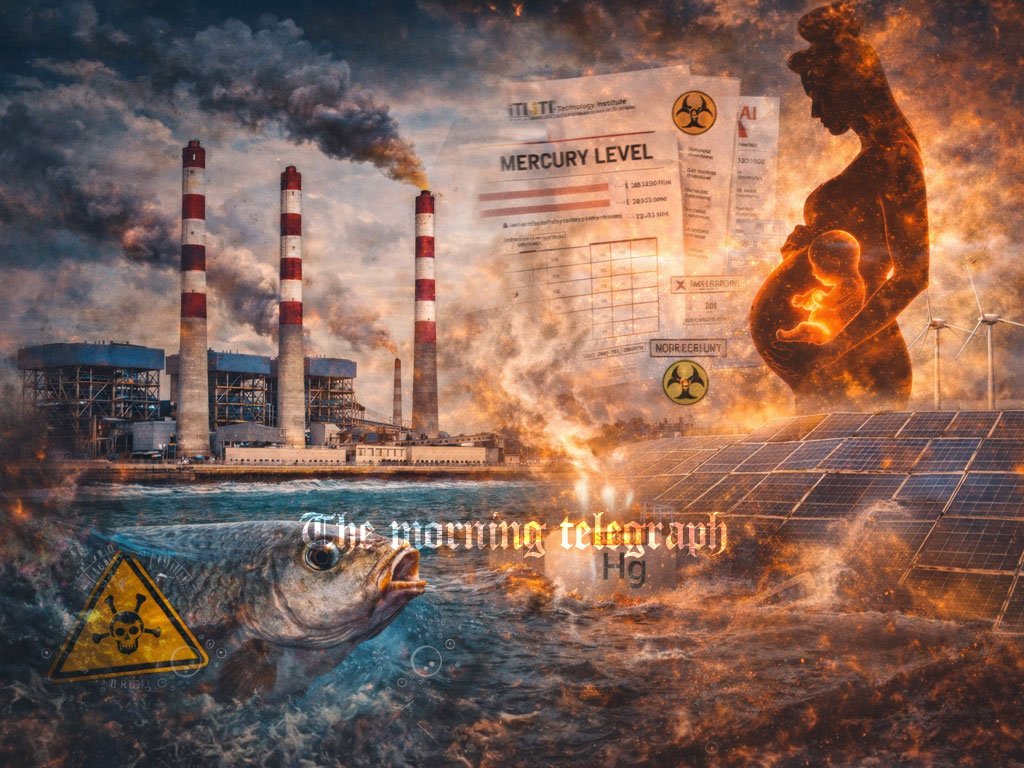
The Norochcholai coal-fired power plant is releasing an alarming 600 to 650 kilograms of mercury into the environment each year, triggering serious environmental pollution and health concerns across Sri Lanka. According to environmental expert Dr. Vidura Ralapanawa, these emissions are contaminating both the ocean and the atmosphere, creating a growing ecological crisis.

In a detailed social media statement, Dr. Ralapanawa highlighted findings from the Industrial and Technological Institute, confirming that each kilogram of coal used at the plant contains approximately 0.27 milligrams of mercury. These figures point to a consistent and significant source of toxic heavy metal pollution.
The plant consumes between 2.2 and 2.4 million tons of coal annually, and it has been revealed that the mercury generated during combustion is released directly into the environment without any effective treatment or filtration system in place.
According to Dr. Ralapanawa, the Electrostatic Precipitator system installed at Norochcholai is incapable of controlling mercury emissions, as mercury exists in vapor form during the burning process. Additionally, the Flue Gas Desulfurization unit, which is designed to manage sulfur emissions, uses seawater that reacts with mercury vapor, forming highly toxic methylmercury.
This contaminated seawater is then discharged directly into the ocean without undergoing any purification process, raising serious concerns about marine pollution and ecosystem damage along Sri Lanka’s coastal regions.
Furthermore, mercury that does not enter the ocean is released into the atmosphere through the plant’s smokestacks. This airborne mercury eventually returns to the ground through rainfall, spreading contamination across land and water systems.
The health implications of this mercury exposure are severe and cannot be ignored, Dr. Ralapanawa warns, emphasizing the long-term risks associated with toxic environmental exposure.
Methylmercury, identified as a powerful neurotoxin, has a particularly harmful impact on brain development in infants and young children, making it a critical public health issue.
Exposure to mercury can also affect pregnant mothers, leading to complications such as impaired fetal development, birth defects, and even miscarriages, further highlighting the seriousness of the crisis.
Mercury entering marine ecosystems through plankton is gradually accumulated in the food chain, eventually reaching high concentrations in large fish such as sharks and ultimately transferring into the human body through consumption.
Previous studies conducted by international organizations such as IPEN and the Environmental Justice Center have already confirmed elevated mercury levels in hair samples of young women in the Kalpitiya area, indicating widespread exposure and reinforcing the urgency of intervention.
Dr. Ralapanawa concludes by stressing that technical solutions are available to mitigate this crisis, urging authorities to implement advanced filtration methods such as Bag Filters and activated carbon systems to effectively reduce mercury emissions and protect both public health and the environment.