Explosive claims suggest a high-stakes political crackdown, with allegations of selective law enforcement, planned arrests of key Rajapaksa family members, and growing concerns over governance, accountability, and misuse of state power in Sri Lanka.
Amid intensifying political turmoil in Sri Lanka, the opposition has raised serious allegations that the government is selectively using security forces and law enforcement agencies to enforce the law against targeted individuals. These claims have fueled concerns over political interference, with growing suspicion surrounding verbal directives reportedly issued to certain security officers. Sources indicate that many officials are now increasingly demanding such orders in written form to ensure accountability and legal protection.

It is understood that officers attached to independent commissions are particularly cautious, showing a clear preference for documented instructions rather than informal commands. This shift highlights a broader unease within the system, as institutions seek to safeguard their independence amid mounting political pressure and scrutiny over governance practices.
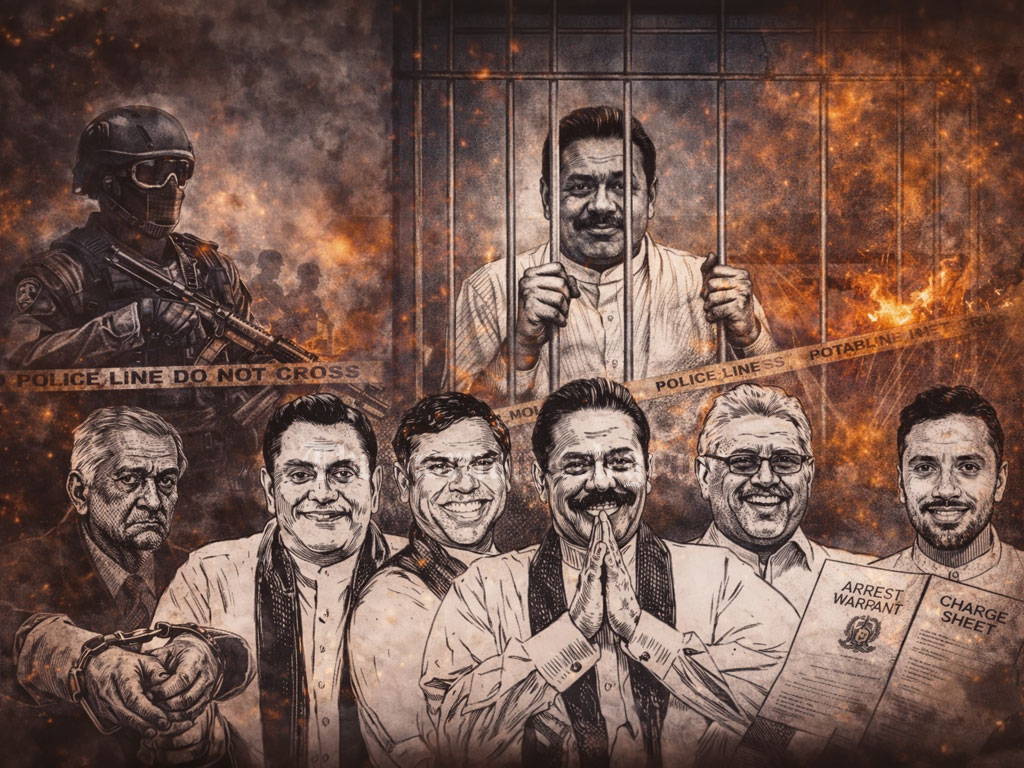
At the same time, allegations have surfaced suggesting that a coordinated plan is underway to arrest several members of the Rajapaksa family based on political decisions taken at the highest levels. According to these claims, there is an effort to detain one or more of Shiranthi Rajapaksa, former Speaker Chamal Rajapaksa, and MP Namal Rajapaksa before the Sinhala and Tamil New Year, a move that could significantly escalate the country’s political tensions.
Reports indicate that an attempt was made last week to arrest Chamal Rajapaksa, but it did not materialize due to his absence from the country. In parallel, there are indications that legal action may be pursued against Shiranthi Rajapaksa in connection with the controversial Siriliya Saviya project, further intensifying the political narrative surrounding accountability and alleged corruption.
Security sources have also revealed that attention has turned toward Opposition Leader Sajith Premadasa, with possible legal action being considered over alleged misuse of Central Cultural Fund resources. These developments have added another layer to the unfolding political crisis, raising questions about whether investigations are being conducted impartially or influenced by broader political agendas.
Meanwhile, sections of the opposition have criticized the government for maintaining a policy of silence when responding to allegations directed at its own leadership. This perceived lack of transparency has contributed to growing public skepticism and debate over the credibility of ongoing anti-corruption efforts.
Further complicating the situation, the New People’s Front has reportedly lodged more than one hundred complaints with the Bribery and Corruption Commission against several influential figures, including the Speaker of Parliament. However, according to the party’s leader Sugeeshwara Bandara, no preliminary investigations have been initiated into these complaints so far, raising serious concerns about institutional responsiveness and equal application of the law.
As Sri Lanka navigates this volatile political landscape, the unfolding developments point to a critical moment in the country’s governance trajectory, where issues of justice, political accountability, and the rule of law remain at the forefront of national discourse.