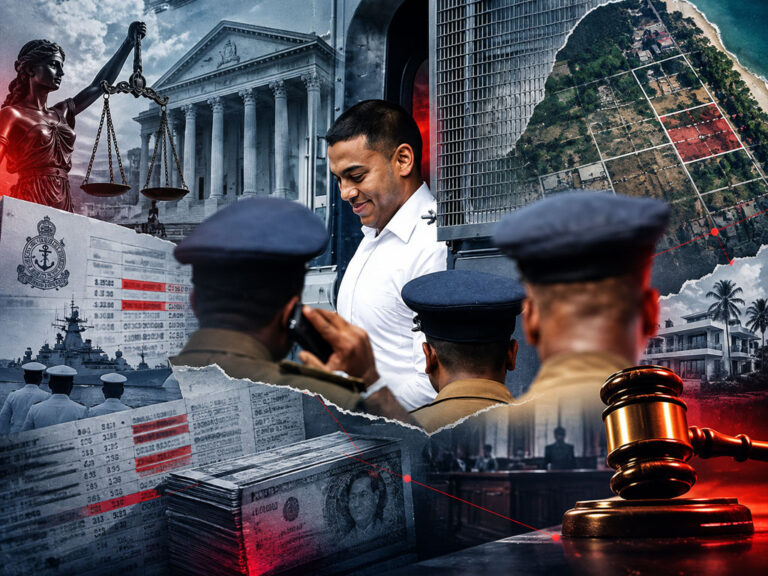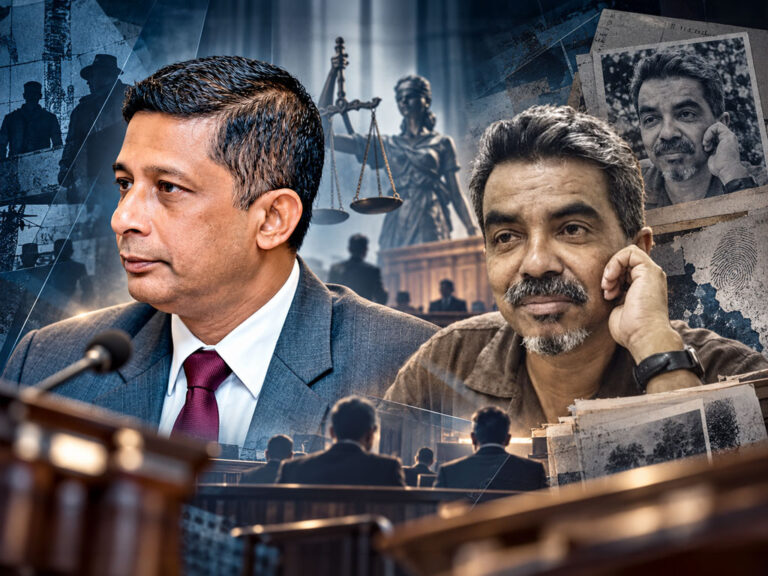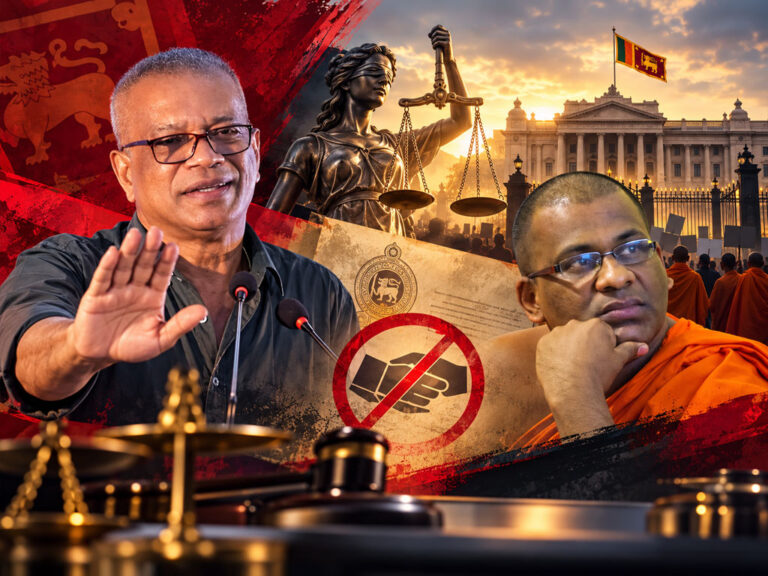
A sweeping political critique reveals how overconfidence, scandal mismanagement, and rising public frustration may be turning Sri Lanka’s ruling power into its own worst enemy.
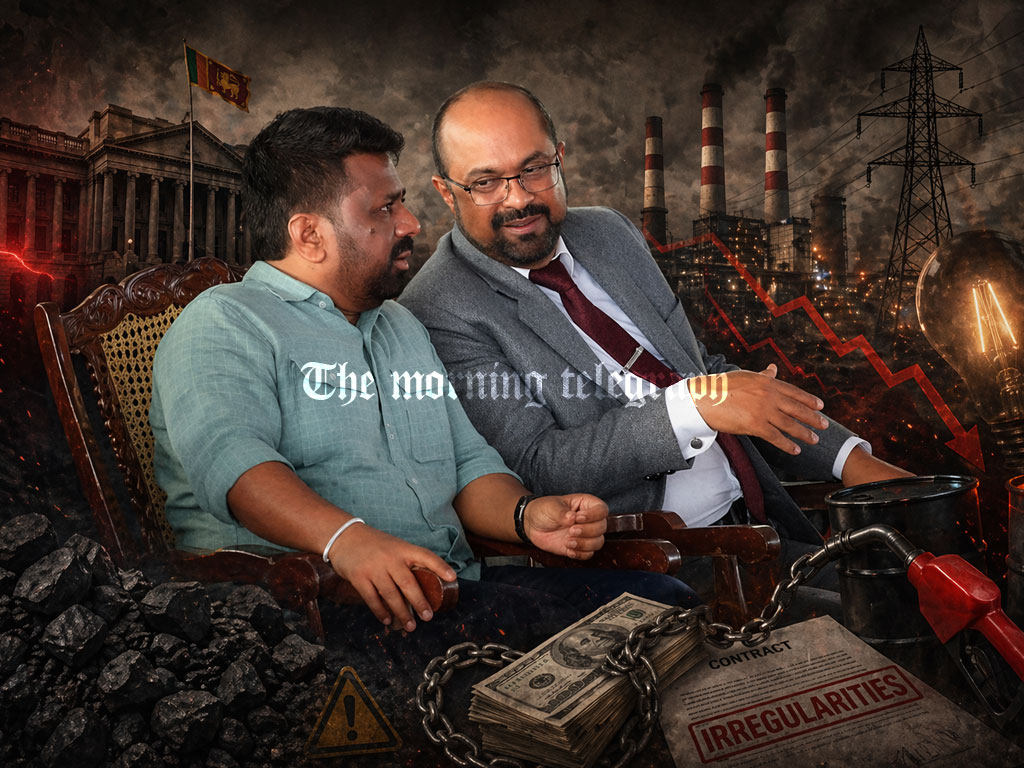
Sri Lankan governments that secure overwhelming parliamentary majorities often fall into a predictable trap. With massive mandates behind them, they begin to believe their dominance is unshakable and that weakened opposition forces will never recover. This mindset breeds political arrogance, where leaders start to ignore public sentiment and push through decisions without restraint. History shows that such overconfidence rarely ends well. Governments that once held two thirds majorities have frequently suffered dramatic electoral defeats, as seen in 1977, 2015, and again in 2024. Even the United National Party victory in 1977 stands as an unusual case, where subsequent electoral success was marred by allegations of rigging, political violence, and the controversial 1982 referendum. Today, a similar pattern appears to be unfolding as the JVP NPP administration finds itself under growing pressure, particularly due to its handling of the coal procurement scandal.

The current government has made determined efforts to convince the public that none of its members were involved in the controversial coal procurement process, despite mounting criticism. Unlike past corruption allegations that often felt distant from everyday life, this scandal has had a direct impact on citizens. Substandard coal imports have significantly reduced power generation at the Norochcholai coal plant, forcing expensive oil powered plants to compensate for the shortfall. This has led to higher electricity tariffs and increased fuel prices, placing an additional burden on households already struggling with economic hardship. Reports indicate that diesel purchases reached as high as USD 286 per barrel, an unprecedented figure globally, highlighting the severity of the situation. Such developments have given the opposition a powerful narrative to challenge the government’s credibility.
In what appears to be an unintended political consequence, the government has handed its rivals a potent weapon. Opposition parties now have a clear rallying point, and a once aggressive ruling coalition finds itself increasingly defensive. Having come to power with strong anti corruption messaging and promises of accountability, the leadership is now facing accusations that mirror those it once directed at others. This reversal has shifted the political landscape, placing the government in a position it likely did not anticipate when it first assumed office.
Opposition forces have already signaled their strategy. They have collectively stated that a full investigation into the coal procurement scandal will be a priority under any future administration. Their approach is straightforward, using allegations of procurement irregularities and financial mismanagement to reshape public opinion. In a country where protest voting is a recurring trend, such controversies carry significant political weight. The government, now facing accusations of a major scandal, has reason to be concerned about how this narrative may evolve in the coming months.
Sri Lanka’s recent political history offers a reminder of how quickly public sentiment can shift. In 2015, voters rejected the Rajapaksa administration largely due to allegations of corruption and abuse of power. Yet, within just a few years, the same electorate overwhelmingly supported the SLPP in the 2018 local government elections, paving the way for its return to power. This pattern demonstrates that public trust is fluid, and opposition movements built on anti corruption platforms can gain momentum rapidly. The current situation suggests that a similar dynamic could once again influence the country’s political future.
There is also a growing sense of irony in the unfolding narrative. Leaders of the JVP, once positioned as champions of integrity and simplicity, are now being scrutinized for their own financial disclosures and political conduct. Their earlier portrayal as a party rooted in modest means has been challenged by new claims about personal assets and financial standing. This contradiction has provided additional ammunition for critics, who argue that the party’s public image no longer aligns with its current reality.
At the heart of the issue lies the government’s handling of the coal procurement controversy. Critics argue that decisive action at the earliest stage could have changed the narrative entirely. A transparent investigation, coupled with accountability measures against those responsible, might have strengthened public trust and reinforced the government’s anti corruption stance. Instead, the decision to defend key figures and broaden the inquiry to include historical cases dating back years has been seen as an attempt to dilute responsibility. This approach has not only failed to resolve the issue but has also intensified political scrutiny.
The result is a government facing a credibility challenge of its own making. By mishandling a crisis that directly affects the public, it has opened the door for political opponents to regain influence and reshape the national conversation. In a landscape where public perception can shift rapidly, such missteps carry lasting consequences. What began as a governance challenge has now evolved into a broader political test, one that may ultimately determine the future direction of the country’s leadership.