Mounting political pressure intensifies as fresh allegations of financial secrecy, fuel overpricing, and governance failures push calls for a full public disclosure and independent probe into Sri Lanka’s growing economic controversy.
National Organizer of the Sri Lanka Podujana Peramuna Namal Rajapaksa has urged the President to immediately disclose the recipient of the controversial US $2.5 million transfer, claiming that the government is attempting to hide serious financial irregularities linked to the transaction. His remarks have added further momentum to the ongoing Sri Lanka Treasury controversy and cyber fraud investigation.
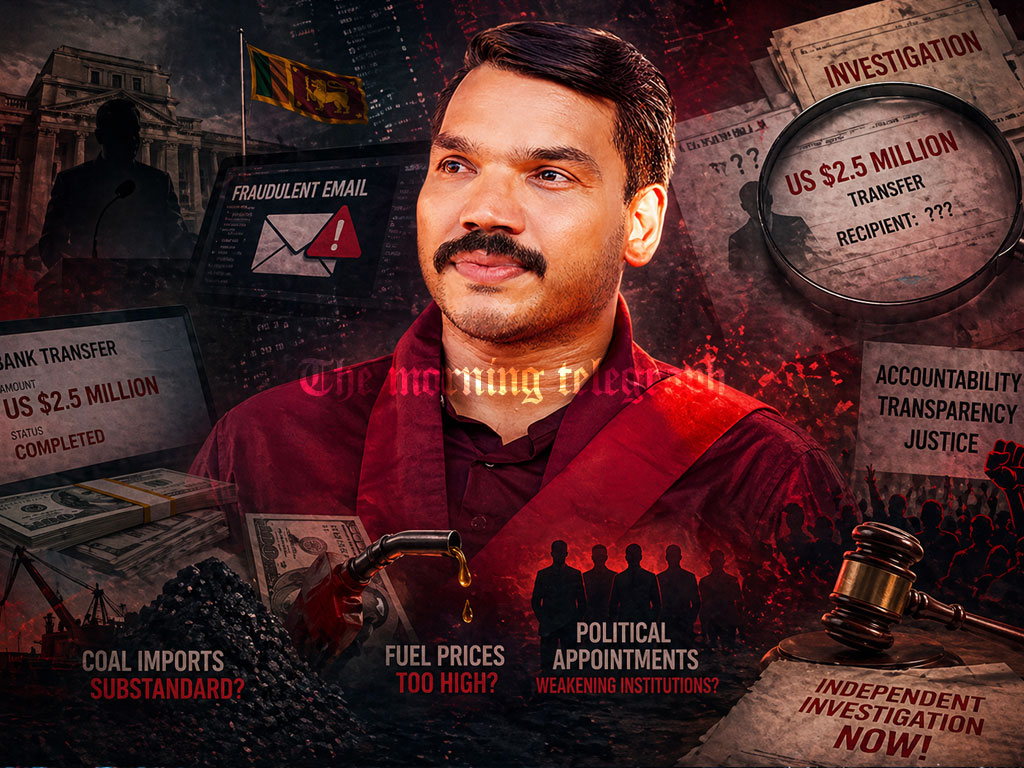
Addressing journalists in Colombo, Namal Rajapaksa alleged that the $2.5 million payment was carried out based on instructions received through a fraudulent email in December last year. He questioned the lack of transparency, accountability, and timely action surrounding the incident, raising concerns about possible lapses in financial governance and cybersecurity controls.

“Who received this $2.5 million? Was it transferred to a single account or multiple accounts?” he asked, calling on authorities to release full details of the transaction and launch a comprehensive financial fraud investigation. His comments reflect growing public demand for clarity on the Sri Lanka Treasury cyber breach and the handling of public funds.
He further accused the government of failing to take legal action months after the incident, instead attempting to shift blame onto lower level officials. According to him, this approach undermines accountability and raises serious doubts about whether key figures are being protected from scrutiny.
Namal Rajapaksa also criticized the government’s handling of coal imports, alleging that substandard supplies had resulted in financial losses that were ultimately passed on to the public. He claimed that certain companies were being shielded from investigation, while allegations of procurement fraud were being ignored.
In addition, he alleged that Sri Lanka had paid unusually high prices for fuel in the global market, placing further strain on the already fragile economy. These claims add to broader concerns about economic mismanagement, rising costs, and the impact on the public.
He expressed concern over what he described as a weakening of state institutions, stating that politically connected appointments had eroded governance standards and accountability mechanisms. This, he argued, has contributed to a climate where financial irregularities can occur without proper oversight.
Concluding his remarks, Namal called for an independent, transparent, and credible investigation into all alleged irregularities, emphasizing that those responsible must be identified and held accountable under the law as Sri Lanka faces mounting pressure to restore trust in its financial systems.