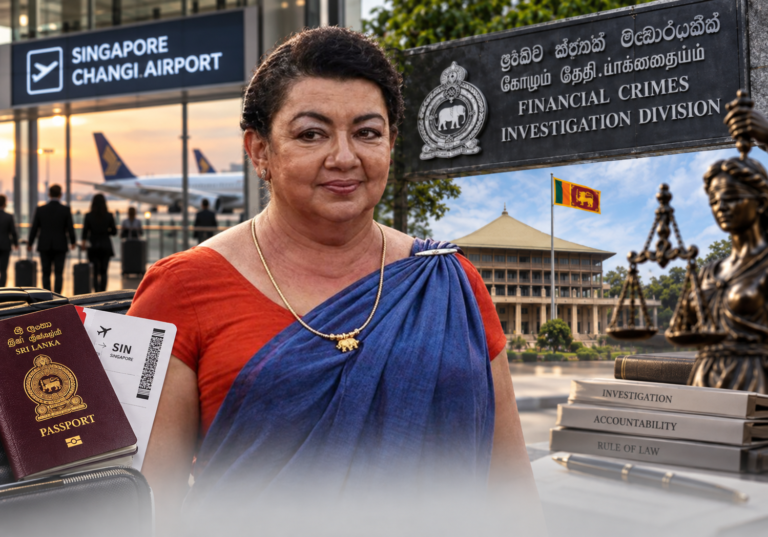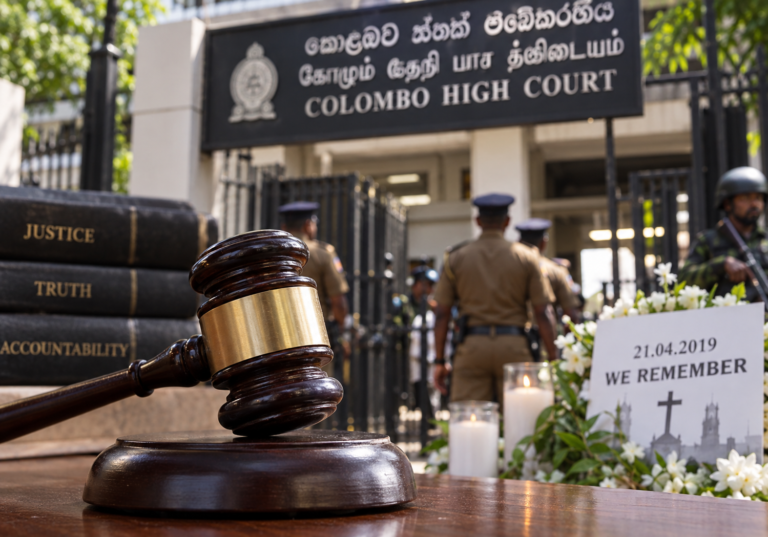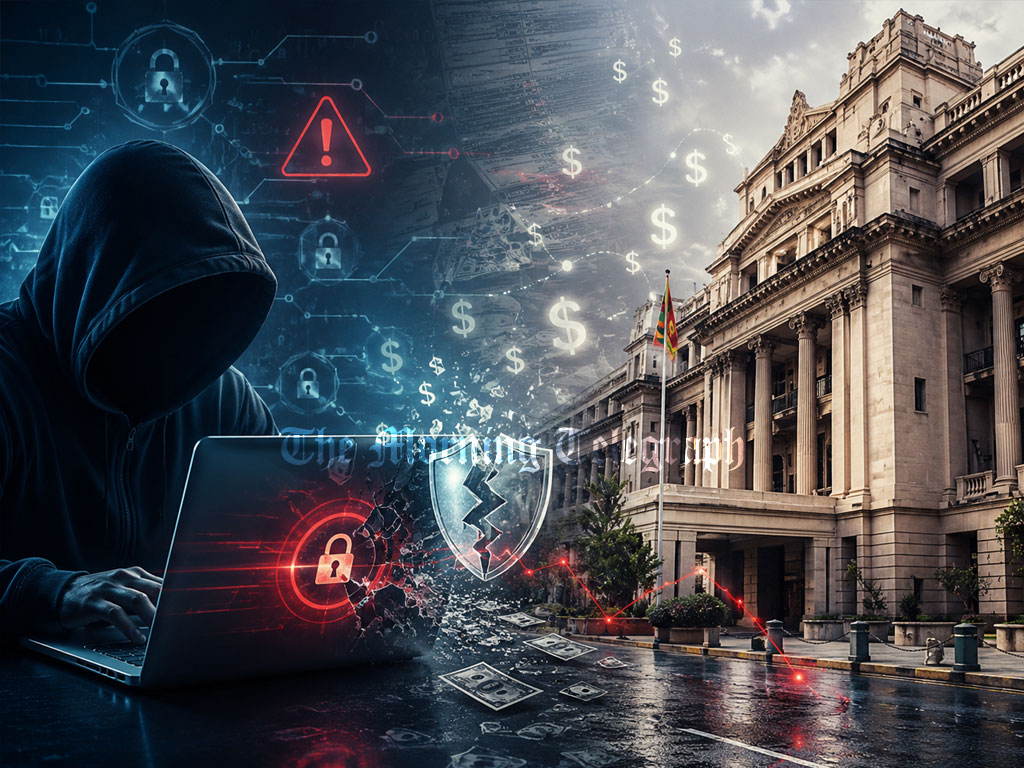
Treasury crisis over missing US$2.5 million, Ranga’s death and Aswasuma errors puts NPP’s anti-corruption promise under pressure.
Treasury crisis allegations have now placed the National People’s Power government and Pelawatte’s anti-corruption promise under intense public scrutiny.
The manner in which the Janatha Vimukthi Peramuna acted in the past regarding corruption, fraud, and irregularities earned it deep public love and respect. The best example was the removal of Anuruddha Polgampala’s parliamentary seat, which he first won from the Kegalle District at the 2004 general election. That incident took place in September 2008.
Polgampala, who was accused of using his parliamentary position to illegally facilitate a person, Rohan Kodituwakku Arachchilage, to enter Japan, had to resign as soon as he admitted the offence. Through that move, the JVP taught the highly corrupt United National Party and Sri Lanka Freedom Party an excellent lesson. Japan had deported the individual in question a few weeks before the JVP removed Polgampala.

The media reminded the country of how the JVP acted over Polgampala after President Maithripala Sirisena appointed the former MP as Chairman of the State Timber Corporation on May 4, 2018. That appointment came after the arrest of Piyasena Disanayaka, Chairman of the State Timber Corporation, while allegedly accepting a bribe of Rs. 2 million from T.H.K. Mahānāma, then Chief of the Presidential Staff.
It should also be remembered that Polgampala was arrested twice in 2016, and that he entered the Sabaragamuwa Provincial Council in 2000 representing the UNP. Later, Polgampala, who also worked with the JVP, the Sri Lanka Podujana Peramuna, and the SLFP faction led by Maithripala Sirisena, contested a presidential election as an independent candidate.
He has contested the presidency three times, and he qualified to do so because he had represented Parliament. Resigning from his parliamentary seat after admitting an offence was not an obstacle. Even today, that unfortunate situation remains unchanged. Few seemed disturbed by the tragedy of a country where merely being an MP is considered a qualification to run for President.
The statement made by President Anura Kumara Dissanayake on May Day regarding a case pending before court has now become highly controversial. Addressing the main May Day rally of the National People’s Power in Maharagama, the President, who is also the leader of the party and the JVP, said: “I heard something yesterday, April 30. They said the verdict will be given on May 25. A verdict on a case on May 25. Wait for it, clap for it on May 25. That’s what will happen.”
The Free Lawyers organisation, which revealed to the country the disappearance of US$2.5 million from the Treasury, as well as the Samagi Jana Balawegaya, Opposition Leader Sajith Premadasa, the Joint Opposition represented by legal scholar Professor G.L. Peiris, and SLPP MP Namal Rajapaksa, accused the President of directly interfering in the judicial process. The President’s statement also drew the attention of Chief Justice Priyantha Padman Surasena and the Bar Association of Sri Lanka.
In response to an inquiry by this correspondent, Justice Minister Harshana Nanayakkara stressed that the bankrupt and shattered opposition was attempting to use the President’s statement politically for its own advantage. He said that under no circumstances had the President intervened in the judicial process, and that this position would not change in the future.
He further said the opposition, fearing the judicial process, was attempting to create a problematic situation by levelling accusations against the President and the government. He added that it was not surprising that political parties and individuals responsible for past corruption, fraud, and irregularities were now alarmed.
However, the NPP government cannot simply ignore the statement made by the Bar Association of Sri Lanka that the President’s remarks could erode public confidence in the judicial process.
There are two weeks left until May 25. The ruling party, the opposition, and everyone interested in the President’s May Day prophecy must now wait patiently until the relevant verdict is delivered. The situation on the ground can be understood only after the verdict is announced.
There is no need to speak further about pressures exerted on the judiciary by governments led by the UNP, which Sajith Premadasa represented until 2020, and the SLFP, which former minister G.L. Peiris represented. The professor also served as a UNP minister. The conduct of those governments toward the judiciary was not good. It is no secret that both parties disregarded the Attorney General.
The removal of Dr. Shirani Bandaranayake through impeachment in 2012 and 2013 on the orders of President Mahinda Rajapaksa remains the most egregious interference in the judiciary. The removal of the Chief Justice was even more serious than the attack on the homes of Supreme Court judges in 1983 with President J.R. Jayewardene’s consent. Both presidents could not tolerate the judiciary failing to act as they wished.
There is little point discussing judicial independence without considering the parliamentary operation carried out against Mrs. Bandaranayake, its background, and other interventions. This is not to justify President Dissanayake’s May Day statement. That statement cannot be discussed in isolation. The country has not forgotten the confrontational situation President Ranil Wickremesinghe created with the judiciary in 2023 and 2024.
The opposition, which is trying to turn the President’s May Day statement to its advantage, recently informed the Speaker of Parliament that a parliamentary debate is needed regarding the President’s alleged interference in the judiciary.
In addition to President Dissanayake’s statement regarding the verdict scheduled for May 25, he also emphasised that 15 cases, including five involving criminal charges, are before the courts in May. The economic, political, and social challenges facing bankrupt Sri Lanka because of corruption, fraud, irregularities, and administrative weaknesses are not minor. It is regrettable that political power is determined based on corruption and related matters.
The main reason for the ouster of President Gotabaya Rajapaksa was the collapse of the country’s economy. It would not be wrong to say that the country lost both dollars and rupees. That situation caused supply chains to break down. Some today forget that the aragalaya, which received support from the United States and India, succeeded because the government failed to meet the people’s needs.
Corruption allegations against the NPP, which formed the first government to come to power through a public election after the aragalaya, must also be discussed. Leader of the House Bimal Rathnayake, who on May Day named former ministers and MPs who will face judicial proceedings in 2026 on corruption charges, launched a strong attack on the opposition.
He also emphasised that the social status or family relationships of those accused in judicial proceedings would not be considered. That is as it should be. However, neither he nor the President responded to the allegations against the NPP government. JVP General Secretary Tilvin Silva’s direct answer to the opposition’s allegations on May Day showed that the government and the party have no concern whatsoever about the situation that has arisen.
The opposition did not pay proper attention to Tilvin Silva’s comments on the disappearance of US$2.5 million from the Treasury and the procurement of coal for 2025 and 2026. Those comments are as serious as President Dissanayake’s statement. The JVP strongman said: “The imported coal is always of poor quality. But no fraud has taken place.” The JVP General Secretary promised that the party would vouch for its members, or “brothers,” regarding them.
However, the coal issue is not simple. According to a special report issued by the National Audit Office, the Ministry of Energy awarded the relevant tender to a company that did not have the mandatory registration required for the tender process. That Indian company acted in accordance with the procedures to be followed during coal loading and unloading. This is not an opposition claim, but a point raised by the National Audit Office.
Although the NPP defeated the no-confidence motion against Energy Minister Kumara Jayakodi in Parliament without difficulty, the minister and Energy Secretary Professor Udayanga Hemapala eventually had to resign. President Dissanayake’s appointment of a Presidential Commission to investigate coal procurement from the day the Lakvijaya power plant in Norochcholai became operational served as a reminder that commissions are not a cure for everything.
Furthermore, according to the JVP General Secretary’s statement that he would “vouch with his blood,” the entire coal procurement process was handled by party members. Or was the JVP General Secretary merely making a political statement suited to May Day?
The JVP General Secretary’s comments on the disappearance of US$2.5 million from the Treasury were also astonishing. “When sending money to a foreign country, some money was lost. Human errors occur, and what happened at the Treasury is not a fraud or a theft. We will also finish that within a week.”
No mention was made of the death of Ranga Nishantha, an Assistant Director of the Ministry of Finance who had complained to the Criminal Investigation Department regarding the Treasury incident and was suspended from work. He died mysteriously on April 29.
The post-mortem concluded that death occurred due to excessive bleeding from several incisions and that it was most likely a suicide. Was he a JVP member? The party did not appear to have contributed to his final rites. However, it is no secret that he was someone who showed strong allegiance to the party. The opposition raised suspicions about his death and stated in Parliament that a full investigation should be conducted through British police.
Ranga Nishantha’s suspicious death reminded many of the highly controversial incident that took place at the Borella Cemetery on December 15, 2022. Dinesh Schaffter, the head of Janashakthi Insurance, was found inside his own car at the Borella Cemetery with neck injuries. He had been tied to the steering wheel in the driver’s seat.
He was not dead when found, but was admitted to the National Hospital of Colombo, where he died of a heart attack that night. A post-mortem initially declared that he had died by strangling himself. Later medical tests concluded that cyanide was found in his blood. The court eventually declared it a homicide.
Although it was promised that the Treasury issue would be resolved within a week, the NPP government cannot see an end to the problem in the foreseeable future. It is the party’s position that Harshana Sooriyapperuma, who previously represented Parliament and has served as Secretary to the Ministry of Finance and the Treasury since June 2025, was in no way involved in paying the US$2.5 million to a third party. Needless to say, conducting a free and fair investigation is a significant challenge in such an environment.
Public Security Minister Ananda Wijepala stated in Parliament on May 7 that police had recorded statements from 21 individuals regarding the massive investigation that the JVP General Secretary promised to resolve within a week. It should be emphasised that the investigation is still in its preliminary stage. The government must also acknowledge that the suspicious death cannot be ignored in the investigation.
A recent discussion on Saheđa Channel between Professor Anuradhi Hapuarchchi and Divaina’s Financial and Economic Editor Shyam Nuwan Ganewatta, focusing on the Treasury incident, highlighted the dangerous situation facing the country.
The discussion, aired on May 2, focused mainly on technical matters and cybersecurity. Professor Hapuarchchi, a graduate of the Massachusetts Institute of Technology with a PhD in Business Administration in Artificial Intelligence, emphasised the direct impact that the loss of US$2.5 million could have on the country.
Emphasising the seriousness of the situation, she warned that if urgent action is not taken, even state fiscal policy could be manipulated or directed by external parties. Such a situation, she said, would be a serious threat to the country’s economy.
The need to develop financial and technological literacy was emphasised throughout the program. The professor clearly explained how state institutions, as well as ordinary people, fall into the grip of financial criminals. She pointed out that even lawyers she knows well have been deceived by individuals operating pyramid schemes from abroad, after being lured by promises of high interest.
She also pointed out that the chances of recovering the lost US$2.5 million are very slim, and that there has never been a known previous instance where a country’s treasury paid money to financial criminals in this manner.
She warned that this loss could force the government to increase taxes, and that other foreign payments, public servants’ salaries, and pensions may also face delays. It was stated that public questioning and suspicion of the entire digital banking system is a highly problematic situation.
She recalled the attempt by hackers nearly ten years ago to transfer nearly US$1 billion belonging to Bangladesh from a US bank to banks in other countries. Due to the hackers’ intervention, US$101 million was received into accounts in the Philippines, amounting to US$81 million, and Sri Lanka, amounting to US$20 million, with some of that money later recovered.
Pointing out that President Anura Kumara Dissanayake is also the Minister of Finance, the professor also commented on the public distrust and instability that could arise from the Treasury incident. She emphasised that if the situation worsens due to a lack of proper oversight, transactions conducted through the entire digital banking system could be affected.
She said that because of this breakdown of trust, people might even reduce financial transactions. That, in turn, would cause the banking system to collapse. She also pointed to the responsibility of safeguarding public funds.
“Digitalisation and cybersecurity are like the bark to a tree, and the tree to the bark,” she emphasised, stating that immediate attention must be paid to the entire process.
The latest blunder by the NPP government is the overpayment of Rs. 5,000 lakhs, or Rs. 500 million, to Aswasuma beneficiaries, above the amount scheduled to be paid in April 2026.
Speaking for the Free Lawyers organisation, which revealed to the country the disappearance of US$2.5 million from the Treasury, Rajith Keerthi Thennakoon pointed out that the double or overpayment to Aswasuma beneficiaries highlights the collapse, chaos, and irresponsibility in state financial management today.
He also emphasised that the handling of state funds without a system of checks and balances amounts to crime, corruption, and fraud.
The Welfare Benefits Board, accused of acting in such an irresponsible manner, admitted its fault by presenting various explanations. Admitting that their institution had committed an error within 24 hours of being accused is a positive development compared to the container jumping at the Colombo Port, the coal fiasco, and the Treasury incident, when considering how the NPP has acted.