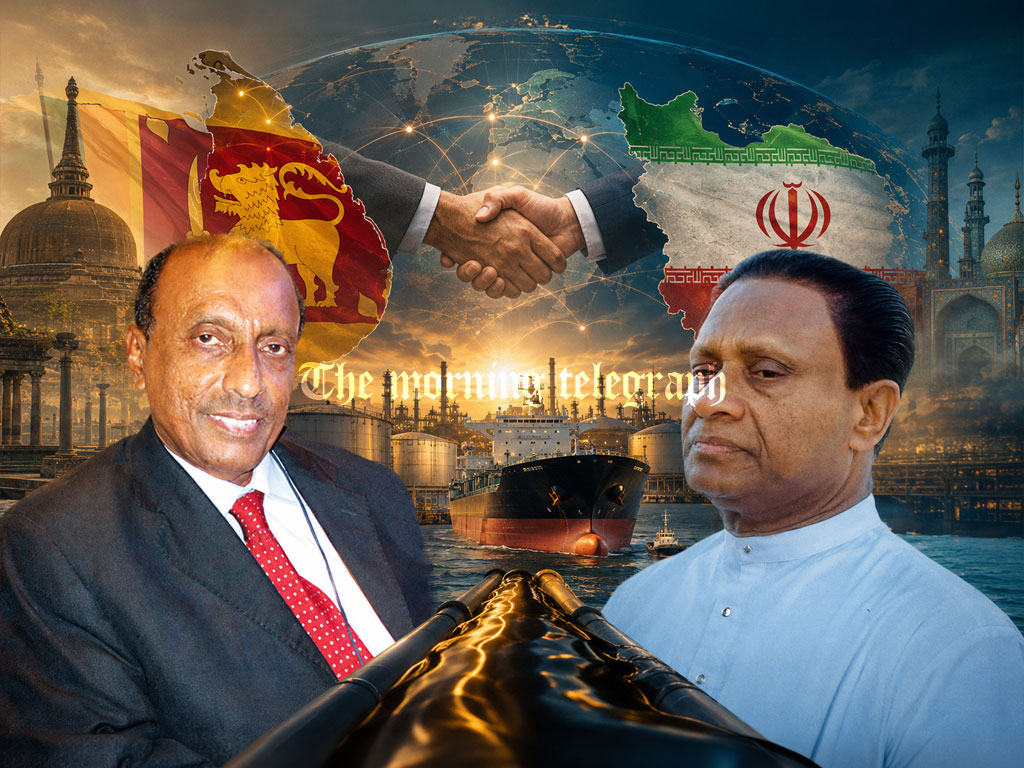
Sri Lanka Iran oil trade history resurfaces as Omar Kamil recalls Tehran diplomacy, crude oil concessions and vital foreign exchange relief.
Sri Lanka Iran oil trade has returned to the spotlight after former Colombo Mayor and diplomat Omar Kamil revealed how long-standing ties with Tehran helped Sri Lanka secure crucial relief during a difficult energy and foreign exchange period.
Sri Lanka and the Islamic Republic of Iran have shared friendly and cordial relations for decades. Historians have recorded that Persian traders from Colombo were involved in trade along their ancient “Silk Route” to China. Iran, once known as Persia, carries a civilizational history stretching across centuries, and that past has also touched Sri Lanka.

Ancient Persian coins and several other artefacts are displayed at the UNESCO World Heritage Cultural Centre in Sigiriya, reflecting the depth of this old connection. In that sense, the relationship between modern Iran and Sri Lanka is not new. It is a long friendship, later strengthened further through crude oil trade between the two countries.
But what is the deeper story behind this ancient relationship between Sri Lanka and Iran? Who is revealing it now? The historical and diplomatic background has been explained by Mr. Omar Kamil, a Sri Lankan politician and diplomat who has remained active in the country’s public life for several decades.
Kamil became widely known for serving as Mayor of Colombo for many years. He was first elected as a member of the Colombo Municipal Council in 1979 and, twenty years later, was elected Mayor of the Colombo Municipal Council in 1999. He held that position from 1999 to 2002.
In 2003, Omar Kamil was appointed Sri Lanka’s Ambassador to Iran. After serving in Tehran, he was also appointed Sri Lanka’s Ambassador to Saudi Arabia. Now 76 years old, Kamil recently revealed his diplomatic experiences in Iran through an article written for an English newspaper, explaining the work he carried out as Sri Lanka’s envoy in Tehran.
His reflections carry particular importance at a time when an Iran-America war has begun. In that context, the details he disclosed regarding Sri Lanka’s crude oil trade with Iran have gained fresh significance.
“For more than 25 years, Sri Lanka imported crude oil from Iran for the Sapugaskanda oil refinery,” Kamil recalled.
He said that during his tenure as Sri Lanka’s Ambassador to Iran from January 2003, then Minister of Power and Energy Karu Jayasuriya and Ceylon Petroleum Corporation Chairman Dhamma Wimalasena requested his assistance to obtain concessionary prices for diesel and furnace oil from the National Iranian Oil Company.
According to Kamil, they were aware that he understood the language of commerce and trade. At the time, the Ceylon Petroleum Corporation had been importing 75% of Sri Lanka’s crude oil requirement from Iran over a period of 25 years.
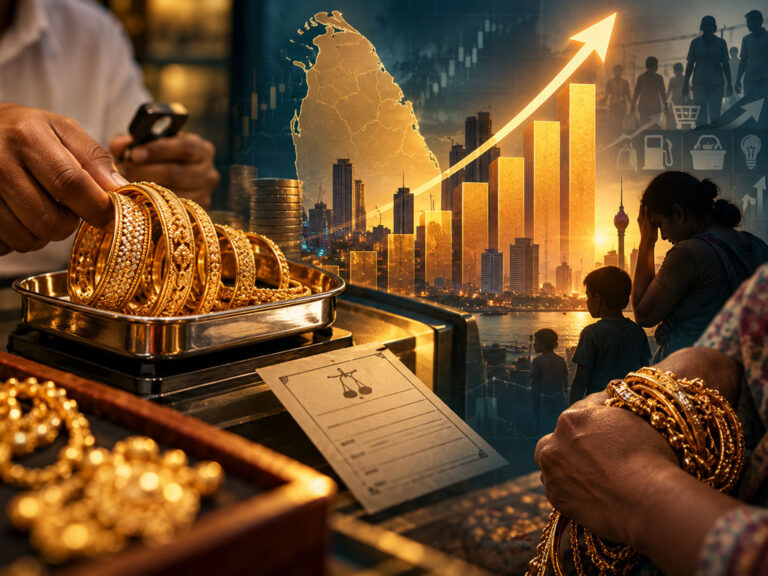
For these imports, a bank guarantee had to be provided to the People’s Bank of Sri Lanka through an international bank. Kamil said the Petroleum Corporation spent more than Rs. 100 million annually as commission fees for that process.
Meanwhile, in March 2003, global oil prices surged following United States military action in Iraq. Oil prices rose from USD 20 per barrel to USD 100, placing heavy additional pressure on oil-importing countries such as Sri Lanka.
Kamil said Minister Karu Jayasuriya and Chairman Dhamma Wimalasena were therefore keen to obtain relief from the bank guarantee requirement.
His explanation continued with the diplomatic efforts that followed.
“I discussed this situation with the then Deputy Foreign Minister of Iran responsible for economic affairs,” Kamil said.
He said he strongly appealed for reconsideration of the bank guarantee requirement, pointing out that Sri Lanka’s letters of credit had never defaulted during the previous 25 years.
The Iranian Minister responded positively and said he would recommend the request to the Governor of the Central Bank of Iran. He also asked Kamil to discuss the issue further with Iran’s Central Bank Governor.
Kamil then contacted Central Bank Governor Dr. Shambani and requested that the bank guarantee requirement be reconsidered.
Although a bank guarantee was a prerequisite for Iranian oil exports to all SAARC countries, including India, Dr. Shambani informed him that Sri Lanka would receive special consideration because of its long-standing relationship of more than a quarter century with the Iranian Oil Company.
Accordingly, on 09 December 2003, the Governor of the Central Bank of Iran sent an official letter to Sri Lanka’s Central Bank Governor A.S. Jayawardena, informing him that the prime bank guarantee requirement had been waived.
Kamil said this achievement brought significant foreign exchange savings to Sri Lanka.
Central Bank Governor Jayawardena and Petroleum Corporation Chairman Wimalasena later appreciated Kamil’s efforts through letters dated 26 January 2004 and 23 January 2004 respectively. They acknowledged his role in successfully resolving the issue with the Central Bank of Iran.
Kamil also said he met Deputy Minister of Petroleum Hussein Najad regarding Sri Lanka’s request for crude oil and diesel furnace oil on deferred terms. Najad had previously served as Iran’s Ambassador to the United Nations in 1991.
During the discussion, the Minister recalled Sri Lanka’s position during the vote against the US-UK sponsored joint resolution titled “Zionism is Racism”, which called for its repeal. He also noted Iran’s appreciation of Sri Lanka’s position on the Palestinian issue.
In 1991, when the resolution was submitted to the United Nations, then President Ranasinghe Premadasa stated that it should comply with UN Resolution 242 of 1967 and that parties should return to their pre-1967 borders, as unanimously agreed by the United Nations.
President Premadasa firmly maintained that position.
Kamil said the arrangements, first granted for three months and later extended to six months, helped Sri Lanka overcome foreign exchange difficulties. Through these measures, he said, trust and goodwill between Sri Lanka and Iran were re-established.