By Ajith Perera
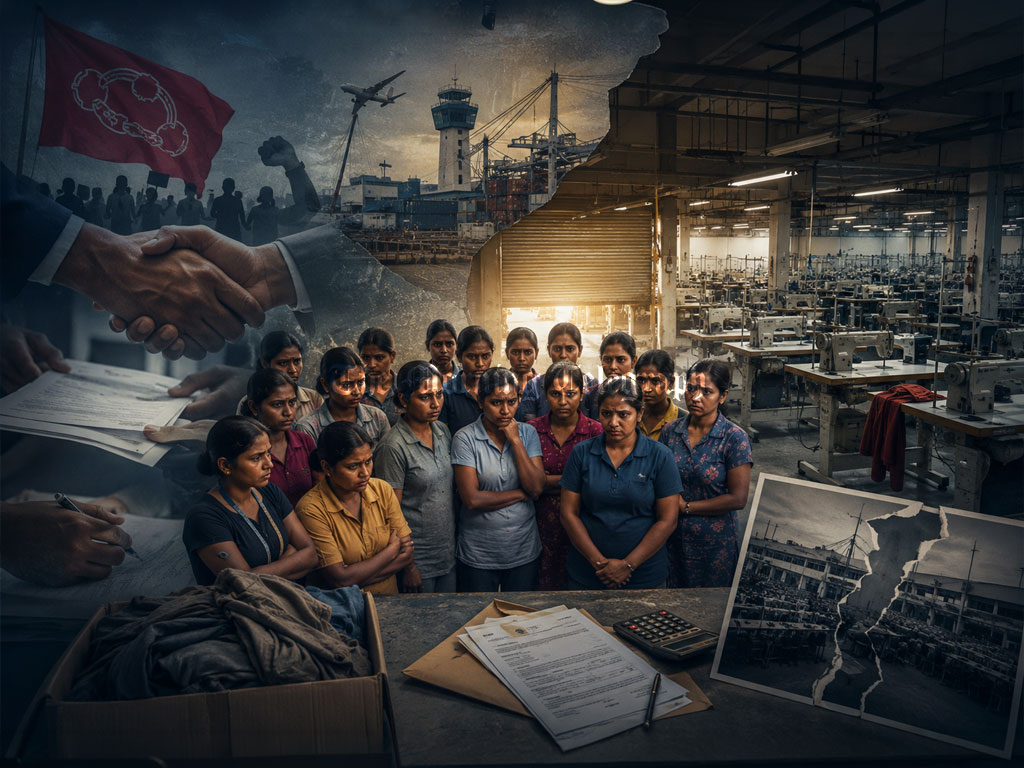
Sixteen former NEXT workers were left with less compensation than originally offered, raising hard questions over union promises, international pressure, and who truly stood by them.
Exactly a year ago, a UK-owned apparel manufacturing facility in Sri Lanka took a decision to close down its garment sewing facility located in the high cost Katunayake Export Promotion Zone. The company communication indicated that high costs of operation in the Katunayake zone together with a history of making sustained losses meant that they had no choice but to close down this operation. Given a history of difficult labour relations, the company closed its doors overnight and commenced discussions with the labour force on a Voluntary Retirement package, offering employees payments well in excess of the already very generous requirements under Sri Lanka’s Termination of Employment of Workmen (TEWA) regulations.

The facility had a trade union in place, one that is affiliated to a UK-based trade union. As soon as the decision was announced, the trade union cried foul, claiming that workers were sacked via WhatsApp, that the company broke Sri Lanka’s labour laws and a host of other mud was thrown in the direction of the company.
This dovetailed into the international arena with a number of NGOs and Civil Society Organisations being brought into the loop who echoed the same arguments on the international stage. The company was publicly vilified for its conduct causing damage to the reputation of the country and the industry. They were publicly accused of acting “in blatant violation of Sri Lankan Labour Law” and called for NEXT act with “transparency and responsibility”.
Despite the best efforts of the Union and the collective voices to dissuade them, over 1,000 employees chose to take up the offer that was on the table, and received their compensation and went on to secure employment.
The Trade Union, however, managed to convince 16 of their members that they should not take the offer, thereby forcing the company to formally make an application to the Department of Labour for the termination of these 16 employees.
Despite the union’s best efforts to prolong the process, earlier this year the application for termination was approved by the Department. The ruling acknowledged that the company had offered a compensation package in excess of the law and had undertaken to help find employment for those who unfortunately lost their jobs. With the termination being approved the Commissioner General of Labour, the company did what was permitted by the law of the land and confirmed the compensation due to the employees.
The original offer by the company was in excess of the legal requirement, but now these terminated employees received less money than they would have done, had they accepted the company offer. Moreover, in one case, it was deemed that the employee was beyond the age of retirement and as such was not due for any compensation.
Despite being promised a better option by the Union in question, the 16 employees were ultimately sadly left with a compensation less than what was on offer by the company. Unfortunately for them, the various organizations both locally and internationally who shouted so loudly a year ago have now all gone eerily quiet. No offer to help find employment for the forgotten 16, no offers to help them financially.
The irony of this situation is that the very same people who called for transparency and responsibility now take zero responsibility for their actions. The Union knew very well that the Department could legally only award a payment that was in line with the law of the land, so any promise to obtain a bigger settlement was nothing but deceit. The amplifiers in the west, presumably now realizing their folly have now moved on to other campaigns, conveniently forgetting the part they played in this.
A factory closure is never good for anyone, neither the company, nor the employees. It is however unfortunate that some organizations seek to use this as an opportunity to try and portray themselves as being there for the people but then sadly slink away when they are found to be the ones in the wrong. There is funding at play for some unions and personnel that make the bigger noise. Perhaps if this requirement was met, then why bother about this 16 of NEXT.