
By Dwayne Ferreira.
The prominent banner disappeared shortly after the controversy gained public attention, only to be replaced by a smaller notice that reportedly retains the prohibition affecting Muslim mothers who wear the niqab.
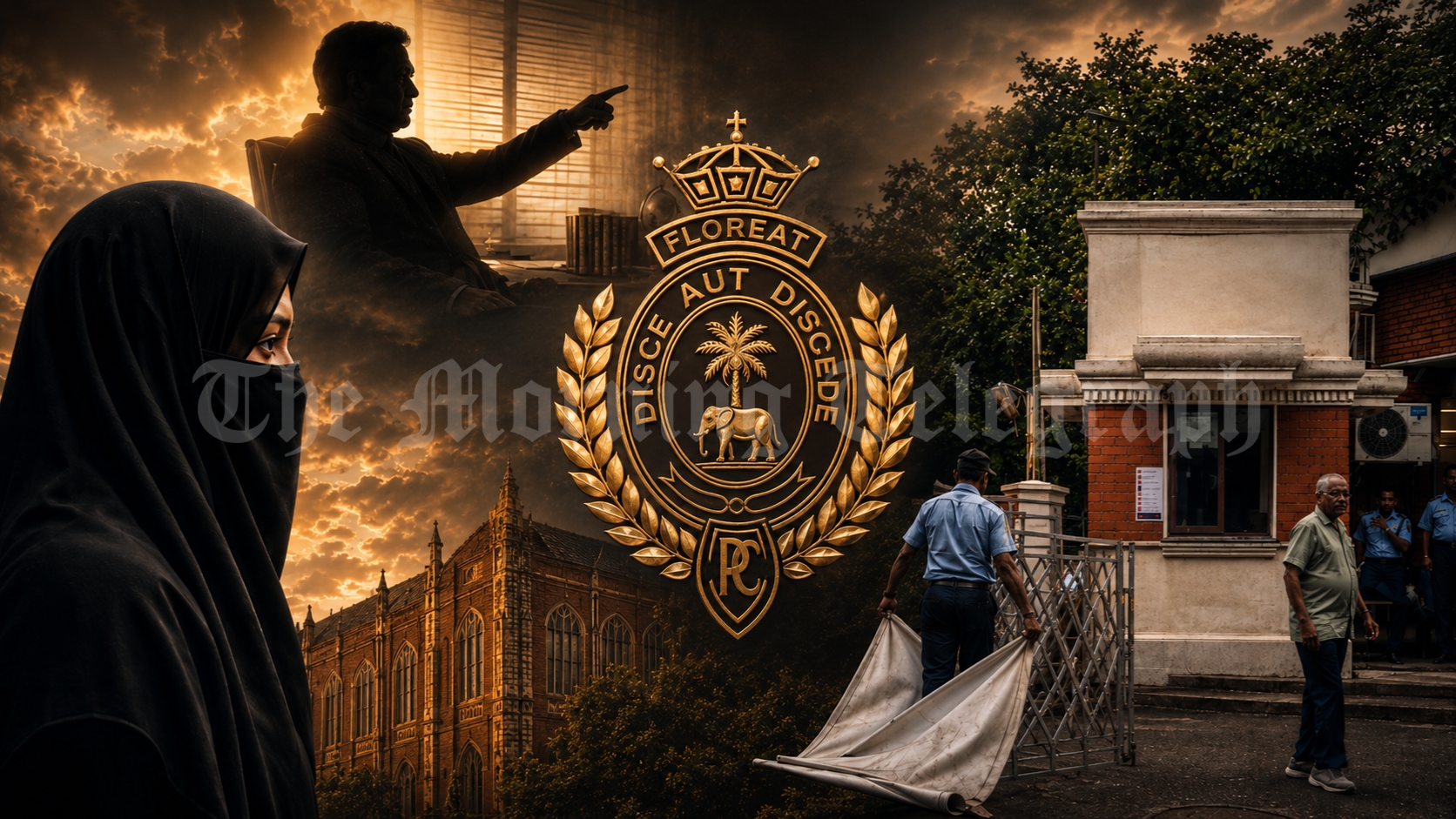
Royal College, Colombo, has removed the large banner displaying its controversial prohibition on veils and face coverings, but a smaller replacement notice reportedly carrying the same restriction has now appeared outside the school.
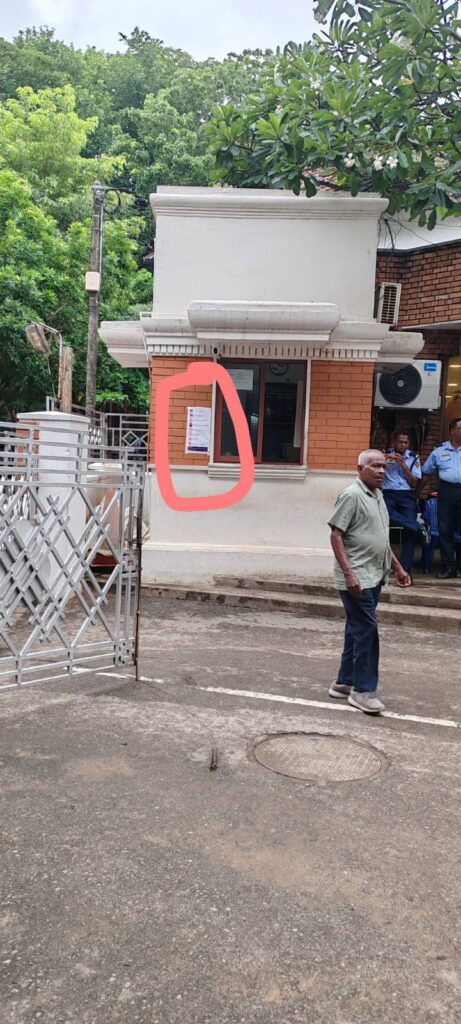
The change was observed on June 24, one day after The Morning Telegraph reported that the prohibition had prompted complaints from parents and representations to the Human Rights Commission of Sri Lanka and the Ministry of Education.
Images and information received by The Morning Telegraph indicate that a smaller, and less visible banner has been posted next to the security post. The large and highly visible banner previously positioned outside the school has been taken down but no images of said banner have been shown to The Morning Telegraph. However, the prohibition itself does not appear to have been withdrawn. Instead, it has been transferred to a considerably smaller notice.

The sequence raises an unavoidable question: has Royal College reconsidered the disputed policy, or has it simply reduced its public visibility following media scrutiny?
The timing alone does not establish why the banner was replaced. Nevertheless, removing the prominent display while retaining the restriction may create the appearance of an attempt to manage the controversy without addressing the concerns raised by affected parents.
Smaller Sign Could Create Greater Confusion
The replacement may also make the situation more difficult for Muslim mothers arriving to collect their children, attend parent meetings or participate in school activities.
A large banner clearly visible from outside the premises, however objectionable its message may be, at least publicly communicates the restriction. A much smaller notice could easily be overlooked by visitors until they reach the entrance.
This may leave mothers wearing the niqab vulnerable to being unexpectedly stopped, questioned or challenged by security personnel in front of their children, other parents and members of the public.
Affected families have already alleged that mothers were subjected to humiliating remarks and denied or restricted entry because of their face coverings. A less conspicuous sign does not resolve those concerns. It could instead make enforcement less transparent and increase the possibility of confrontations at the gate.
Optics Changed, but Policy Appears to Remain
The removal of the original banner could initially be interpreted as a response to public concern. However, replacing it with a smaller version while continuing the prohibition would suggest that the administration has altered the presentation rather than reconsidered the policy itself.
The central issue was never merely the size of the banner.
The controversy concerns whether a national school can impose a blanket restriction that effectively prevents certain Muslim mothers from participating fully in their children’s education while observing their religious practices.
Sri Lanka’s Constitution protects equality before the law, freedom from discrimination on religious and other grounds, and the freedom to manifest one’s religion. Any restriction imposed by a state institution must therefore have a clear lawful basis and must be necessary and proportionate to a legitimate objective.
Royal College has not publicly explained whether the restriction originates from a Ministry of Education circular, an official national security directive or a decision made internally by the school administration.
It has also not been publicly clarified whether less restrictive arrangements were considered, such as allowing identity verification in private by a female staff member.
Previous Human Rights Findings Carry Significance
The Human Rights Commission has previously considered a dispute involving Muslim women’s religious clothing at another national school.
In that case, the Commission found that national schools receiving state funding remained bound by constitutional protections relating to equality and religious freedom. It also concluded that Muslim women could not be prevented from wearing their traditional dress without a lawful and justifiable basis.
Although that case involved teachers wearing the abaya and is not identical to the present dispute involving parents wearing face coverings, its findings demonstrate that school traditions or unwritten administrative preferences cannot automatically override constitutional protections.
Royal College Must Clarify Its Position
Royal College describes itself as a multicultural institution that celebrates diversity. The continuation of a prohibition disproportionately affecting Muslim mothers appears difficult to reconcile with that public commitment.
The school administration should now disclose who authorised the restriction, the legal or regulatory basis for it and whether Muslim mothers are still being prevented from entering while wearing the niqab.
It should also explain why the original banner was removed and replaced so soon after the controversy received media attention.
Making a discriminatory-looking instruction smaller does not make the underlying concern disappear.
Until the school withdraws the prohibition, provides a lawful and proportionate justification, or introduces a respectful identification procedure, affected parents are likely to view the new notice as the same barrier presented in a less visible form.
The sign may have become smaller, but the questions surrounding equality, dignity and parental access have only grown larger.
#RoyalCollege #MuslimWomen #NiqabRestriction #ReligiousFreedom #HumanRightsSriLanka #EqualityForAll #EducationRights #ParentRights #Discrimination #MediaScrutiny #Colombo #SriLankaNews #FreedomOfReligion #SchoolAccountability #TheMorningTelegraph



50 years ago too there were Muslim Students and I was there too, but we didn’t have this garbage of a problem. Muslim mothers did attend PTA and other School activities and they were dressed as normal acceptable human beings, they adorned a saree or a Shalwa which was an accepted form of dressing. Suddenly with radicalised stepping up, a dress code from the dessert became the norm. Who knows who attends those meetings? Also, mothers who dress in this manner can send there kids to schools which encourage this type of clothing. Imagine if mothers started coming in Shorts and Skinnies and mini skirts, FFS.
100 years ago most of the womens attire redda and hetta. On days it’s change to saree and denims. Muslim women’s attire changed to abaya and nikab. We have to respect others. That’s the RC teach us
absolutely true…agree with you 100 percent.
Royal College Colombo was built on a simple promise, that every boy who enters is an equal brother. But right now, that promise is being broken at the school gates. On a special Parent & Teacher meeting day, a day meant for parents and teachers to come together, mothers were turned away because of their traditional religious clothing, under the guise of security. Let’s be 100% clear, no one is trying to skip security. These mothers are completely happy to show their faces and prove who they are to a female teacher or parent at the gate.
Choosing a harsh, total ban instead of a simple, respectful, female led check on an important school day isn’t about safety, it is an insult to a mother’s dignity. When a stupid leader uses power to lock out devoted moms and divide families, it goes entirely against the unity and respect Royal College teaches our boys. Our children go to school to learn how to stand together. It is time the leadership practiced the exact same lessons they teach, protected our mothers, and brought fairness back to our gates. 🙏🙏🙏