Negombo Prison crisis fuels debate over inmate deaths, political conduct, a disputed bishop appointment and judicial independence.
The Negombo Prison crisis has triggered fierce political debate, international concern and renewed questions about justice, accountability and institutional failure in Sri Lanka.
“We bring criminals to justice, or we bring justice to criminals.”
Former United States President George W. Bush made that well-known remark some time ago. It came to mind while listening to the arguments and political disagreements surrounding the recent tragedy at Negombo Prison.
Reports published since the incident show that authorities have not yet legally established its full cause. Instead, rumours, allegations and political interpretations have dominated the public conversation.

Negombo Prison Crisis Reportedly Began With Drug Dispute
Reports describe the serious confrontation at Negombo Prison as a dispute connected to drugs.
They identify a notorious criminal named Katuwellegama Suresh as the person who allegedly triggered the crisis. He reportedly opposed inmates providing information to authorities about drug rackets operating inside the prison.
The confrontation began on Sunday evening.
Two inmates died that day. By nightfall, the situation appeared to have calmed.
However, another confrontation erupted on Monday morning while officers were distributing food. An argument involving an officer serving meals reportedly developed into a major clash.
Several prison officers suffered serious injuries.
By that stage, inmates had allegedly broken into the prison pharmacy and consumed excessive quantities of intoxicating medication. Officers later said some prisoners appeared to have lost control of their actions.
Meanwhile, hundreds of inmates’ relatives had gathered outside the prison.
As the violence worsened, officers reportedly received information that inmates might break through an iron door and escape. An officer then fired through a window in the door in an effort to control the situation.
By then, authorities had transferred many injured people to hospitals. Most were inmates, although a significant number of prison officers also required treatment.
One day later, reports said 19 inmates and eight officers had died. Another 23 officers and 54 inmates remained under hospital care.
Gunfire, Beatings and New Prison Facilities
Reports stated that gunfire caused 14 of the deaths. The remaining victims reportedly died from injuries sustained during beatings.
Authorities later transferred inmates from Negombo Prison to several other prisons across the country.
The government officially designated the closed Bogambara Prison in Kandy and the former Mahamodara Hospital in Galle as new prison facilities.
Opening additional prisons can suggest that crime and incarceration are increasing. However, authorities established these facilities under exceptional circumstances following the unrest.
The Negombo Prison crisis also attracted international attention.
An Indian national facing drug-related charges was reportedly among those killed.
Major international news organisations, including India’s The Hindu, Al Jazeera and the BBC, covered the incident.
Officials from the Human Rights Commission of Sri Lanka’s emergency observation and response unit arrived at the prison on the night of the violence.
However, prison authorities reportedly refused them entry.
The Commission then used its statutory powers to issue an order to the Commissioner General of Prisons, asserting its legal right to enter the facility.
The United Nations office in Colombo also expressed deep concern. It called on the government to protect unarmed inmates.
Amnesty International monitored the situation and urged Sri Lanka to take immediate steps to ensure the safety of people held in state custody.
Negombo Debate Engulfs Parliament
The incident also created heated scenes in Parliament.
Opposition Leader Sajith Premadasa and several Samagi Jana Balawegaya MPs strongly raised the issue.
Ajith P. Perera, S.M. Marikkar, Mujibur Rahuman and Dayasiri Jayasekara criticised the government’s handling of the crisis.
Sri Lanka Podujana Peramuna National Organiser Namal Rajapaksa also launched strong attacks.
The opposition eventually secured a two-hour parliamentary debate on the matter.
Throughout the week, opposition MPs repeatedly referred to the incident in their speeches. The Negombo controversy appeared in almost every argument, much like the familiar story in which every discussion returns to the flea.
Government Chief Whip Bimal Ratnayake later accused the opposition of turning Parliament into an object of ridicule.
However, tensions rose so sharply that even the Speaker struggled to maintain control of the House.
Parliament’s Montessorian Battle Over Seats
Political disputes involving representatives from the North have taken many forms.
The latest confrontation involves senior MP Gajendra Kumar Ponnambalam and MP Archuna Ramanathan.
Ponnambalam complained to the Speaker that they could not continue sitting next to each other.
He alleged that Archuna had threatened and verbally abused him at District Development Committee meetings and on social media.
Ponnambalam also wrote to the Speaker, arguing that sitting beside Archuna distracted him.
He requested that Parliament move Archuna’s seat.
Archuna entered Parliament through an independent group. Ponnambalam argued that Parliament should not place him in the front row alongside senior MPs.
He also claimed that Parliament had not traditionally allocated front-row seats to independent MPs in similar circumstances.
Such a request to the Speaker is unusual.
It would be difficult and perhaps unfair to judge whether one MP should have another member’s seat changed for personal reasons.
At the last moment, reports suggested that officials resolved the matter by moving MP Kader Mastan’s seat between the two men.
It remains disturbing that Parliament must spend time resolving such Montessorian disputes while the country faces serious public problems.
New Bishop’s Appointment Divides Northern Catholics
Meanwhile, the retirement of former Jaffna Bishop Rt. Rev. Dr. Justin Gnanapragasam created another debate.
The Holy See appointed Bishop Anton Ranjith Pillainayagam as his successor.
Bishop Anton Ranjith is regarded as a close associate of Cardinal Malcolm Ranjith. The Vatican made the appointment, and no legal irregularity surrounds the process.
However, members of the Jaffna clergy and lay Catholic community expressed dissatisfaction through Northern media.
They asked: “Who will speak for Tamil Catholics now? Who has the right to do so?”
Critics have not questioned the new Bishop’s qualifications.
Instead, Northern Catholics have asked why the Church selected a cleric associated with Colombo when the Jaffna diocese has around a dozen capable priests.
Bishop Anton Ranjith was born on Karampon island near Jaffna. However, he entered the priesthood through the Colombo diocese and spent much of his professional life there.
The central concern among Northern priests relates to who proposed his appointment.
They claim Cardinal Malcolm Ranjith nominated him, thereby overlooking approximately 12 priests serving in the North.
Some clergy members have also criticised the Cardinal’s position on calls from Northern communities for an international investigation into alleged wartime massacres.
Northern Catholic priests have expressed concern over descriptions of Sri Lanka as a country rooted primarily in Sinhala Buddhist tradition.
They argue that a Bishop serving the North must understand the sensitivities surrounding Tamil political and social issues.
Nevertheless, the Holy See has approved the appointment and is not expected to reverse it.
Northern Catholics now appear prepared to closely observe how the new Bishop responds to the region’s continuing difficulties and grievances.
Judges’ Retirement Plan Creates New Crisis
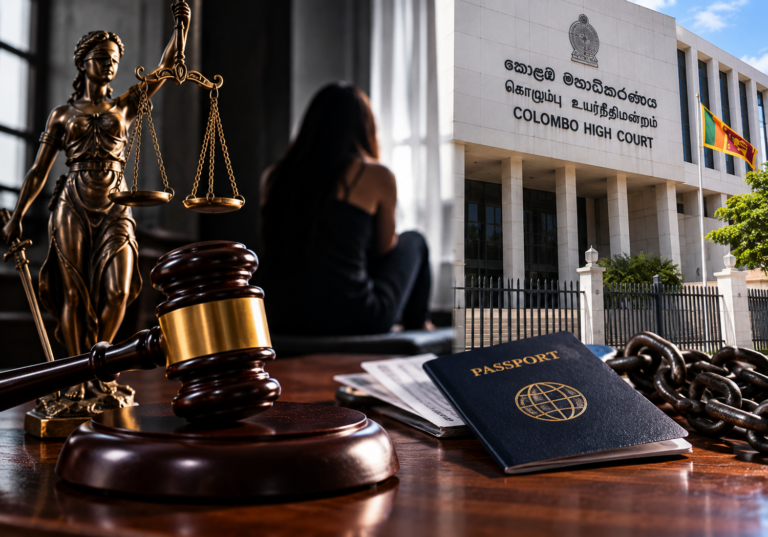
A separate national controversy has developed over plans to extend the terms of Supreme Court and Court of Appeal judges by two years.
The Bar Association of Sri Lanka has opposed the proposal.
The Commonwealth Lawyers Association, the Asian Lawyers Association and other national and international organisations have also raised objections.
Former Chief Justice Sarath N. Silva warned that the country could face serious consequences if the government implemented the decision arbitrarily.
The Judges’ Association has called a special general meeting for the 18th of this month to discuss the issue and determine its position.
However, social media reports claim an unidentified group is trying to disrupt the meeting.
Some allegations suggest that individuals within the association may be involved in those efforts.
Reports also indicate that organisers have struggled to secure a hall for the meeting.
From the Negombo Prison crisis to parliamentary disputes, religious concerns and pressure within the judiciary, these events reflect a wider national problem.
Sri Lanka’s institutions increasingly appear trapped between political rivalry, public suspicion and declining trust.
The country now needs verified facts, transparent investigations and responsible leadership. Without them, rumour and political theatre will continue to replace justice and accountability.