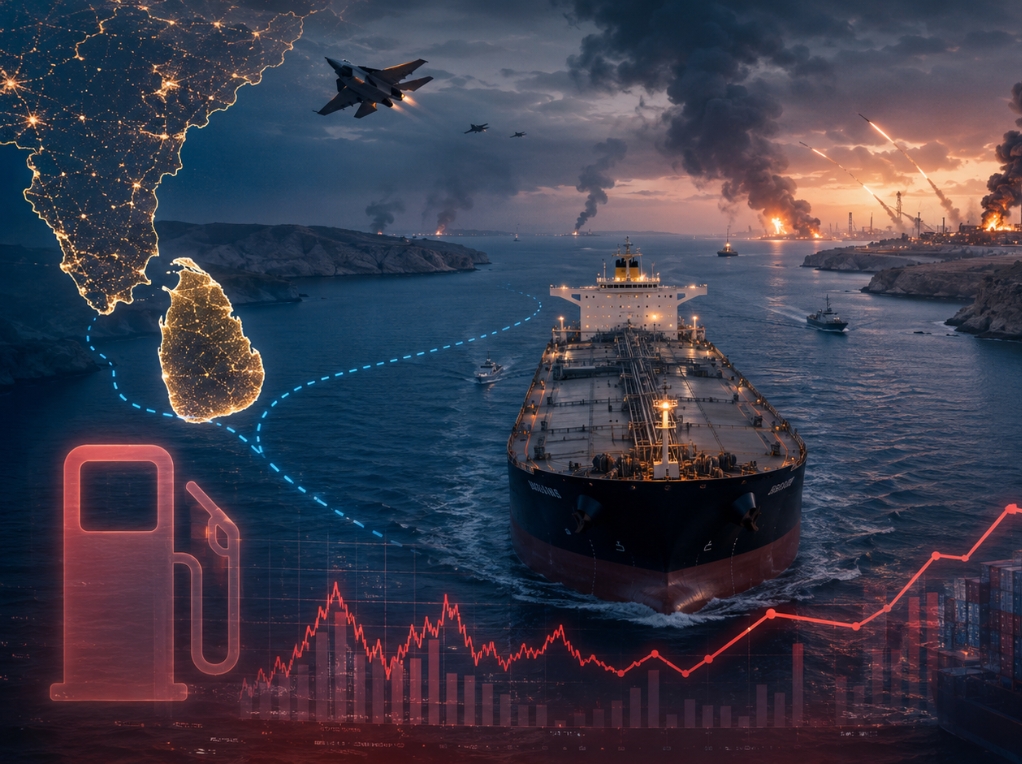
Fresh US strikes on Iran have intensified one of the world’s most dangerous conflicts. However, for Sri Lankans, the biggest threat may arrive through fuel prices, freight charges and renewed inflation.
The United States launched another round of attacks against Iranian military targets after accusing Iran’s Islamic Revolutionary Guard Corps, or IRGC, of striking a Cyprus-flagged container ship in the Strait of Hormuz.
The attack reportedly caused a major fire and serious engine-room damage. It also left one civilian crew member missing and prevented the vessel from continuing its journey.
President Donald Trump ordered the retaliatory operation, according to U.S. Central Command, known as CENTCOM.
CENTCOM said American forces struck approximately 140 Iranian military targets. The targets included missile and drone facilities, naval capabilities, ammunition storage sites, communication networks and coastal surveillance positions.
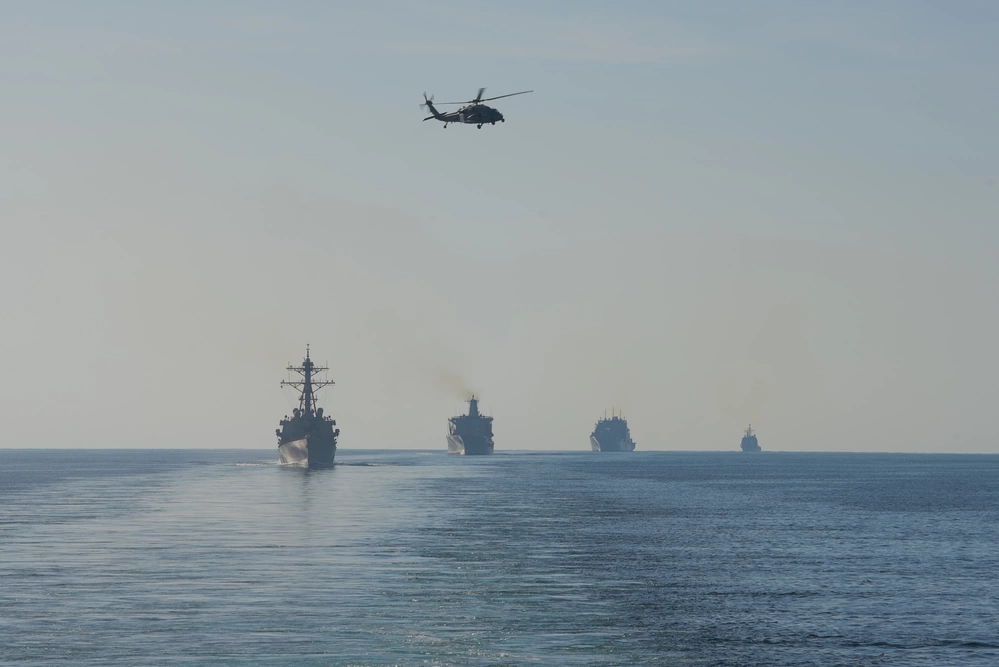
Credit: U.S. Navy photo by Seaman Apprentice Jarrod A. Schad
Why Sri Lanka Cannot Ignore the Conflict
Sri Lanka does not need to purchase Iranian oil directly to suffer the consequences of a Gulf crisis.
Oil trades on an international market. Therefore, when conflict pushes up crude prices, freight costs or shipping insurance, Sri Lanka eventually pays more for imported fuel regardless of its source.
That pressure can spread rapidly across the economy.
Higher fuel prices increase transport expenses for bus operators, logistics companies and freight services. Businesses may then pass those costs to customers.
Electricity production can also become more expensive when Sri Lanka needs fuel-based generation. Meanwhile, import bills rise and exporters face higher shipping charges.
Inflation, which Sri Lanka has struggled to control since the 2022 economic crisis, could once again come under pressure.
Tea, garments, rubber products and other exports may also become more expensive to transport. Shipping companies could impose war-risk premiums, delay journeys or reroute vessels if the security situation deteriorates further.
For an island economy that depends heavily on maritime trade, instability around the Strait of Hormuz is not merely a foreign affairs story. It is also a direct economic threat.
What Happens After the Latest Strikes?
The next several days could determine whether the latest US strikes on Iran remain part of a contained exchange or develop into a longer regional confrontation.
Iran has threatened further retaliation. Washington has also indicated that it may take additional military action if Iran continues attacking commercial shipping.
Meanwhile, diplomatic efforts remain uncertain and tensions across the Gulf remain dangerously high.
For Sri Lanka, the greatest immediate danger may not come from missiles or bombs. It may come through higher shipping costs, more expensive fuel and renewed pressure on household budgets.
Wars in the Persian Gulf rarely remain economically confined to the Middle East.
Their consequences eventually reach countries such as Sri Lanka through the cost of filling a fuel tank, paying an electricity bill, importing food and moving exports across the ocean.
Sri Lanka may be far from the targets struck inside Iran. However, it remains closely connected to the waters around them.
That is why the latest US strikes on Iran should matter to every Sri Lankan.