The Karapitiya journalist detention inquiry cleared police of intimidation, contradicting the reporter’s account and media freedom concerns.
The internal police inquiry into the alleged harassment and detention of a Ceylon Today journalist at the Karapitiya Police Post on March 9 2026 has concluded that no intimidation, discrimination or confrontation took place—a finding that contradicts the journalist’s account and the widespread condemnation issued by Sri Lanka’s media organisations following the incident.
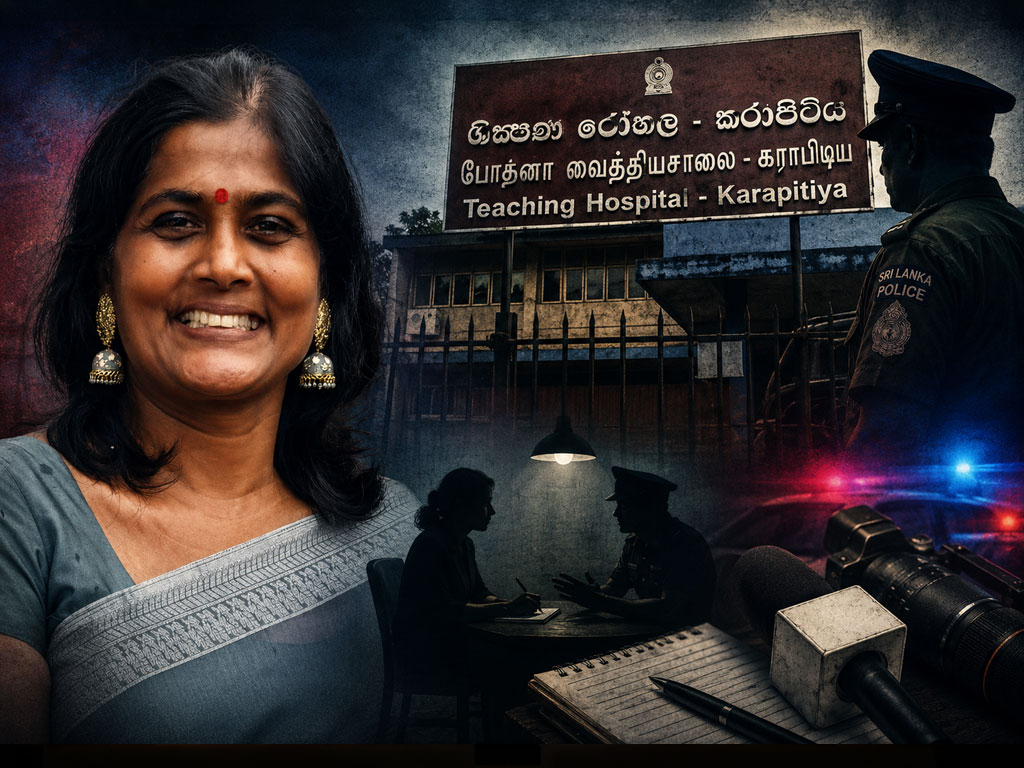
The incident involved Ceylon Today Deputy Editor Sulochana Ramiah Mohan, who says she was detained at the Karapitiya Police Post from approximately 4.00 p.m. until 9.00 p.m. after visiting Iranian sailors with a foreign journalist. According to her account, police officers accused her of trespassing, threatened to arrest her, verbally harassed her, disparaged the media profession, and compelled her to sign the police entry complaining alleging trespass at the Karapitiya Base Hospital.

Following the incident, media organisations across Sri Lanka condemned the treatment meted out to the journalist, describing it as an attack on press freedom and the right of journalists to carry out their professional duties.
A formal complaint against the officers attached to the Karapitiya Police Post was lodged at the Galle Police Headquarters the following day March 10 2026.
However, despite accepting the complaint, police did not issue an official acknowledgement or receipt.
Subsequently, complaints were also submitted to the Human Rights Commission of Sri Lanka (HRCSL). The HRCSL later informed the complainant that the matter had been referred to the National Police Commission and that it would not pursue a separate investigation.
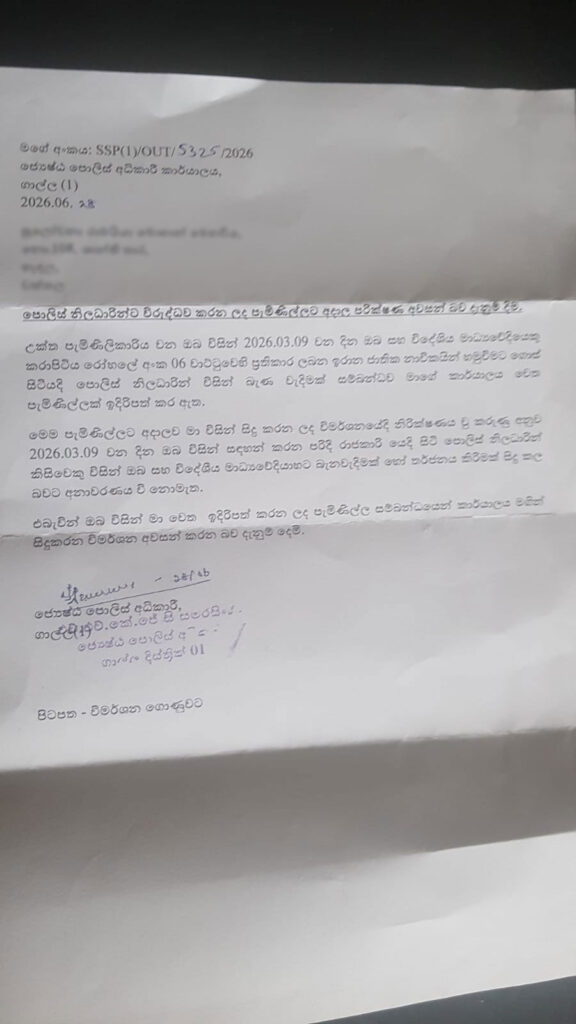
Several weeks later, a letter dated June 6, 2026, signed by Senior Superintendent of Police (SSP) H.K.J.C. Samaranasinghe of Galle, informed Ceylon Today Deputy Editor Sulochana Ramiah Mohan that the departmental inquiry had been concluded.
According to the letter, the inquiry found that the police officers on duty at the Karapitiya Police Post on March 9 had not confronted the journalist or the foreign journalist accompanying her, and that allegations of discrimination, intimidation or harassment “were found not to have happened.”
The letter further stated that the inquiry had been completed and that no further investigation would be conducted.
The findings, however, stand in stark contrast to the journalist’s account of the incident.
According to Sulochana, she was subjected to nearly five hours of detention without justification, during which police officers repeatedly questioned her, threatened her with arrest, and made derogatory remarks about journalists and the media. She alleges that officers blamed the media for the country’s current economic and political situation, stating that “the country is in this state because of the media.”
She further maintains that police attempted to build a case against her for allegedly trespassing into a restricted area to meet the Iranian sailors and compelled her to sign documents against her will. The claims in that entry lodged against her were all false, she told the local media.
The conclusion of the police inquiry effectively dismisses all allegations raised by the journalist, despite the public condemnation of the incident by media organisations and the complaints lodged before both the Human Rights Commission and the National Police Commission.
The outcome has raised fresh questions over the independence and credibility of internal police investigations into complaints involving alleged misconduct by law enforcement officers, particularly in cases concerning press freedom and the treatment of journalists.