Sri Lanka Hajj Bill plans aim to formalise pilgrimage services while the government explores concessionary loans for Muslim devotees.
The Sri Lanka Hajj Bill has reached the Legal Draftsman’s Department as the Government moves to formalise pilgrimage arrangements for Muslim devotees.
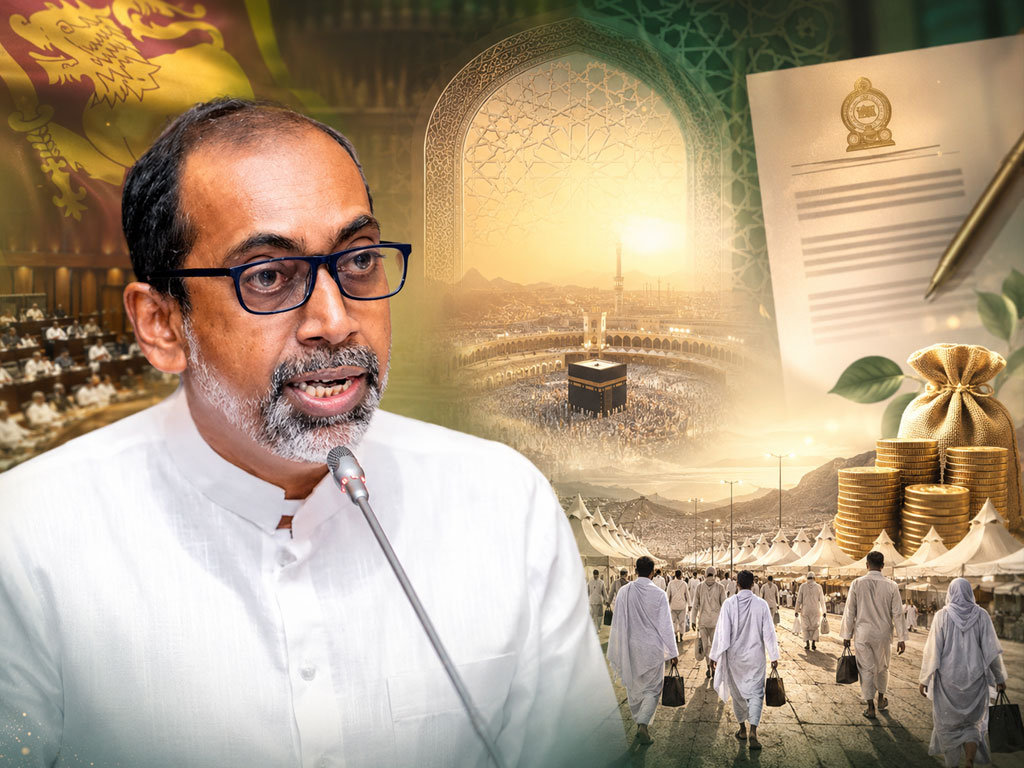
Buddhasasana, Religious and Cultural Affairs Minister Hiniduma Sunil Senevi announced the development in Parliament. He said the proposed legislation would make Hajj services more organised, transparent and convenient.
The Minister made the announcement while responding to a question raised by Parliamentarian Ruwan Mapalagama.
Sri Lanka currently manages the pilgrimage through guidelines introduced in 2013. The Government now wants to transform that administrative framework into formal legislation.
“The Hajj Committee’s primary task was to transform these guidelines into a formal law,” the Minister said.
“We have now completed drafting the bill and sent it to the Legal Draftsman’s Department. Once passed, devotees will receive a more structured service.”
Sri Lanka had already informed Saudi Arabian authorities in November 2025 that it was taking measures to regularise domestic Hajj operations, including work on a draft Hajj Act.

Sri Lanka Hajj Bill Accompanied by Improved Facilities
The Minister also outlined improvements introduced for Sri Lankan pilgrims.
Authorities have upgraded accommodation and related services at Mina, Arafat and Muzdalifah from Category C to Category B.
The Government has also improved transport arrangements. Under the revised system, each bus will carry 50 pilgrims.
Sri Lanka’s Ministry of Religious and Cultural Affairs continues to coordinate with the Saudi Government, local travel agents and service providers.
The Minister said this cooperation aims to secure better facilities and a more efficient pilgrimage experience.
Sri Lanka received an official Hajj quota of 3,500 pilgrims for 2026 under an agreement signed with Saudi Arabia.
Concessionary Loans Considered for Pilgrims
Sunil Senevi acknowledged that the Hajj pilgrimage places a heavy financial burden on many families.
He said the cost currently ranges from Rs. 2 million to Rs. 2.5 million for each devotee.
According to the Minister, the Government succeeded in reducing the cost to some extent last year. It is now examining concessionary loan facilities to help pilgrims meet their expenses.
However, the Government has not yet announced how the proposed loans would operate.
The Minister did not identify participating banks, interest rates, repayment periods or eligibility requirements. Therefore, devotees must await a formal scheme before making financial arrangements.
The Government’s plans combine legal reform, better accommodation, improved transportation and possible financial support.
Once enacted, the Sri Lanka Hajj Bill could replace the existing guidelines with a clearer legal framework and provide pilgrims with a more consistent service.