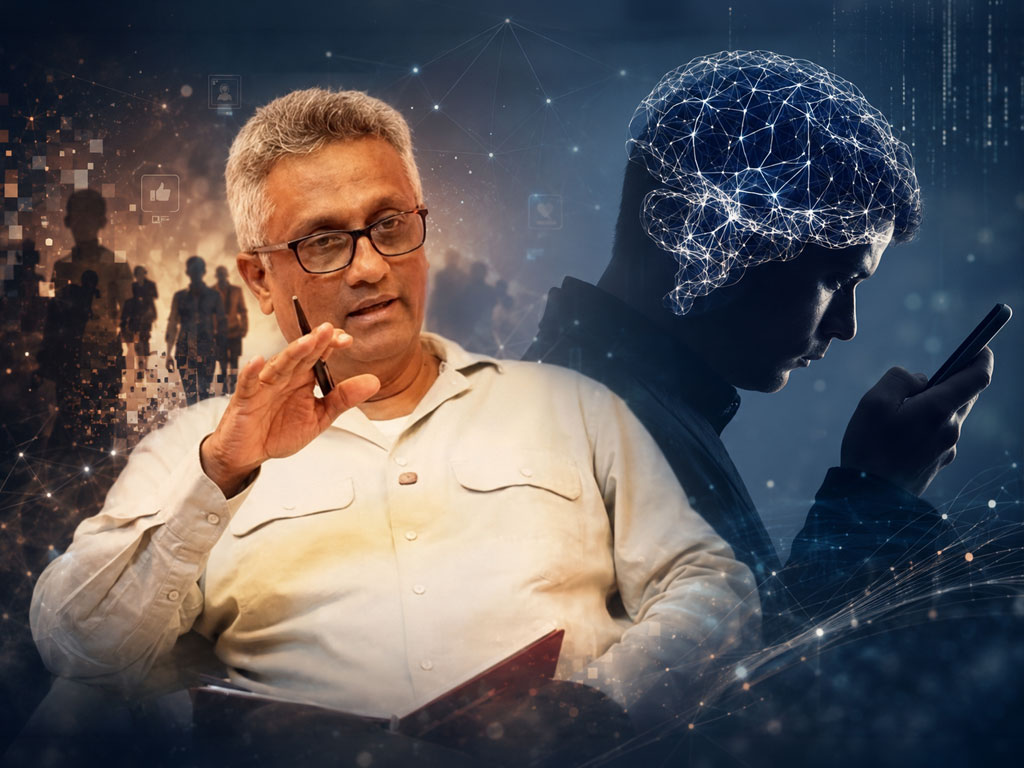
Digital attention crisis concerns grow as analysts examine screen switching, short videos, consumerism, relationships and the limits of AI.
The digital attention crisis is changing how people think, consume information and form relationships, according to two Sri Lankan social commentators.
Political and social analyst Deepthi Kumara Gunaratna and veteran journalist Narada Bakmeewewa discussed the issue on TV Supreme’s “IF – Smart Casual” programme.
The July 21 discussion focused on “Post-modern Prophecy and Today’s Social Tragedy.” It examined smartphones, social media, artificial intelligence, consumer culture and declining concentration.

Digital Attention Crisis and Screen Switching
The speakers highlighted research showing that people now spend far less time on one screen before moving to another.
Researcher Gloria Mark has said the average time spent on a single screen fell from about two and a half minutes in 2004 to around 47 seconds in later studies.
However, the statistic refers to screen-based task switching. It does not mean that every person can concentrate for only 47 seconds in all situations.
Gunaratna and Bakmeewewa argued that Shorts, Reels and algorithmically selected content encourage users to expect rapid stimulation.
They suggested that constant switching could weaken sustained concentration and make lengthy, logical examination more difficult.
The speakers also connected excessive screen use with disrupted sleep and weaker memory. However, these wider health effects depend on factors such as usage patterns, age and individual circumstances.
Research indicates that frequent digital interruptions can fragment attention. Experts also say people can rebuild focus through deliberate habits and fewer disruptions.
Consumerism and the “Symbolic Father”
The discussion also examined what the speakers called the collapse of the “Symbolic Father.”
They used the term to describe the weakening of traditional cultural limits, authority and internal discipline.
According to their analysis, this breakdown has contributed to a culture of unrestricted entertainment and consumption.
People may use credit cards and other borrowing to fund lifestyles they cannot sustainably afford. The speakers argued that this can create personal debt and broader social distress.
They also discussed the growing preference for virtual communication over direct human relationships.
This shift, they suggested, may contribute to a “post-couple society” in which conventional partnerships lose importance and digital connections increasingly replace physical relationships.
AI Cannot Fully Control the Human Unconscious
The programme then examined artificial intelligence and its influence over decision-making.
The speakers said AI can process data, identify patterns and shape choices based on rational or measurable information.
However, they argued that it cannot fully control the human unconscious, including deeply rooted beliefs, prejudices, fears and superstitions.
They cited continued belief in the “evil eye,” known locally as aswaha or wasdos, as an example.
People may use advanced vehicles and modern digital tools while still following traditional practices intended to protect themselves from supernatural harm.
The speakers presented this contradiction as evidence that human behaviour remains more complex than data-driven systems can fully explain.
Calls to Protect Children and Rebuild Focus
The programme proposed stronger limits on smartphone and social media access for children under 16.
Several governments are considering or enforcing age restrictions because of concerns about online safety and youth well-being. However, researchers continue to debate whether blanket bans work better than safer platform design, parental guidance and digital literacy.
The speakers also called for education and artistic activity that strengthen memory, imagination and sustained thought.
They argued that society must not simply reject technology. Instead, people should rebuild the mental habits needed to use it without surrendering control.
The digital attention crisis therefore extends beyond shorter concentration. It raises deeper questions about education, debt, relationships, culture and whether human judgment can remain independent in an algorithm-driven society.
SOURCE:- THE LEADER