Judges retirement age proposal draws UN scrutiny as Sri Lanka considers extending terms for Supreme Court and Court of Appeal judges.
Sri Lanka’s proposed judges retirement age amendment has drawn United Nations attention, with a UN Special Rapporteur formally writing to the government over judicial independence and public trust.
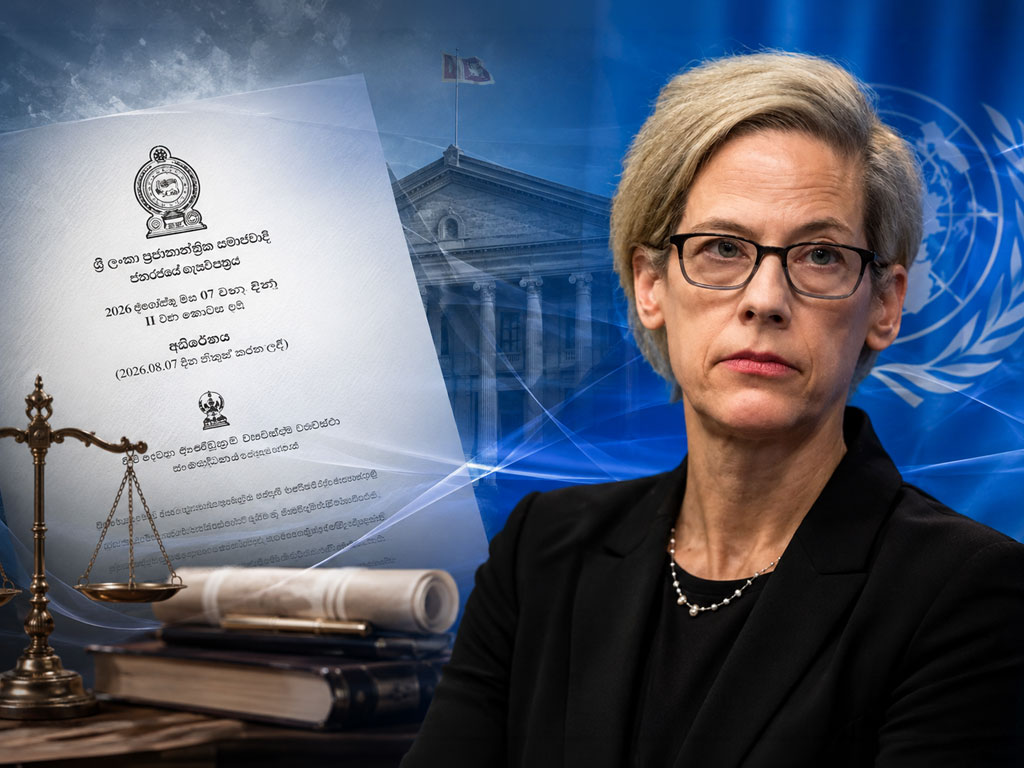
United Nations Special Rapporteur on the Independence of Judges and Lawyers Margaret Satterthwaite sent the official communication concerning the proposed extension.
The letter, bearing reference number OL LKA 4/2026, was issued from Geneva on August 7, 2026.
It stresses the importance of protecting judicial independence and maintaining public confidence when authorities consider changes affecting the tenure of senior judges.
The proposal would extend the retirement ages of Supreme Court and Court of Appeal judges by two years.
UN Scrutinises Judges Retirement Age Proposal
Under the current Constitution, Supreme Court judges retire at 65. Court of Appeal judges currently retire at 63.
The proposal presented by the Ministry of Justice as an administrative reform would raise those limits to 67 and 65 respectively.
The proposed framework would also apply the new judges retirement age limits to judges already serving on the bench. However, the official draft has not yet been made public.
The key details are:
- Current age limits: Supreme Court judges, 65; Court of Appeal judges, 63.
- Proposed age limits: Supreme Court judges, up to 67; Court of Appeal judges, up to 65.
- International legal basis: International Covenant on Civil and Political Rights and UN principles.
- Recommended approach: Transparent and participatory reform instead of an urgent constitutional amendment.
The communication refers to the International Covenant on Civil and Political Rights, or ICCPR. It also cites the UN Basic Principles on the Independence of the Judiciary.
According to these principles, security of tenure remains an important safeguard for judicial independence.
The letter also notes that other international legal bodies, including the Venice Commission, have stressed the importance of transitional arrangements.
Such arrangements become particularly important when retirement-age changes apply retroactively to judges who are already serving.
UN Calls for Broad Consultation on Judicial Reform
The Special Rapporteur also highlights the need for clear transitional mechanisms if future legal questions arise over the constitutionality of the proposed amendment.
Such issues could become particularly significant if judges must make judicial decisions concerning the amendment itself.
Therefore, Satterthwaite recommends a broader reform process rather than proceeding solely through a single constitutional amendment.
The communication calls for transparent and wide consultation involving stakeholders across the judicial sector. It specifically identifies Bar Associations and academics among those who should participate.
The approach is intended to ensure that changes to the judges retirement age do not undermine the independence of the judiciary or confidence in the justice system.
The UN Special Rapporteur has also requested detailed information from the Sri Lankan government.
This includes the current status of the proposed amendment, its principal objectives and details of discussions held with the judicial sector.
The government has also been asked to provide an assessment of how the proposal could affect public trust.
The communication places international attention on how Sri Lanka proceeds with the proposed two-year extension and whether authorities adopt safeguards and consultation before making changes affecting serving judges.