Responsible governance Sri Lanka needs means testing major decisions, consulting widely and avoiding risks that could burden future generations.
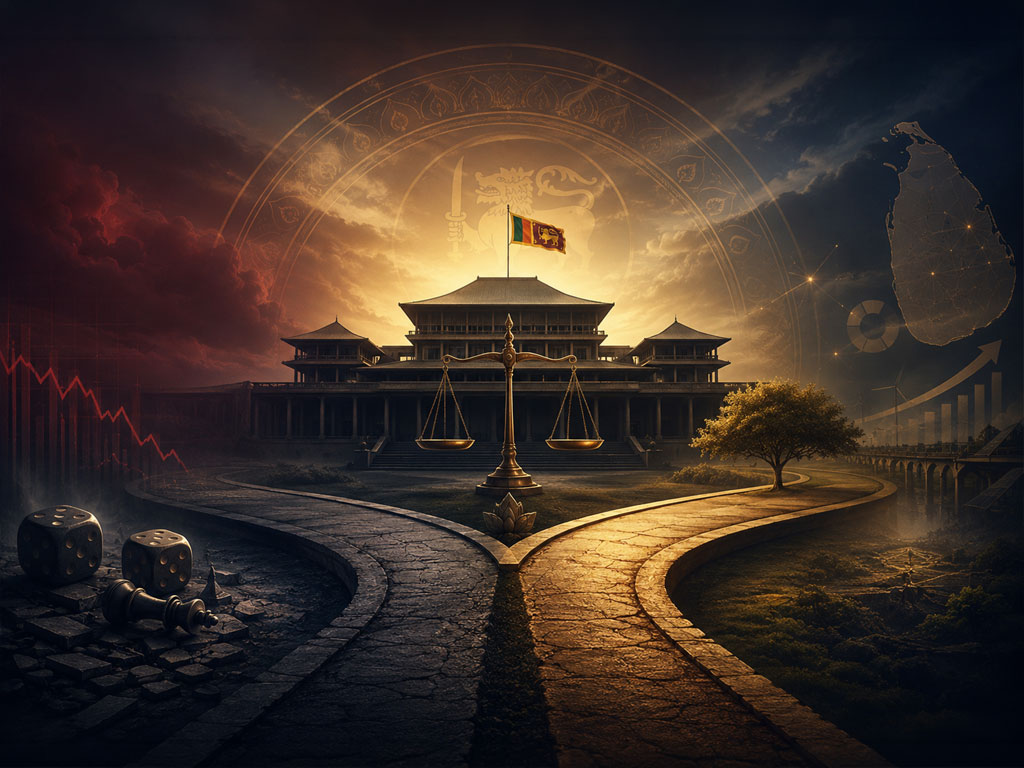
Responsible governance Sri Lanka needs begins with a simple principle: an elected government has the right to implement its programme, but not to gamble recklessly with the country’s future.
An electoral mandate gives a government authority to govern. It does not provide unlimited permission to take political, economic, security or international risks whose consequences may outlive that administration.
This distinction matters enormously for Sri Lanka.
Political power is temporary. National decisions, however, can shape the lives of citizens for decades.
A government therefore has a responsibility not merely to act, but to think beyond its own political lifespan.

Responsible Governance Sri Lanka Requires Humility
The greatest danger emerges when leaders become too confident in their own assumptions.
Once disagreement is treated as obstruction, warnings can easily be dismissed. Forecasts may go unchallenged, while ambitious promises can become policy before anyone properly assesses their long-term costs.
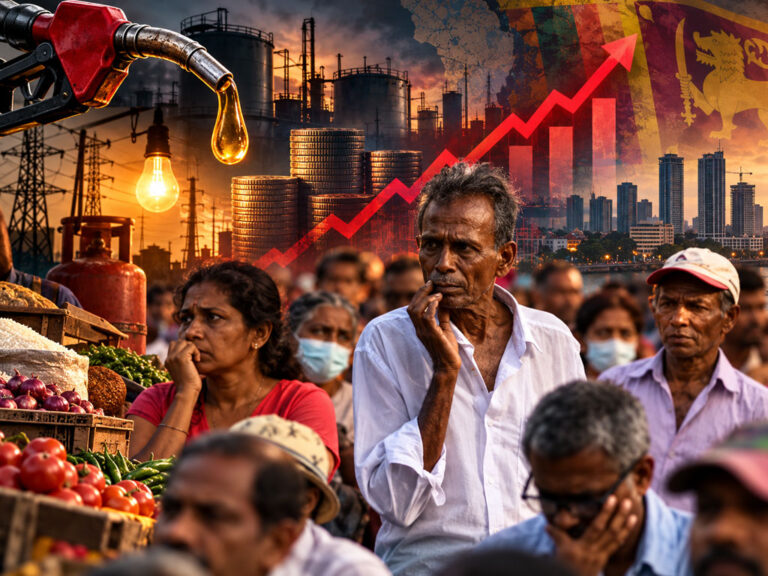
Sri Lanka’s 2021 fertiliser policy provides a powerful warning.
Reducing reliance on chemical fertilisers and promoting sustainable agriculture could be debated on its merits. The central problem was the speed and manner of implementation.
Hundreds of thousands of farmers depended on reliable access to agricultural inputs. Yet the country lacked enough time for a realistic transition, sufficient alternatives and proper assessment of the likely effect on production.
The consequences were severe.
Agricultural output came under pressure. Food availability deteriorated, while household incomes were squeezed during an already deepening economic crisis.
The Food and Agriculture Organization and the World Food Programme later reported widespread food insecurity. Food prices also climbed to extraordinary levels.
The lesson was straightforward: good intentions do not guarantee good outcomes when the design of a policy is fundamentally inadequate.
Global History Shows What Happens When Assumptions Fail
The same principle can be seen internationally.
Iraq demonstrated that removing an existing political order can be far easier than creating a stable replacement.
Years of violence, instability and human suffering followed decisions whose wider consequences had not been fully anticipated.
Afghanistan offered another warning.
After two decades of international involvement, the Afghan government collapsed rapidly in 2021. That exposed the risks of relying on assumptions about institutions, security forces and public stability that had not been adequately tested.
Economic history provides similar lessons.
Greece showed how accumulated fiscal weaknesses can develop into a national emergency.
Argentina repeatedly demonstrated the enormous cost of policy instability and declining public confidence.
Brexit, regardless of one’s personal position on the decision, also showed how a powerful political choice can produce economic, constitutional and diplomatic consequences far more complicated than the original campaign argument.
None of these examples means governments should avoid bold decisions.
Countries cannot develop without calculated risks.
The real question is whether those risks have been properly assessed.
Were alternatives examined? Did experts and affected communities have an opportunity to speak? Did Parliament scrutinise the proposal? Are safeguards available if the original assumptions prove wrong?
National Consensus Matters on Decisions That Outlast Governments
This is why national consensus matters on constitutional reform, national security, strategic assets, major infrastructure, international agreements, foreign borrowing and long-term economic commitments.
Such decisions should not become instruments of short-term electoral advantage.
Consensus does not require political parties to abandon their principles.
Instead, it requires recognition that some national interests are too important to be determined solely by the calculations of one administration.
Sri Lanka has particularly little room for another major policy failure.
After enduring a devastating economic crisis, the country cannot afford decisions driven more by political confidence than evidence.
The crucial question should always be this: who pays when the government gets it wrong?
Usually, the politicians who made the decision do not bear the full cost.
Ordinary citizens do.
They pay through higher prices, lost opportunities, unemployment, debt and declining living standards.
That is why responsible governance Sri Lanka requires cannot be separated from accountability.
Listening Is Not Weakness
Responsible leadership demands the courage to listen, challenge assumptions, consult widely and change direction when evidence requires it.
Admitting that a policy is failing is not weakness.
Continuing a dangerous policy simply to protect political pride is.
Sri Lanka needs a stronger culture of consultation involving Parliament, opposition parties, professionals, academics, businesses, farmers and civil society.
The opposition also has responsibilities.
It should provide credible alternatives rather than reject every government proposal automatically.
Likewise, governments must learn to distinguish constructive criticism from political obstruction.
Good governance requires both sides to understand that national interest sometimes demands more than political victory.
Ultimately, governments are elected to govern.
They are not elected to gamble with the permanent interests of the nation.
The strongest leadership is not measured by how quickly a government imposes its will.
It is measured by how carefully leaders test their assumptions before taking decisions that millions of people may have to live with.
That is the standard responsible governance Sri Lanka now needs.
Sri Lanka’s future must never become an experiment in political confidence.