Maithripala Sirisena award as President of the Happiest Era sparks criticism over the Easter attacks, 2018 political crisis and his legacy.
The Maithripala Sirisena award presented at a recent international ceremony in Colombo has reopened an uncomfortable debate over the former President’s record and the meaning of Sri Lanka’s so-called “Happiest Era.”
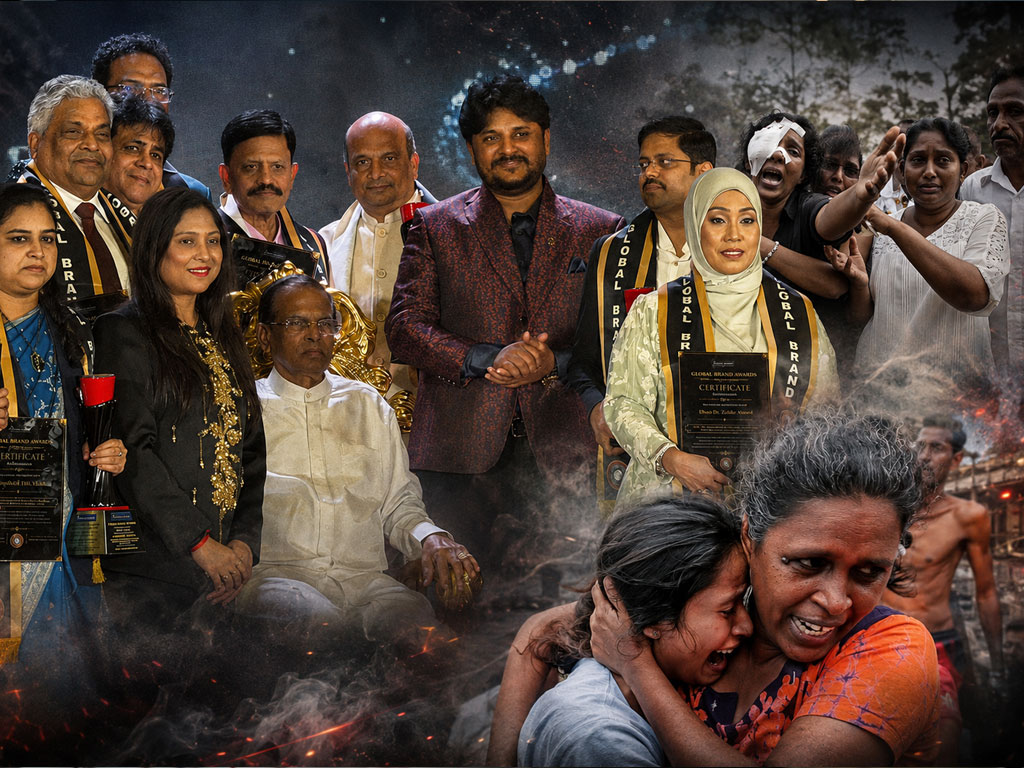
At the “Global Brand Awards 2026” and “SHE FOR THE NATION – Season 2” ceremony, Sirisena received a special honour as the “President of the Happiest Era.”
International guests, businessmen and professionals attended the event. Garuda Ram, associated with the KGF film, was among those present.
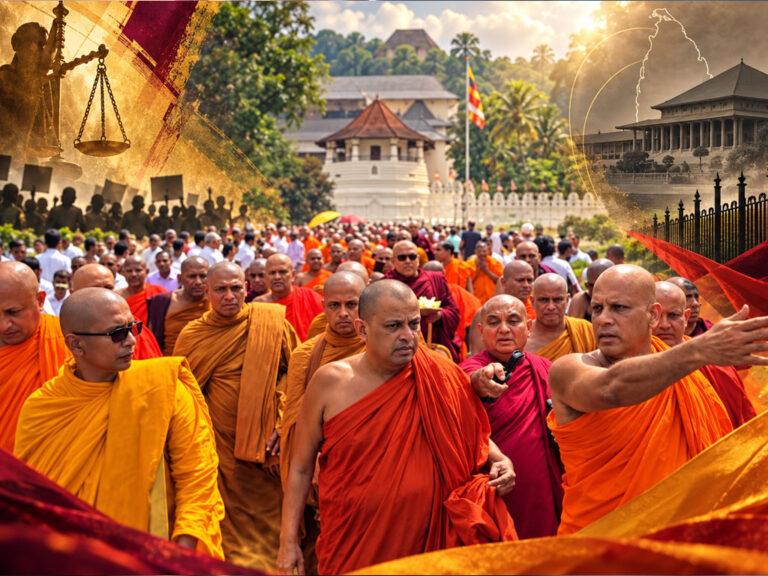
Yet for critics, the red-carpet recognition stood in stark contrast to some of the darkest events that occurred during Sirisena’s presidency.
History, they argue, cannot be rewritten by an award plaque.

Maithripala Sirisena Award Revives Easter Attack Anger
The central question is simple. Who experienced this claimed “Happiest Era”?
Was it a happy period for the families of the 269 people killed in churches and hotels on Easter Sunday in 2019?
Was it a happy era for those who lost children, parents, spouses and other loved ones in the coordinated terrorist attacks?
Sri Lankan authorities had received prior intelligence warnings before the bombings. Sirisena was President, Minister of Defence and Commander-in-Chief at the time.
The Supreme Court later held Sirisena and several former senior officials responsible for violating the fundamental rights of victims by failing to take appropriate action despite available intelligence.
The court also ordered Sirisena to personally pay compensation to victims.
Against that background, critics view an award describing him as the “President of the Happiest Era” as deeply insensitive to the memory of those killed and to families still living with the consequences of the attacks.
For them, no ceremonial recognition can erase the questions surrounding the failure of national security before Easter Sunday.
Geopolitical Claims and Nalinda Jayatissa’s Statements
The Easter attacks have also generated years of discussion about whether influences beyond local extremists played a role.
Current Minister Nalinda Jayatissa, who served on the Parliamentary Select Committee investigating the attacks, has publicly spoken about what he described as an Indian connection behind the incident.
Those claims remain part of a wider political debate surrounding the attacks and their background.
Critics of Sirisena argue that his administration weakened Sri Lanka’s national security and intelligence structures at a time of growing geopolitical competition in the Indian Ocean.
They contend that political divisions and short-sighted decisions left the country vulnerable while regional powers pursued their own strategic interests.
From that perspective, describing the period as a “happy era” ignores the profound breakdown in security that culminated in the Easter Sunday tragedy.
The 52-Day Crisis and a Mandate Under Strain
Sirisena came to power in 2015 after voters backed a platform built around good governance, democracy and the rule of law.
However, the political crisis that erupted in October 2018 fundamentally changed perceptions of his presidency.
Sirisena dismissed Prime Minister Ranil Wickremesinghe and appointed Mahinda Rajapaksa in his place, triggering the 52-day constitutional crisis.
The confrontation plunged Parliament into turmoil. Extraordinary scenes followed inside the chamber, including lawmakers throwing chilli powder during clashes.
Sri Lanka’s Supreme Court later ruled against Sirisena’s move to dissolve Parliament before constitutionally permitted timelines.
For critics, the crisis represented a betrayal of the reformist mandate that brought him to office.
They argue that a President elected to strengthen democratic institutions instead helped push the country into one of its most serious constitutional confrontations.
That episode remains another reason why the Maithripala Sirisena award has attracted such a hostile response from sections of the public.
Who Really Enjoyed the “Happiest Era”?
Critics also question whether ordinary Sri Lankans experienced the prosperity and political stability implied by the award.
During Sirisena’s presidency, relations between the President and Prime Minister deteriorated dramatically.
The administration became increasingly divided, while political instability grew.
For ordinary citizens dealing with rising living costs and economic uncertainty, critics argue that little about the period justified describing it as exceptionally happy.
Instead, they say political leaders remained consumed by internal battles, ministerial positions and struggles for power.
The public, meanwhile, watched the coalition that promised reform descend into open conflict.
That is why the controversy surrounding this award goes far beyond the ceremony itself.
Awards may recognise achievements, create headlines and provide moments of prestige. However, they cannot independently determine how a presidency will be remembered.
For critics of Maithripala Sirisena, his legacy remains inseparable from the 269 lives lost in the Easter Sunday attacks, the Supreme Court findings over failures to act on intelligence, and the constitutional turmoil of 2018.
No polished trophy can settle that historical debate.
Ultimately, the judgment on whether Sirisena presided over Sri Lanka’s “Happiest Era” will not belong to an awards ceremony. It will belong to the public, the victims of that period and the historical record they leave behind.