By Dwayne Ferreira.
IMF and World Bank leaders meet in Bangkok amid rising energy prices, debt pressures and economic risks affecting Sri Lanka.
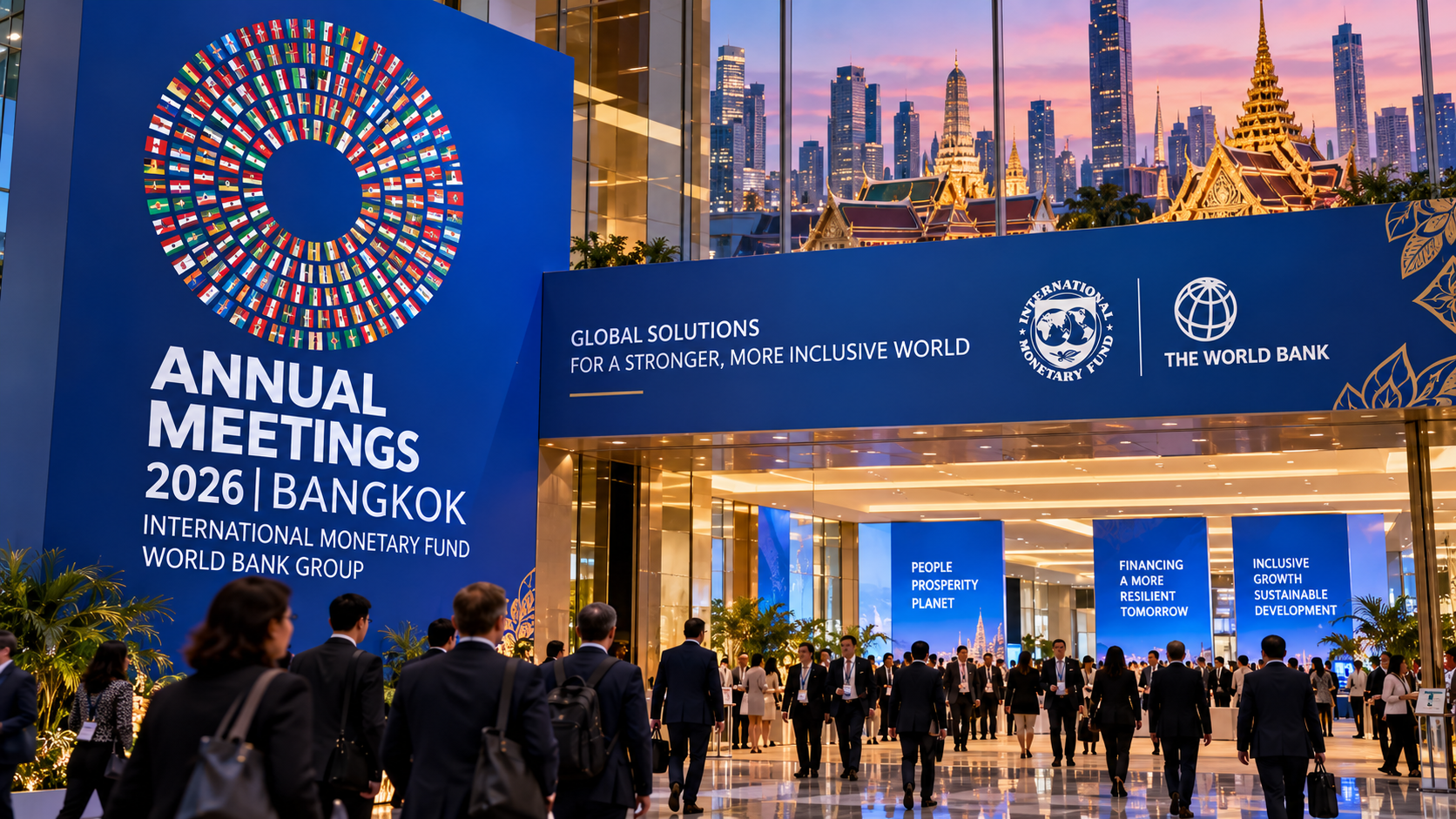
The world’s leading financial policymakers are gathering in Bangkok today for the 2026 Annual Meetings of the International Monetary Fund and World Bank Group. This comes a t a crucial time with global energy costs rising, geopolitical tensions, mounting debt pressure, alongside renewed uncertainty over global economic growth.
The meeting will take place over the course of 6 days, from from October 12 to 18 at the Queen Sirikit National Convention Center. The meeting will bring together leaders in finance, central bank governors, development specialists, business leaders and representatives of international organisations from all parts of the world.

The discussions come at a particularly difficult time for countries attempting to protect their economic growth while confronting uncertain commodity prices, expensive borrowing and a rising cost for public services.
For developing economies such as Sri Lanka, decisions and policy discussions emerging from Bangkok could have important implications for debt sustainability, financing conditions and future economic reforms.
Global Economic Outlook Faces Growing Pressure
Renewed instability in the Middle East has raised concerns about oil and gas supplies, while geopolitical disputes continue to threaten shipping routes and international trade.
Higher energy prices can affect almost every sector of the economy, from transport, to manufacturing, to agriculture, electricity generation and also food production.
Central banks must also consider the possibility that another inflationary shock could complicate efforts to ease interest rates.
For households, the consequences can include more expensive fuel, higher food bills and reduced purchasing power.
For governments, the impact may be felt through larger import bills, weaker economic growth and additional pressure on public finances.
Reuters reported ahead of the meetings that investors would closely examine the IMF’s forthcoming World Economic Outlook, particularly its assessment of the impact of energy costs and international instability.
World Bank Pushes Investment and Job Creation
Beyond immediate financial risks, the World Bank is placing emphasis on economic transformation, private investment and employment.
The official meeting programme includes a flagship session titled Small AI, Big Jobs, examining opportunities associated with technological development.
Other scheduled discussions focus on mobilising private capital, building infrastructure and improving development outcomes.
These issues are increasingly important for countries seeking growth beyond traditional industries.
For Sri Lanka, improved access to investment, workforce development and digital technologies could support efforts to expand higher-value employment and strengthen productivity.
However, rapid technological change also raises difficult questions about job displacement, skills shortages and the ability of education systems to prepare workers for emerging industries.
Debt Sustainability Returns to the Centre of Attention
One of the most important issues facing developing nations is the cost of servicing existing debt.
Countries that borrowed heavily during previous periods of low interest rates are now managing repayments under more difficult global financial conditions.
Higher borrowing costs can place pressure on government budgets, limiting the money available for healthcare, education, infrastructure and social protection.
The IMF and World Bank are expected to examine how countries can strengthen fiscal stability without undermining essential economic and development priorities.
Financial stability, sovereign risk and access to international capital are also scheduled to feature prominently during the week.
The IMF’s official programme includes discussions on sovereign risks, development financing, financial-sector resilience and the consequences of repeated economic shocks.
Energy Security and Food Prices Take Centre Stage
Energy security and food supply chains are expected to receive particular attention during the meetings.
The IMF has scheduled sessions examining how countries can respond to shocks involving essential commodities and global supply networks.
Disruptions to fuel supplies can raise the price of agricultural production, refrigerated transport and food distribution.
Higher fertiliser costs can also affect farmers and ultimately contribute to food inflation.
For developing nations dependent on imported fuel, fertiliser and food products, such pressures can quickly undermine economic recovery.
The challenge for international institutions is to identify policies that improve resilience without imposing excessive costs on households and businesses.
A Major Gathering Returns to Thailand After 35 Years
The 2026 meetings mark the first time Thailand has hosted the IMF–World Bank annual gathering since 1991.
The return to Bangkok highlights Asia’s expanding influence within the international economy and the importance of the region’s financial and trade relationships.
The programme includes major policy meetings, public seminars, financial-stability discussions and presentations examining artificial intelligence, employment and development.
The annual plenary session is scheduled for October 16, with other ministerial and committee meetings taking place throughout the week.
A Critical Week for Economic Confidence
The coming days will provide a clearer picture of how the IMF and World Bank assess global growth, inflation and financial vulnerability.
Investors will also be looking for indications of how policymakers intend to manage higher energy prices, debt pressures and slowing economic activity.
For developing countries, the larger question is whether international cooperation can help prevent external shocks from reversing hard-won economic progress.
For Sri Lanka, the summit offers an important reminder that domestic economic recovery remains closely connected to developments far beyond its borders.
The challenge is not simply to maintain financial stability today, but to build an economy capable of withstanding the next international crisis.