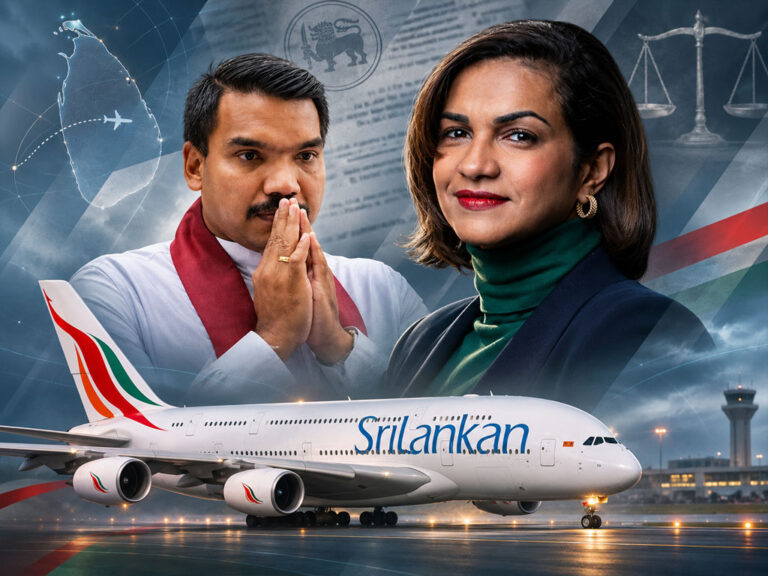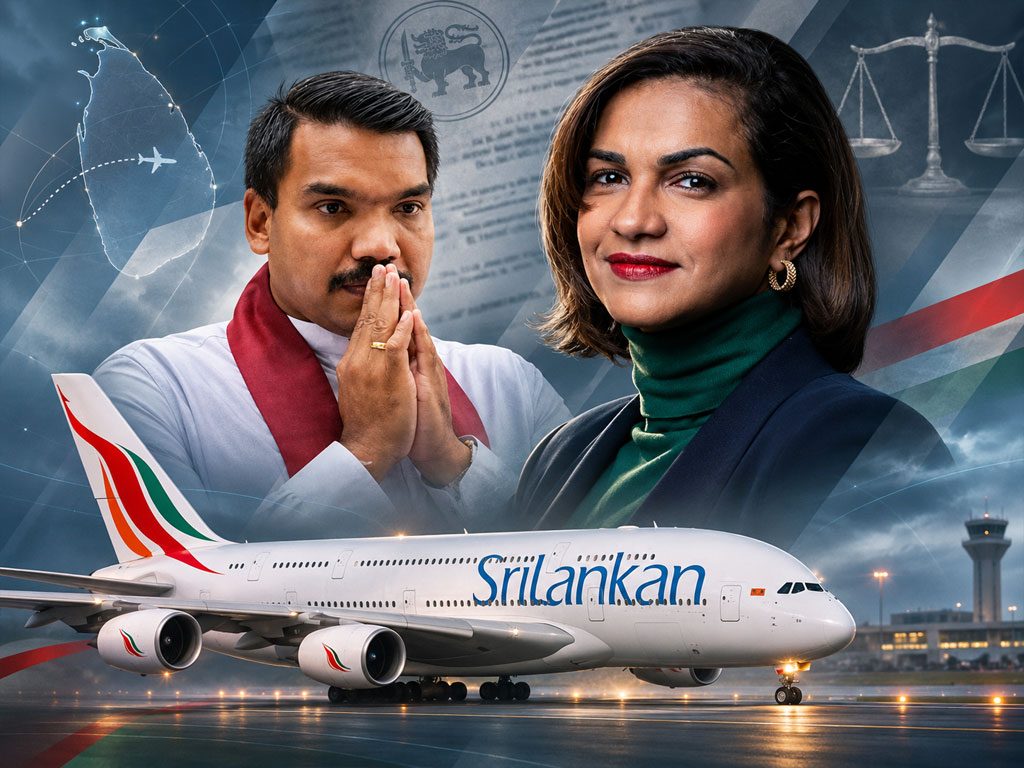
COLOMBO, November 27, 2026 —Yousr Khalil, who helped lead the forensic investigation behind Airbus’s €3.6 billion global corruption settlement, has reportedly been named among prosecution witnesses in the Sri Lankan proceedings involving alleged bribery and money laundering linked to the national carrier’s aircraft purchases.
Yousr Khalil, a French forensic accounting specialist who played a leading role in the multinational investigation into aircraft manufacturer Airbus, is expected to travel to Sri Lanka to give evidence in criminal proceedings against opposition Parliamentarian Namal Rajapaksa over alleged bribery connected to SriLankan Airlines’ aircraft procurement.
Khalil, a partner and head of the Paris office of international forensic investigation firm Forensic Risk Alliance (FRA), has reportedly been identified among the prosecution witnesses in the case before the Colombo Permanent High Court Trial-at-Bar.
Her anticipated involvement could provide important technical evidence concerning the financial arrangements, intermediary companies and international transactions examined during the Airbus investigation.
The proceedings arise from allegations surrounding SriLankan Airlines’ multibillion-dollar aircraft procurement agreements, which formed part of a wider international corruption investigation involving Airbus and authorities in the United Kingdom, France and the United States.
The investigation established that Airbus personnel offered payments of up to US$16.84 million to an intermediary company connected to the wife of a senior SriLankan Airlines executive to influence aircraft purchasing decisions.
Of that amount, US$2 million was actually paid, according to the findings recorded in the United Kingdom’s 2020 deferred prosecution agreement with Airbus.

Sri Lankan prosecutors have separately brought charges against Rajapaksa and other accused persons concerning alleged bribery and money laundering connected to the aircraft transaction.
The Attorney General filed an indictment containing 24 charges before the Colombo Permanent High Court Trial-at-Bar in October 2026, with 59 witnesses listed by the prosecution.
Although Khalil’s expected appearance has been reported, no confirmed date for her testimony has been publicly established.
The precise evidence she may present, and whether it directly implicates any individual accused, remain matters for the court to determine.
French Expert Played Leading Role in Airbus Investigation
Khalil is an internationally recognised forensic accounting specialist whose work covers corporate fraud, financial investigations, anti-corruption compliance and complex cross-border transactions.
She serves as a partner at Forensic Risk Alliance and leads the firm’s Paris office.
Her professional experience includes investigations spanning Europe, the United States, the Middle East, North Africa and Asia.
FRA confirms that Khalil played a leading role in the multinational investigation involving Airbus, working with legal advisers and forensic specialists to examine the company’s international business practices.
The investigation required extensive analysis of financial records, electronic communications, corporate structures and transactions involving intermediaries operating across several jurisdictions.
According to FRA, Khalil managed an integrated team of approximately 70 professionals working across Europe and the United States.
Their work supported the investigations and regulatory proceedings that culminated in Airbus’s €3.6 billion global settlement in January 2020.
The settlement involved separate resolutions with authorities in the United Kingdom, France and the United States.
Khalil’s professional background makes her a potentially important witness where prosecutors seek to explain how financial records were collected, analysed and linked to specific transactions.
However, her role in the international investigation does not establish that she personally investigated every transaction subsequently examined by Sri Lankan authorities.
The scope of her evidence will depend on the prosecution’s witness arrangements and the documents admitted by the court.
US$2.3 Billion Aircraft Procurement at the Centre of Inquiry
The Sri Lankan proceedings arise from aircraft procurement agreements negotiated during the period when Kapila Chandrasena served as Chief Executive Officer of SriLankan Airlines.
The transaction has been described in public reporting as a procurement programme valued at approximately US$2.3 billion.
It involved the purchase of 10 Airbus aircraft and the proposed lease of another four.
The purchase arrangements covered six A330 aircraft and four A350 aircraft, while the additional leasing proposals concerned four A350 aircraft.
These transactions formed part of the national carrier’s fleet development strategy.
Airbus’s international commercial arrangements subsequently came under investigation after authorities examined the use of business partners and intermediaries to influence aircraft sales.
The United Kingdom’s Serious Fraud Office investigated conduct involving several countries, including Sri Lanka.
The relevant findings identified arrangements through which Airbus employees offered financial benefits to an intermediary associated with a senior executive of the national carrier.
The existence of those arrangements became central to subsequent investigations into whether Sri Lanka’s aircraft procurement decisions had been improperly influenced.
The original aircraft transaction value should be distinguished from the alleged commission arrangements.
A US$2.3 billion procurement agreement does not mean that the same amount was paid to the manufacturer, nor does it represent the value of the suspected bribes.
Similarly, the agreed commission ceiling and the amount actually transferred are separate financial figures.
These distinctions are important when examining the potential financial consequences of the transaction.
US$16.84 Million Offered, but US$2 Million Paid
The international investigation uncovered a payment arrangement involving a company registered in Brunei and connected to the wife of a senior SriLankan Airlines executive.
According to the statement of facts accompanying the United Kingdom’s deferred prosecution agreement, Airbus employees offered up to US$16.84 million to the intermediary company to influence the purchase and leasing of aircraft.
The documented arrangement involved proposed payments linked to aircraft transactions.
Investigators established that US$2 million was transferred to the intermediary company.
The remaining amount was not paid under the arrangement described in the UK proceedings.
This distinction is central to accurately reporting the financial allegations.
The US$16.84 million figure represents the maximum amount offered or promised under the relevant arrangement, rather than the total amount demonstrated to have been transferred.
The findings also exposed the use of intermediary structures and misleading information concerning the identity of the person behind the company.
Such arrangements can complicate efforts to identify the true beneficiaries of transactions, particularly when funds move through multiple corporate entities and international banking systems.
The Sri Lankan proceedings must establish whether any of the accused knowingly received, obtained, controlled or benefited from unlawful payments, according to the specific offences alleged.
The international findings establish the background to the case but do not, by themselves, determine Rajapaksa’s criminal responsibility.
Airbus’s €3.6 Billion Global Corruption Settlement
The international investigation into Airbus lasted approximately four years and involved cooperation among several national enforcement authorities.
On January 31, 2020, Airbus reached a global settlement valued at approximately €3.6 billion following investigations into its use of intermediaries and suspected improper payments in international business transactions.
The United Kingdom’s Serious Fraud Office entered into a deferred prosecution agreement with Airbus involving penalties and costs of approximately €991 million.
Separate agreements were reached with French and United States authorities.
The investigations examined commercial practices across several international markets, including transactions involving aircraft sales and associated business partners.
In the United Kingdom proceedings, the SriLankan Airlines transaction formed part of the evidence supporting allegations that Airbus had failed to prevent bribery by persons associated with the company.
The settlement represented a significant corporate enforcement outcome.
However, a deferred prosecution agreement is not a criminal conviction of every individual connected with the transactions examined.
Nor does the global settlement automatically establish the guilt of individuals subsequently prosecuted in Sri Lanka.
Those prosecutions require separate evidence capable of satisfying the applicable criminal law.
Namal Rajapaksa Faces 24 Charges Before Trial-at-Bar
The Attorney General’s Department informed the Colombo Chief Magistrate’s Court on October 27, 2026, that an indictment containing 24 charges had been filed against Rajapaksa and three other accused before the Colombo Permanent High Court Trial-at-Bar.
The prosecution identified 59 witnesses in connection with the proceedings.
The allegations concern bribery and money laundering associated with SriLankan Airlines’ Airbus procurement arrangements.
Public reporting has separately identified an alleged Rs. 100 million payment forming part of the accusations involving Rajapaksa.
The prosecution’s position is that financial transactions and other evidence link the accused to unlawful benefits arising from the aircraft deal.
Rajapaksa was arrested on September 4, 2026, following questioning by the Commission to Investigate Allegations of Bribery or Corruption.
Investigators have also examined possible money-laundering offences arising from the same underlying aircraft transaction.
The charges against Rajapaksa must be distinguished from the findings made against Airbus in the international corporate proceedings.
The overseas investigation established the existence of improper payment arrangements involving intermediaries.
Sri Lankan prosecutors must separately prove the individual conduct alleged against Rajapaksa and the other accused.
No conviction has been established against him in these proceedings.
The allegations remain subject to judicial determination, and the accused are entitled to challenge the prosecution’s evidence.
Why Yousr Khalil’s Evidence Could Be Important
Khalil’s anticipated testimony is potentially significant because of her experience examining the international financial arrangements that formed part of the Airbus investigation.
Complex corruption cases often require investigators to reconstruct the movement of funds through bank accounts, intermediary companies and other financial structures.
Forensic accounting specialists may examine payment instructions, transaction records, internal correspondence and documents identifying the individuals who controlled particular accounts.
Such analysis can help establish whether payments were authorised, where money was transferred and whether the explanations given for transactions are consistent with the underlying documentation.
However, the specific material Khalil is expected to present in the Sri Lankan case has not been publicly established.
It is therefore premature to state that her evidence will confirm that payments reached Rajapaksa or any other named individual.
Her testimony could concern the methods used during the international investigation, the authenticity and interpretation of financial records, or particular transactions that prosecutors consider relevant.
The defence would be entitled to challenge the evidence through the applicable court procedures.
The evidentiary value of her testimony will ultimately depend on its relevance to the charges, the admissibility of supporting documents and the court’s assessment.
International Financial Records Could Be Central to Proceedings
The alleged bribery arrangements involved transactions and corporate entities outside Sri Lanka, making international cooperation an important element of the investigation.
Foreign bank records and documents obtained through legal assistance procedures may help establish the movement of funds between jurisdictions.
Prosecutors have previously referred to documentary and electronic evidence associated with Airbus, including correspondence they claim is relevant to the aircraft transaction.
The presence of international financial evidence can make a prosecution more complex.
Records must be properly authenticated, and their relevance to the individuals accused must be established.
Where specialist witnesses are called, courts may also need to distinguish between a forensic expert’s technical conclusions and the legal responsibility of the accused.
Financial records can demonstrate that a transfer occurred or that funds passed through a particular account.
They do not necessarily establish that a person knew the funds originated from an unlawful transaction.
That additional issue depends on the elements of the particular offence and the evidence concerning the accused person’s knowledge, conduct and intentions.
The prospective appearance of a specialist connected to the original Airbus investigation may assist the court in examining these distinctions.
Court Proceedings Continue
The Sri Lankan case remains before the Colombo Permanent High Court Trial-at-Bar.
Following the filing of the indictment in October, the proceedings continued through November, with Rajapaksa remaining in remand custody under orders relating to the Airbus case.
On November 19, the court reportedly ordered his continued remand until December 2.
The latest reports concerning Khalil’s anticipated appearance do not establish whether she will testify at that hearing or at a later stage.
Her inclusion among the reported prosecution witnesses represents a potential development in the presentation of international evidence.
The prosecution must establish that the documents and testimony relied upon prove the offences charged.
The defence is entitled to contest those allegations and challenge the reliability, interpretation and legal significance of the evidence.
The international Airbus investigation provides a substantial documentary background to the Sri Lankan proceedings.
Nevertheless, the outcome will depend on whether prosecutors can establish the specific allegations against the accused beyond reasonable doubt.
Khalil’s expected testimony could contribute to that assessment, but its significance will become clear only when the court hears the evidence and determines its relevance to the charges.