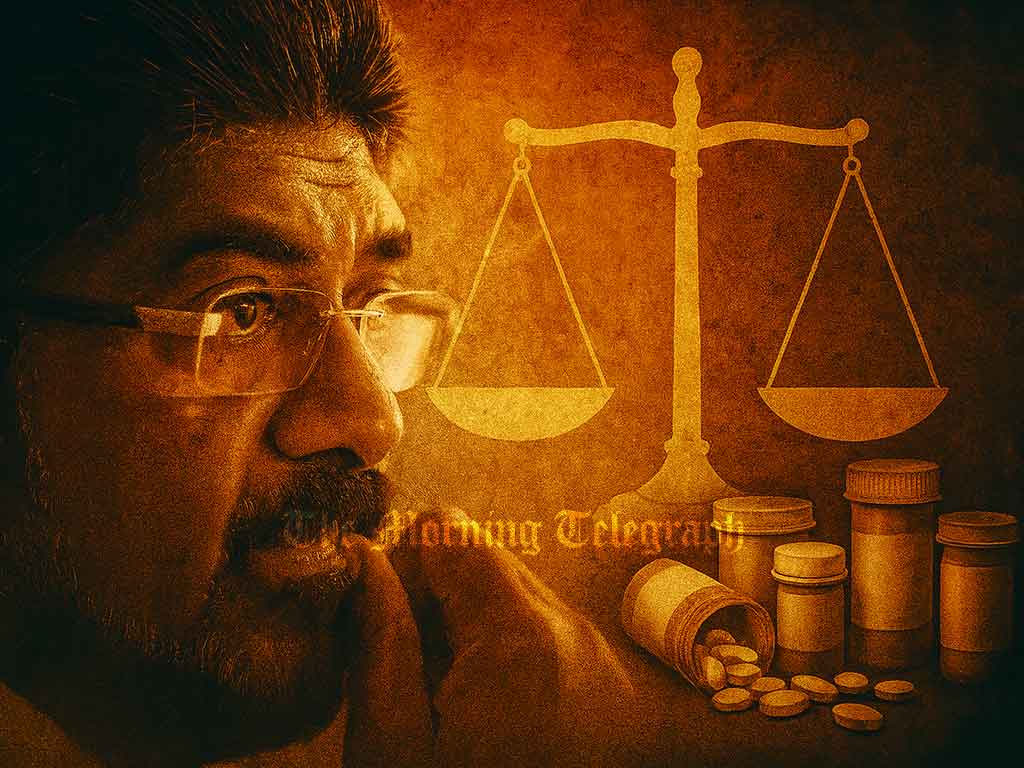
Authorities are probing whether recent payments made to pharmaceutical companies violated Supreme Court orders tied to a major fundamental rights case involving former Health Minister Keheliya Rambukwella. The Supreme Court had issued strict interim injunctions to halt such transactions pending investigations into nearly 150 drug imports. With potential contempt of court charges looming, attention turns to the State Pharmaceuticals Corporation and the integrity of Sri Lanka’s procurement system.
Investigations are currently underway to determine whether the payment of funds to several pharmaceutical companies, despite a standing Supreme Court injunction constitutes contempt of court.
The case stems from a fundamental rights petition filed against former President Gotabaya Rajapaksa and the cabinet, accusing them of endangering public health by allowing substandard medicine imports during the tenure of former Health Minister Keheliya Rambukwella.
The petition, SC/FR/99/24, is being heard before Supreme Court Justices S. Thuraraja, Yasantha Kodagoda, and Mahinda Samayawardhena. On November 4, the Court issued an interim injunction mandating that all procurement operations by the Ministry of Health and the National Medicines Regulatory Authority (NMRA) adhere strictly to Section 109 of the NMRA Act and comply with guidelines issued by the Public Procurement Commission.
The Court further ordered a freeze on payments for all medicines imported during Rambukwella’s tenure until full investigations are complete. The Criminal Investigation Department (CID) was tasked with investigating nearly 150 questionable drug imports and instructed to enforce criminal law if any irregularities or offenses are uncovered.
Despite these strict directives, recent reports suggest that the State Pharmaceuticals Corporation has proceeded to release payments to several of the implicated pharmaceutical firms. This potential breach has drawn concern over whether such actions amount to contempt of court.
The Supreme Court has now requested a full report on these transactions and is expected to evaluate whether the payments directly violated the terms of its injunction.
If confirmed, the development could lead to serious legal consequences for the parties involved and raise broader questions about accountability within Sri Lanka’s public health procurement system.