In a stunning escalation, President Donald Trump has slammed India with a 50% import tariff for purchasing oil from Russia, triggering a diplomatic rift. Delhi calls the move “grossly unfair” as fears grow that Indo-US trade could nosedive by up to 50%. The White House defends the action, citing national security threats and accusing India of undermining Ukraine war sanctions.
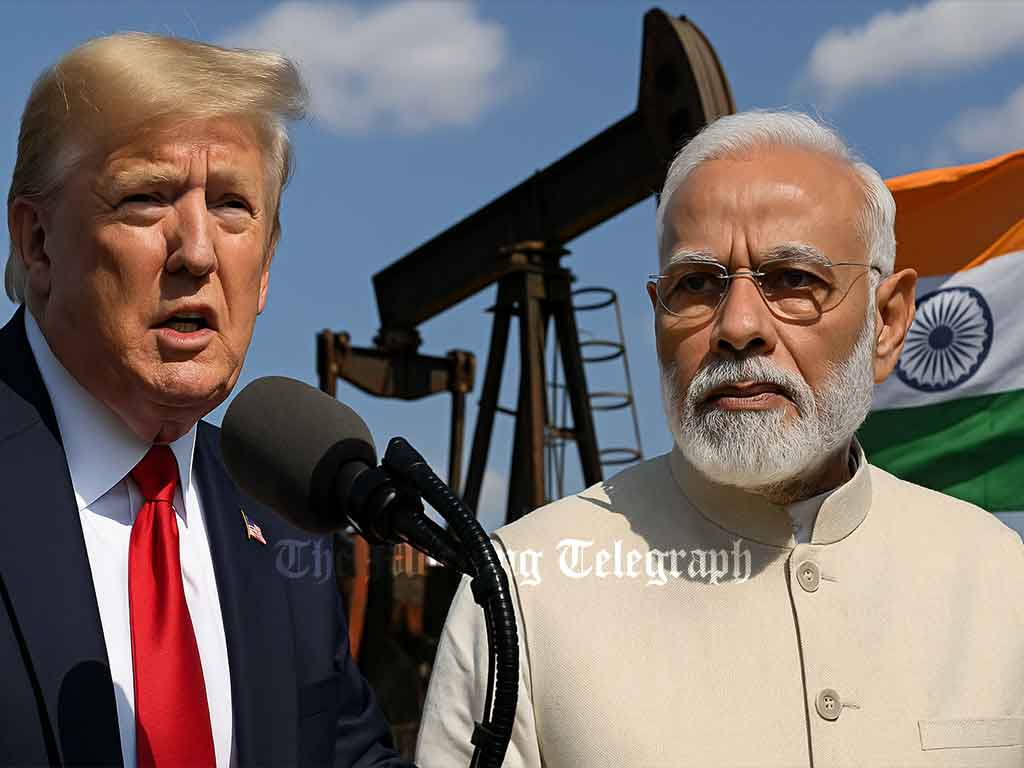
US President Donald Trump has issued an executive order to impose an additional 25% tariff on Indian imports in retaliation for India’s continued purchase of Russian oil.
With this new hike, the total tariff rate on Indian goods entering the United States now stands at 50%, one of the steepest duties imposed on any trading partner. The executive order states that the revised tariffs will come into effect on August 27, 21 days from its issuance.
India’s Ministry of External Affairs issued a sharp rebuttal on Wednesday, describing the decision as “unjust, unjust and unjust.” The ministry emphasized that India had already clarified its position regarding energy imports from Russia, citing national interest and global energy stability as key factors.
“It is therefore extremely unfortunate that the United States has chosen to impose additional tariffs on India for actions that several other countries are taking in their own national interests,” the statement said. “India will take all necessary measures to protect its national interests.”
President Trump, who has repeatedly criticized India’s stance on the Russia-Ukraine conflict, said earlier this week, “India does not care how many people die in Ukraine at the hands of the Russian war machine.”
The White House also released a statement on Wednesday echoing the same sentiment: “The actions of the Russian Federation in Ukraine pose an ongoing threat to the national security and foreign policy of the United States and require strong measures to address the national emergency.”
The administration argued that India’s import of Russian crude oil directly undermines Washington’s efforts to economically isolate Moscow and halt the war in Ukraine.
The US also hinted at further actions, stating it would continue monitoring which other countries were purchasing Russian oil and recommend future actions to the president as deemed necessary.
Russia’s biggest oil and gas clients remain China, India, and Turkey, countries that have been reluctant to cut off energy ties despite Western pressure.
The new tariff hike was reportedly advised by Steve Witkoff, President Trump’s chief envoy on peace negotiations between Russia and Ukraine, following recent talks in Moscow.
India previously called Trump’s tariff threats “unjustified.” Foreign Ministry spokesman Randir Jaiswal recalled that at the start of the Ukraine conflict, the United States had itself encouraged India to import Russian gas to stabilize global energy markets.
“India started importing from Russia after the conflict erupted because traditional supplies were diverted to Europe,” Jaiswal said, defending India’s stance.
These newly imposed duties reveal Trump’s readiness to penalize even key allies over violations of US-led sanctions. Secondary sanctions and tariffs have also been deployed in the past against countries buying Venezuelan oil.
Despite heavy sanctions, the US itself traded an estimated $3.5 billion in goods with Russia last year. This inconsistency hasn’t gone unnoticed in India.
Though Trump and Indian Prime Minister Narendra Modi once shared strong personal rapport, often referring to each other as “friends” and attending joint political events in both countries, this latest development underscores a stark shift in tone.
Analysts warn that the 50% tariff could severely impact Indian exports to the US, slashing volumes by as much as 40-50% and further straining bilateral trade ties.