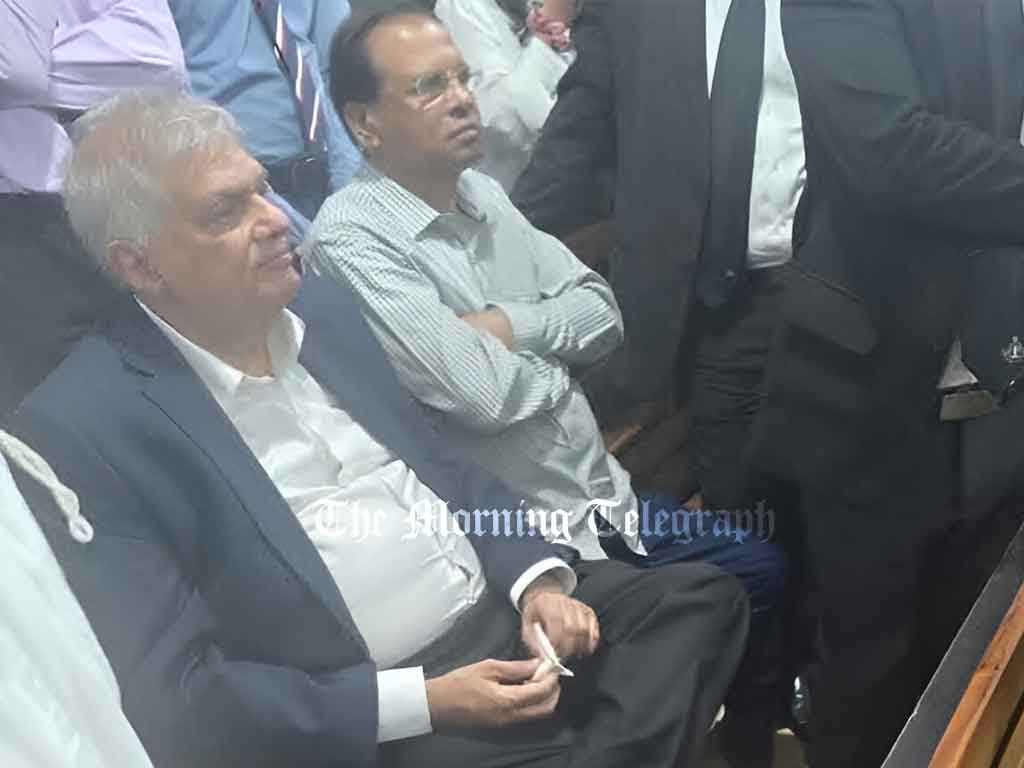
Ranil Wickremesinghe, as president, fulfilled in months what once seemed impossible—yet the shadow of broken promises and political missteps continues to haunt Sri Lanka.
A striking image lingers: Ranil Wickremesinghe and Maithripala Sirisena seated side by side at Colombo Fort Magistrate’s Court, waiting for the outcome of Wickremesinghe’s bail hearing. That picture is heavy with irony. These were the same men who once joined forces in 2014 to topple Mahinda Rajapaksa’s hold on power—only to later dismantle the very hopes they had inspired.
In November 2014, the unthinkable happened. Sirisena defected from Rajapaksa’s government to stand as the common opposition candidate, transforming what had looked like a near-impossible election into a winnable fight. Rajapaksa’s popularity was fading, but the opposition was fragmented and powerless until Sirisena crossed the line. Together, he and Wickremesinghe forged the broadest coalition Sri Lanka had ever seen.

It was a political storm few anticipated. Sirisena’s arrival at UNP headquarters, Sirikotha, drew jubilation. Wickremesinghe told supporters the Rajapaksas had already spent hundreds of millions printing attack posters against him, expecting him to run. Now, with Sirisena in the race, he laughed, those posters were worthless. The crowd roared with approval.
The government, rattled, lashed out. Ven. Galagoda-Atte Gnanasara was deployed to brand the opposition traitors. Even the state broadcaster changed its meditation program from Maithri Bhavana to Meth Veduma in ridicule. Prices were cut, resources mobilised, and diplomats dragged into Rajapaksa’s campaign. In search of divine legitimacy, Mahinda Rajapaksa flew with a 56-member entourage to India’s Tirumala Temple, turning vegetarian for the pilgrimage and ordering SriLankan Airlines to serve only vegetarian meals on board. Astrologers on state TV warned that Sirisena had angered the gods, causing torrential rains. Basil Rajapaksa, meanwhile, dismissed rising violence by claiming the opposition was beating itself up.
But the tide was shifting. Finance Ministry officials began objecting to state funds being misused for Rajapaksa’s campaign. Some warned Treasury Secretary PB Jayasundara they might have to disobey orders. In Dambulla, Rajapaksa walked off stage amid heckling. Police officers like PL Keerthisinghe resigned in protest against political interference.
The signs were clear for anyone willing to read them.
Irish poet Seamus Heaney once wrote of moments when “hope and history rhyme.” January 10, 2015, was one such moment. As results streamed in, civil society monitors described soldiers glued to their phones, police exhausted by repression, and counting agents holding their breath at every “hansaya” vote tallied. Smiles crept across faces. Hope had arrived. The crisis seemed past.
But that wave of justice receded quickly. By the end of 2015, many who had voted for Sirisena and Wickremesinghe were stranded, betrayed by broken promises.
From Hope to Dead Ends
The coalition’s first year inspired optimism. Fear evaporated, authoritarian habits retreated, and Sri Lanka rediscovered its noisy, critical voice. Sirisena and Wickremesinghe seemed to work in harmony, heading one of the most inclusive governments in memory. Oversized convoys vanished, ministers were cut down to size, and the 19th Amendment strengthened checks on power. The rule of law revived, judicial independence was restored, and ethno-religious hatred was confronted, if not eliminated. Corruption remained, notably through the Bond Scam, but the spirit of reform was alive.
By the end of year one, hope was cautious. By the end of year two, hope was gone.
The Right to Information Act passed, Arjun Mahendran was replaced at the Central Bank, and some institutional reforms took shape. But the bigger picture darkened. Economic pressures mounted. The government pursued a controversial 99-year lease of Hambantota Port to China. Sirisena and Wickremesinghe drifted apart, their alliance fraying. By late 2016, a Rajapaksa comeback was no longer unthinkable.
By 2017, it felt inevitable.
A devastating drought left nearly a million people needing food aid, 80,000 of them in dire need. Yet instead of relief, parliament approved Rs. 494 million for luxury vehicles and Rs. 134.4 million for MPs’ office allowances.
The UNDP had already warned that Sri Lanka’s heavy reliance on indirect taxes (80%) placed an unfair burden on the poor. Economists urged reform, but the government ignored them. What had begun as a movement of six million voters became another administration mired in negligence and self-interest.
By 2018, both the government and its promises had collapsed.
Crossing the Rubicon
Civil society compared Wickremesinghe’s eventual arrest to Julius Caesar crossing the Rubicon—a point of no return. But the government’s Rubicon had come earlier.
When anti-Muslim riots broke out in Digana in 2018, the administration stood by. This was a sharp contrast to 2017, when swift action stopped violence in Gintota. The failure in Digana emboldened extremists and helped pave the way to the Easter Sunday bombings a year later.
Sirisena crossed his Rubicon on October 26, 2018, by staging a coup: dissolving Wickremesinghe’s government and appointing Mahinda Rajapaksa as prime minister. Wickremesinghe resisted fiercely. He refused to vacate Temple Trees, mobilised party activists, and forged alliances. But after regaining control, he reverted to survival mode rather than fulfilling the 2015 mandate. Another chance was lost.
One year later, Gotabaya Rajapaksa was president.
From Gotabaya to Ranil
Gotabaya’s presidency proved disastrous. His reign bankrupted the nation. Without him, Sri Lanka might have avoided collapse—or Wickremesinghe might have risen sooner.
By 2022, Anura Kumara Dissanayake was on television promising his party could restore normalcy in six months—reopening schools, restocking hospitals, ending fuel shortages. Yet in 2023, Wickremesinghe, as president, achieved much of that in just five months.
He secured an IMF bailout, launched the Aswesuma poverty relief program, expanded land ownership for the poor, and restored independent commissions through the 21st Amendment. Campaign finance reform and new powers for the bribery commission followed. On restoring democracy and stabilising the economy, Wickremesinghe proved remarkably effective.
But he misjudged the moment. Instead of retiring in 2024 on a high note, he sought re-election. Burdened by unpopular tax hikes and soaring utility rates, his campaign was doomed.
He could have left as a reformist statesman. Instead, clinging to UNP leadership, he appeared out of touch—joking about watching Netflix while supporters whispered of his comeback. By 2024, his fate was sealed. His inability to grasp reality made him an easy target.
The Lesson of Betrayal
Ranil Wickremesinghe’s journey is not just a personal story—it is a warning. Like the Rajapaksas, he betrayed the very mandate that carried him to power. And like them, he paid the price.
For today’s NPP and JVP, now swept up in popular momentum, the lesson is stark. Promises ignored are promises betrayed. Mandates abandoned are mandates lost. And history shows that political betrayal is nothing short of suicide.
Breaking promises may bring short-term survival. But for a nation yearning for deliverance, betrayal ensures only one ending: peril, both for leaders and for the country they govern.
SOURCE :- SRI LANKA GUARDIAN