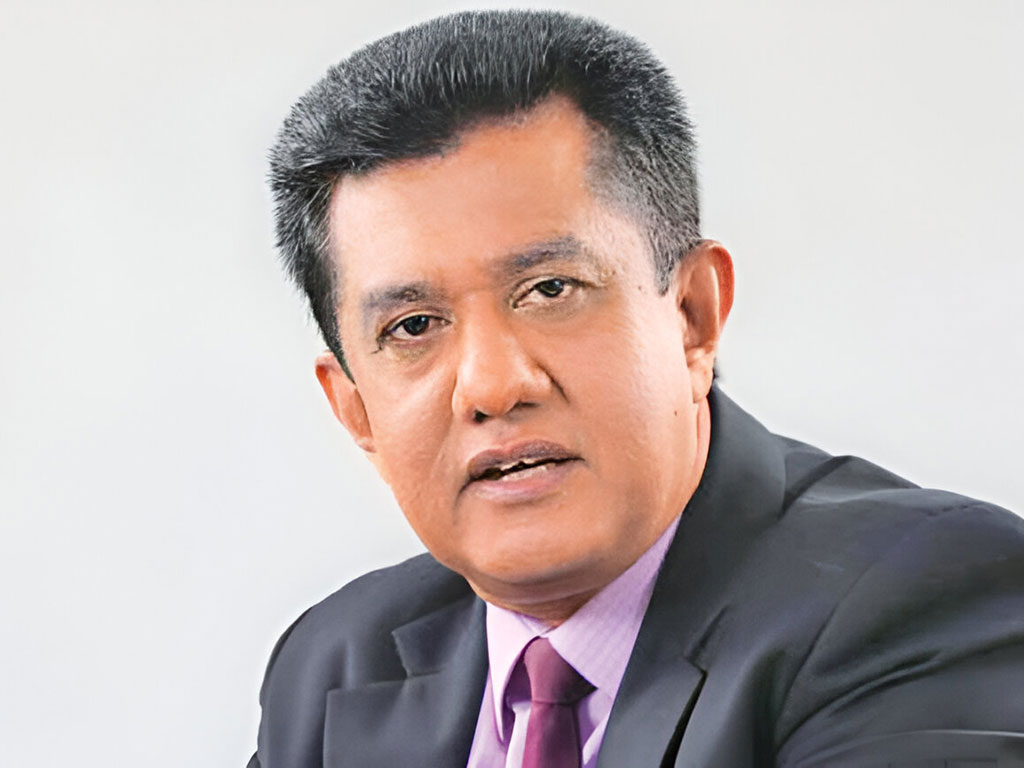
Former COPE Chairman Dr. Charitha Herath has lifted the lid on the hidden struggles of Parliament’s Committee on Public Enterprises (COPE), warning that political interference, overreach, and public humiliation of officials could undermine governance and push Sri Lanka into uncharted dangers.
Amidst heated debates surrounding the ongoing sessions of COPE, Dr. Herath, who once chaired the committee, revealed in an interview with Ceylon Today journalist Aswida Herath that the committee has drifted from its original mandate. He stressed that COPE, established in 1979, was designed to act as an oversight body of Parliament, not as a parallel court. Its core responsibility, he said, is to provide parliamentary oversight over government-controlled institutions, ensuring transparency and accountability without exercising executive or judicial powers.
According to Dr. Herath, COPE is strictly limited to the fourth function of Parliament — monitoring the executive branch. “The COPE Committee does not have the power to remove officials or imprison them. Its role is only to scrutinize from a parliamentary perspective. It cannot issue executive orders or judicial decisions,” he emphasized.

Yet, he expressed concern that today’s COPE has strayed dangerously close to functioning as a public court. He argued that turning oversight sessions into spectacles, with live broadcasts that shame officials, could erode confidence in the public service. If officials are ridiculed and intimidated, he warned, they may become too fearful to perform their duties effectively, restricting themselves to routine administrative work instead of driving national development. “This could create an ungovernable situation,” he cautioned.
Dr. Herath also disclosed the immense influence exerted by the executive branch on the work of COPE during his tenure. He recounted instances where presidents, ministers, and even Cabinet officials attempted to obstruct inquiries. “On certain occasions, leaders from the executive pressured me not to investigate specific matters through COPE. I did not yield to that pressure, and perhaps that is why I was removed when the new government came to power,” he revealed.
The former chairman firmly opposed proposals suggesting that COPE be given direct authority to refer cases to investigative bodies such as the Criminal Investigation Department (CID) or the Inspector General of Police (IGP). He argued that such powers would violate the separation of powers enshrined in the Constitution. “If a letter is sent under the seal of Parliament to the CID or IGP, it carries undue weight. That is not the purpose of COPE,” he explained. Instead, he insisted that the chairman can only instruct the Chief Accounting Officer of the relevant ministry to pass the matter on for proper investigation.
The broader fear, Dr. Herath underlined, is that the current trajectory of COPE risks distorting both governance and accountability. While the public may welcome strong parliamentary scrutiny, he argued that oversight must remain within constitutional limits. Turning COPE into a quasi-judicial body not only undermines separation of powers but also invites executive retaliation, reducing the effectiveness of parliamentary oversight altogether.
In his view, the key to effective oversight lies in balance: ensuring transparency without intimidation, accountability without overreach, and independence without falling prey to executive pressure. He warned that if COPE continues to operate beyond its intended scope, it may do more harm than good, weakening both the public service and parliamentary credibility.
By sharing these candid insights, Dr. Charitha Herath has reignited the debate on the true purpose of COPE and its role in a fragile democracy. His warnings carry weight in a political climate where institutional trust is eroding, and the separation of powers is increasingly contested. For Sri Lanka, the challenge remains clear: can COPE remain a watchdog without becoming a public executioner?