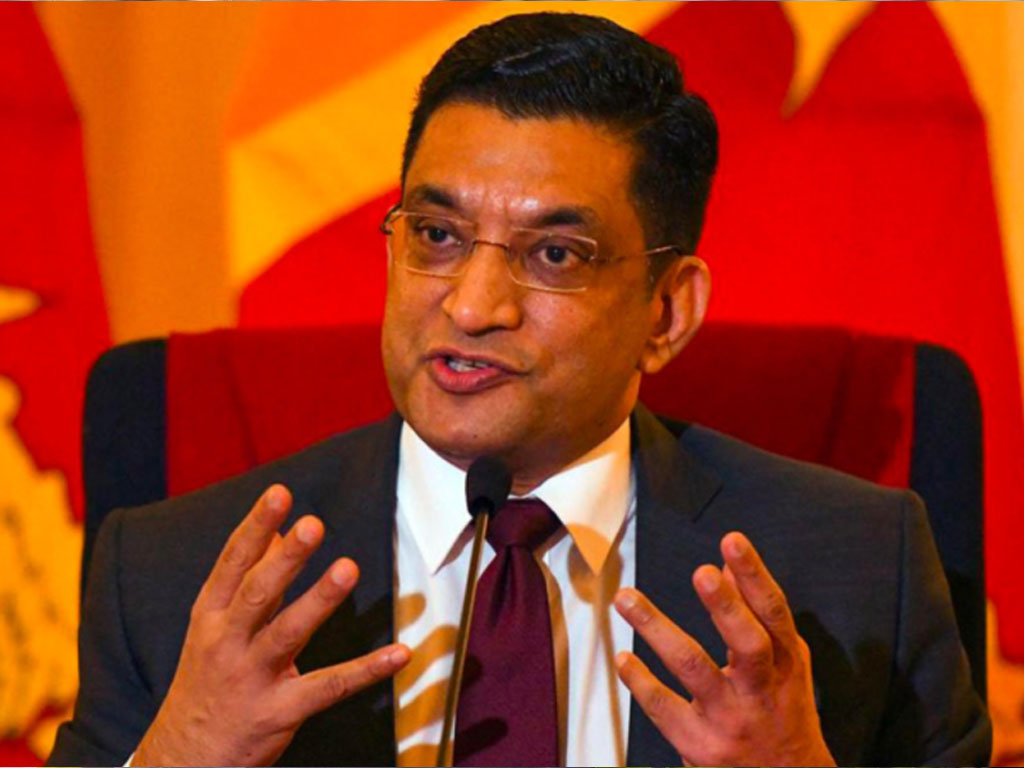
Former Foreign Minister Ali Sabry warns that Sri Lanka’s current stability did not appear overnight, insisting it is the direct result of two governments staying loyal to the IMF roadmap, even at the cost of public anger and political survival.
Former Foreign Affairs Minister Ali Sabry has credited Sri Lanka’s current macroeconomic stability to the continuity of the IMF programme and not to luck, political slogans or sudden policy genius. Issuing a detailed statement following the presentation of the 2026 Budget, Sabry said the country must acknowledge that the only reason Sri Lanka is no longer bankrupt is because two successive governments led first by President Ranil Wickremesinghe and now by President Anura Kumara Dissanayake, resisted the temptation to abandon IMF reforms for short-term popularity. He said economic recovery is never accidental but built through consistency, sacrifice and political courage.

Sabry recalled that when Sri Lanka entered the IMF programme in 2022, the country was at the edge of collapse, unable to pay for fuel, medicine or debt instalments. The IMF roadmap demanded structural changes that were not only technically difficult but politically dangerous. The targets were precise: reduce public debt from 119 percent of GDP to 95 percent by 2029, cut gross financing needs from 13.7 percent to 9 percent, limit foreign debt service to 4.5 percent of GDP, raise government revenue to 15 percent in the medium term with a long-term target of 18 to 20 percent, maintain a primary surplus of 2.3 percent and reform loss-making state-owned enterprises through cost-reflective pricing. Sabry said that by late 2023 and throughout 2024, Sri Lanka had achieved most of these goals not because of political harmony but because the leadership at the time chose discipline over applause.
He listed the unpopular but necessary policy decisions: the income tax bracket doubled from 18 percent to 36 percent, the PAYE tax was reintroduced, VAT rose from 8 percent to 15 percent and then to 18 percent, and the VAT threshold was reduced to expand the tax net. A Taxpayer Identification Number became mandatory for opening bank accounts, buying vehicles and registering property. Fuel, electricity, gas and water were priced at true cost, even when the public protested. These steps triggered the release of IMF funds and restored confidence in international markets, but they also triggered political backlash. According to Sabry, President Wickremesinghe “paid the price so the country wouldn’t have to pay a worse one,” and his decisions cost him the presidency.
Sabry said the 2026 Budget presented by President Anura Kumara Dissanayake is a continuation of the same difficult path, which proves that the IMF reforms were not a partisan experiment but a national necessity. He praised the President for maintaining PAYE, VAT at 18 percent, higher income tax slabs and cost-reflective pricing, even though his party once condemned these policies in public rallies. He said Rs. 100 per litre is still collected in taxes on fuel, a measure heavily criticised in the past but now defended as responsible governance.
Sabry argued that this shift from ideological opposition to fiscal realism deserves recognition because abandoning the IMF programme would have instantly collapsed investor confidence, stopped debt restructuring and forced a return to economic chaos. He called it a “rare political transformation” for a leader to oppose a policy in opposition but protect it in government because it is in the national interest. He said politics often rewards emotional promises, but nation-building rewards only discipline.
According to Sabry, the public must be honest about how the recovery was built. Rising tax revenues, renewed investor confidence, the reopening of vehicle imports and the stabilising of foreign reserves are not isolated victories of the current administration but the cumulative result of reforms implemented under two governments who understood that economic stability has no political colour. He added that Sri Lankans should celebrate stability, but they should not erase the record of who took the hardest decisions when the country was collapsing.
Sabry reminded that Sri Lanka is once again learning a timeless economic law: progress has no ideology and punishes leaders who seek applause instead of accountability. He said Sri Lanka’s recovery was achieved not by slogans but by endurance — and the numbers will continue to reflect that truth whether or not politics tries to rewrite history.
He concluded that for most citizens, it does not matter which party is in power as long as the nation is protected from another collapse. What matters is whether leaders choose pragmatism over populism and whether they are willing to take necessary decisions even when those decisions come with no guarantee of political reward.