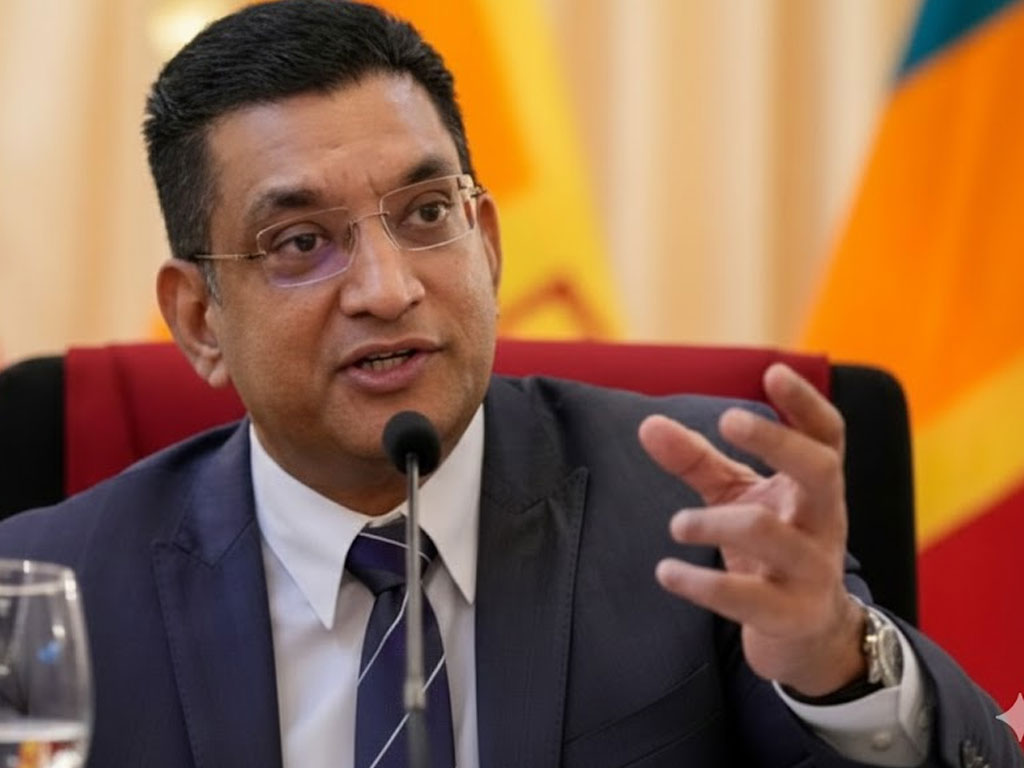
Former Minister Ali Sabry warns the government that separatist forces are regrouping globally and urges immediate action to protect Sri Lanka’s sovereignty, heal past wounds, and confront political denial before it is too late.
Recent events in the United Kingdom, where JVP General Secretary Tilvin Silva encountered coordinated demonstrations by pro LTTE separatist groups, have become a serious warning signal to the Government of Sri Lanka. These protests were not random incidents. They revealed that LTTE aligned separatist networks remain active, organised, and highly strategic even years after the war ended.

For decades, some political actors in Sri Lanka have believed that distancing themselves from previous administrations or blaming others for past decisions would soften the attitudes of separatist movements abroad. Ali Sabry argues that this assumption is misguided. Those who push separatism are driven by ideology, not by which government holds office in Colombo. They will protest any Sri Lankan leader who defends the country’s sovereignty and territorial integrity.
The government must understand this reality urgently. Sri Lanka can no longer afford a political culture where administrations internationalise domestic differences to score political points. This approach has weakened the country’s global position and has emboldened extremist groups outside Sri Lanka. According to Sabry, the responsibility of any State is simple. Protect the nation, uphold national security, and safeguard unity. At home, all citizens must be treated equally, including Sinhalese, Tamil, Muslim, and Burgher communities. Justice must be fair, consistent, and free from political convenience. Only through equal treatment can trust be established within Sri Lanka while resisting pressure from abroad.
Facing the Past with Courage
Sabry says Sri Lanka must confront its painful past openly and honestly. This is not a concession to foreign pressure but a responsibility to its own people. Victims of LTTE terror, families of missing persons, survivors from all communities, and soldiers who fought for the nation deserve the truth. A credible Truth and Reconciliation Commission is the only real path to achieve clarity, closure, and accountability. Without a domestic mechanism, Sri Lanka will continue to face external investigations, allegations, resolutions, and ongoing political pressure from the international community.
A transparent TRC would protect both the armed forces and the country from continuous scrutiny and prevent external forces from shaping the narrative. Sabry emphasises that credible truth seeking is not a weakness. It is the only way to free the country from repeated cycles of global accusations.
Responsibility of Tamil Political Leadership
Sabry stresses that reconciliation requires responsibility from all sides. Tamil political leaders cannot demand the release of convicted LTTE operatives, including those found guilty of attacks like the Central Bank bombing that killed innocent civilians, while at the same time calling for international tribunals against the armed forces that ended the LTTE’s violence. This double standard deepens polarisation and weakens trust between communities. If Sri Lanka is to move forward, Tamil parties must commit to a practical and balanced solution rather than one influenced by separatist pressure from abroad.
A Message to Southern Hardliners
Sabry also cautions Sinhala hardliners. Ignoring or denying the past is not patriotism. It is political short sightedness. Without an effective domestic truth mechanism, Sri Lanka will always be vulnerable to international accusations targeting military personnel, political leaders, and the entire State. Only by addressing grievances transparently can Sri Lanka protect those who fought for the nation from being unfairly demonised internationally.
Responsibility of the Current Government
Ali Sabry reminds President Anura Kumara Dissanayake and the ruling government that they are no longer critics. They are the custodians of the State. The public elected them not to comment but to solve problems and face challenges directly. Sabry warns that the government must lead with clarity and courage. The world is closely observing Sri Lanka, and separatist movements are already mobilised. The government must recognise that the responsibility now lies entirely with them. Delivering results is essential, and political excuses will no longer be sufficient.
Conclusion
According to Sabry, Sri Lanka’s future depends on two critical commitments. The first is a firm and unwavering defence of national sovereignty, especially against separatist extremism outside the country. The second is the establishment of a courageous domestic truth seeking process that helps resolve long standing grievances, reduces global pressure, and brings justice to all communities. This is the only path to a secure, united, and dignified Sri Lanka. Sabry concludes that history will repeat itself if Sri Lanka refuses to learn from past experiences. However, if the country acts decisively and with courage, this moment can become a turning point for a stronger and more unified future.