A political storm now rises over Cyclone Ditwah, as questions intensify about missed warnings, ignored forecasts and whether Sri Lanka’s Meteorological Department and government failed to act before a national tragedy unfolded.
Samagi Jana Balawegaya MP Mujibur Rahman has challenged the government over what he describes as a failure to protect the country before Cyclone Ditwah struck with devastating force. According to him, early indications from officials in the Meteorological Department suggested that a cyclone was possible, but the government is now denying such warnings. As Sri Lanka grapples with more than 470 people dead, hundreds missing and hundreds of thousands displaced, political debate has intensified over whether the disaster response agencies fulfilled their responsibilities. BBC Sinhala has attempted to examine the claims and counterclaims, bringing together statements from all sides and the sequence of events that unfolded as the cyclone developed.

Opposition politicians allege that the government failed to take adequate preventive measures despite predictions of a developing depression. They argue that earlier alerts from the Meteorological Department should have prompted stronger action, coordinated evacuation plans and clear public communication. However, government ministers firmly deny receiving any cyclone warning from the meteorological authorities during the period in question. This clash of narratives has led to a broader public conversation on accountability, institutional independence and disaster preparedness in a country increasingly exposed to climate driven extreme weather.
Deputy Minister Mahinda Jayasinghe, participating in a televised discussion, asserted that no such warning was officially communicated. He issued a public challenge, demanding proof of any cyclone alert issued between November 12 and 27. According to him, the Meteorological Department did not formally report any cyclone formation during that period, and therefore no action was withheld by the government. His comments have become a focal point in the unfolding political debate.
Meanwhile, in Parliament on December 03, National People’s Power MP Lakmali Hemachandra referenced a discussion aired on Derana television on November 12. She stated that MP Dilith Jayaweera had publicly echoed claims that an advance warning existed. Hemachandra argued that the media platform owned by Jayaweera contributed to the spreading of information that the Meteorological Department had predicted severe weather. According to her, this misinformation contributed to political confusion while the real disaster continued to escalate. MP Dilith Jayaweera objected strongly to this statement during the parliamentary session.
Hemachandra insisted that if such clear warnings were broadcast on Derana, then Jayaweera must take responsibility for the narrative he contributed to at a time of national disaster. She highlighted the severity of the situation, stating that hundreds remained missing and hundreds more had died. Her remarks emphasized that public communication during emergencies must be transparent and accurate, especially when lives are at risk.
Minister Nalinda Jayatissa also addressed Parliament on December 03, reiterating that the government received no official announcement predicting a cyclone on November 12. He encouraged anyone claiming otherwise to table such evidence for examination. According to him, unless the Meteorological Department formally communicates a cyclone prediction, no such warning can be considered valid.
MP Mujibur Rahman countered these government statements in a press conference held on December 04. He stated that officials from the Meteorological Department appeared to be under pressure. According to him, their earlier comments had surfaced across social media and television discussions, where they indicated the possibility of severe weather conditions emerging. Rahman argued that the government’s insistence on denying these pre storm insights contradicted the evidence available in the public domain.
Rahman also played for journalists recordings of statements made by the Director General of the Meteorological Department and another official. These recordings, he argued, demonstrated that the department had provided information indicating adverse weather patterns, even if they had not officially labeled them as cyclone warnings at that time. He insisted that the government’s denial was an attempt to deflect responsibility for failing to respond adequately before the storm intensified.
What did the Meteorological Department tell the media on November 11 and 12?
On November 11, the Director General of the Meteorological Department, Athula Karunanayake, held a press conference. He stated that the existing rain conditions were likely to intensify in the coming days. He indicated the emergence of a disturbance in the Bay of Bengal, which could lead to increased rainfall across Sri Lanka. However, he stopped short of predicting a low pressure area or cyclone at that stage. He explained that the department could only confirm a cyclone after more concrete weather patterns were identified.
On November 12, participating in a program on Derana Channel, Karunanayake again stated that rainfall might increase after November 14. This placed attention on potential developments but did not provide direct indications of a cyclone approaching Sri Lanka. The statements demonstrated that meteorological monitoring was active, but cyclone identification had not yet occurred.
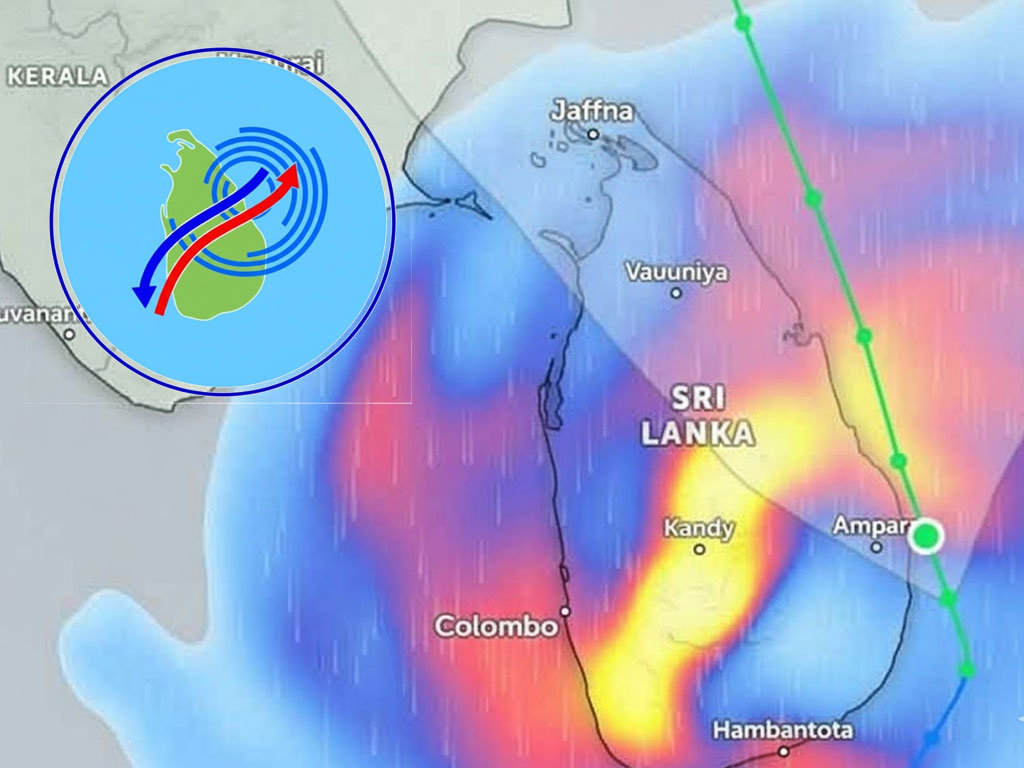
According to Meryl Mendis, Director of the Forecasting Division, the November 11 remarks were not about Cyclone Ditwah. She stated that weather disturbances during that period were ongoing, and the department issued observations based on each developing situation. Cyclone Ditwah itself was identified only on November 23. At that point, they recognized that the low pressure system might evolve further by November 25. Mendis confirmed that the Minister’s statements in Parliament regarding the timeline were accurate.
She also clarified that cyclone warnings cannot be issued before identification. According to her, advance warnings predicting a cyclone a week ahead are not feasible in meteorology. Once the low pressure area was identified on November 23, they monitored its development closely. It became a low pressure system on the 25th and subsequently developed into a cyclone. Her explanation highlighted the complexity of weather forecasting and reinforced the department’s stance that no premature cyclone predictions could have been issued.
Report published by BBC Sinhala on November 24
According to BBC Sinhala, on November 24 the Meteorological Department announced that rainfall could increase due to a disturbance in the lower atmosphere. Director of the forecasting division Meryl Mendis stated that this disturbance could develop into a low pressure area on November 25. Heavy rains of more than 100 mm were expected in parts of the Northern and Eastern provinces, while other regions could receive around 75 mm.
BBC Sinhala also reported that the Department of Irrigation issued its own warning on November 25. The department predicted that rainfall exceeding 200 mm could occur in several provinces during the next few days due to the developing low pressure area near the South Andaman Sea. They highlighted the risk of sudden flooding, while also noting that high river water levels could further elevate dangers across multiple districts.
Engineer L. S. Suriyabandara of the Department of Irrigation indicated that past hydrological patterns suggested a risk of flooding across multiple provinces between November 25 and 30. This assessment was based on previous experiences of heavy rainfall, seasonal flows and the elevated water levels already recorded in major rivers. These warnings signaled a need for preparedness, although the term cyclone had not yet been used by authorities.
SOURCE :- BBC SINHALA