A constitutional standoff is unfolding as opposition leaders warn that the future independence of Sri Lanka’s public institutions now hinges on a single decision by the Opposition Leader.
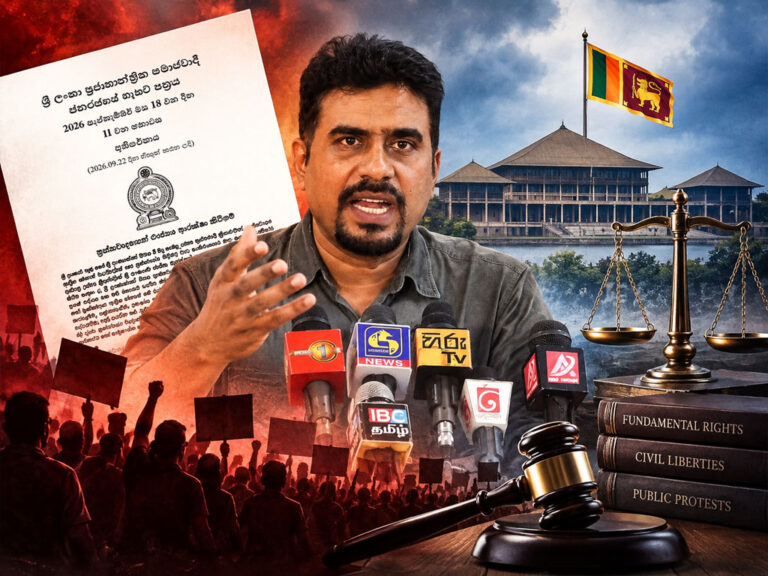
At a media briefing organised by the Pivithuru Hela Urumaya, party leader and attorney-at-law Udaya Gammanpila warned that the independence of the Constitutional Council is now firmly in the hands of Opposition Leader Sajith Premadasa. He alleged that the President is deliberately delaying the appointment of a new Auditor General until January, with the intention of filling key vacancies with loyalists once the terms of three independent Constitutional Council members expire.

Gammanpila said similar warnings were issued at media conferences held on July 14 and December 29, 2025. He stressed that the purpose of the latest briefing was to demonstrate to the Opposition Leader and the public that there is still a constitutional path to defeat what he described as a corrupt political conspiracy.
Citing Article 41E of the Constitution, Gammanpila explained that even after their terms expire, members of the Constitutional Council are legally required to continue in office until new members are appointed. This, he said, prevents any immediate vacuum and blocks attempts to forcibly remove independent voices from the Council.
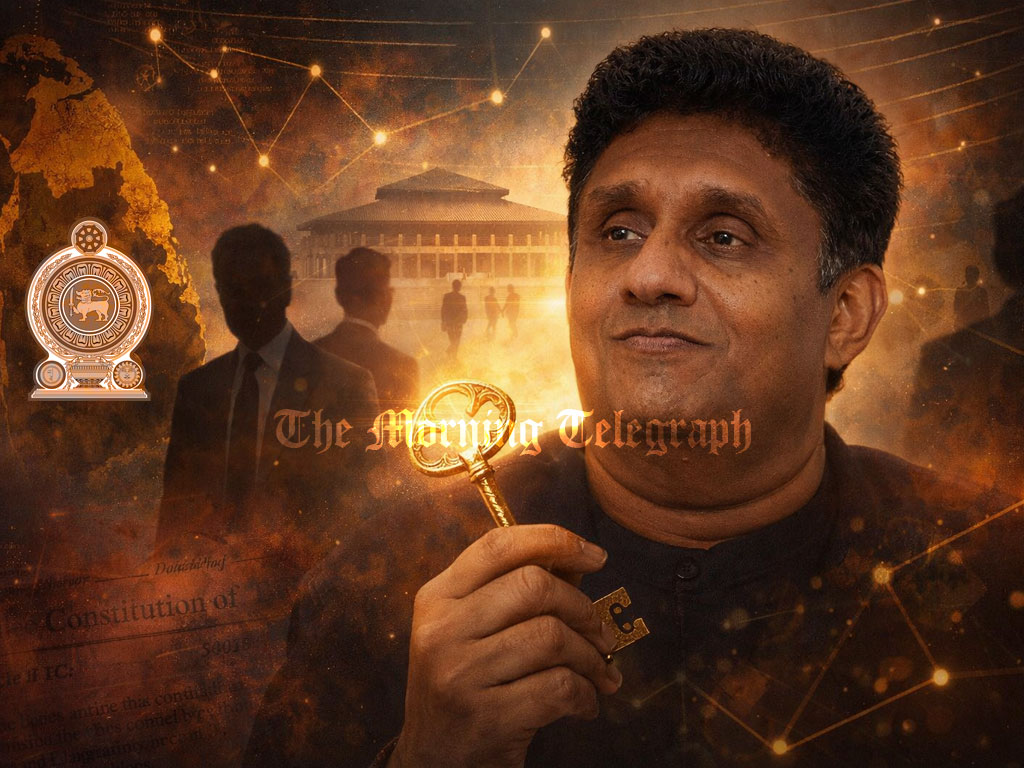
He further referred to Article 41A(1)(e)(iii), which states that the three independent members of the Constitutional Council must be appointed with the consent of both the Prime Minister and the Leader of the Opposition. To safeguard the independence of the public service, Gammanpila urged the Opposition Leader not to approve any names proposed by the Prime Minister if they are perceived as loyal to the ruling compass group.
Gammanpila noted that in past appointments, it was difficult for both leaders to agree on all three nominees, resulting in only one member being appointed by mutual consent. If the remaining nominees are aligned with the government, he warned, the Constitutional Council would fall under government control. This would allow the President to influence appointments to key institutions including Independent Commissions, the High Court judiciary, the Inspector General of Police, the Attorney General and the Auditor General.
He argued that this outcome can be prevented if all three independent members are appointed only through full consensus. Until candidates who are impartial, fearless and widely acceptable are proposed, the Opposition Leader should withhold consent.
Gammanpila outlined several reasons to reject rushed nominations. Previously, independent members were selected through public advertisements inviting applications. Although the current members’ terms ended on January 18, no such applications have been called so far. He questioned why this process has been avoided if there is no intention to appoint political loyalists.
He also praised the current members for demonstrating independence by rejecting recommendations from both the present and former Presidents. Additionally, he highlighted their courage in submitting affidavits to the Supreme Court, stating they were misled in the appointment of the Bribery Commission Director General, proving they are not driven by fear.
In conclusion, Gammanpila urged the Opposition Leader to reject any partisan nominees and insist on independent, credible appointments to preserve the integrity of Sri Lanka’s public service.