From the Atlantic to Colombo, Sri Lanka’s newest ex US Coast Guard cutter begins a historic 77 day voyage that blends naval diplomacy, maritime strategy, tradition, and a powerful reminder of lessons from the Navy’s dramatic past.
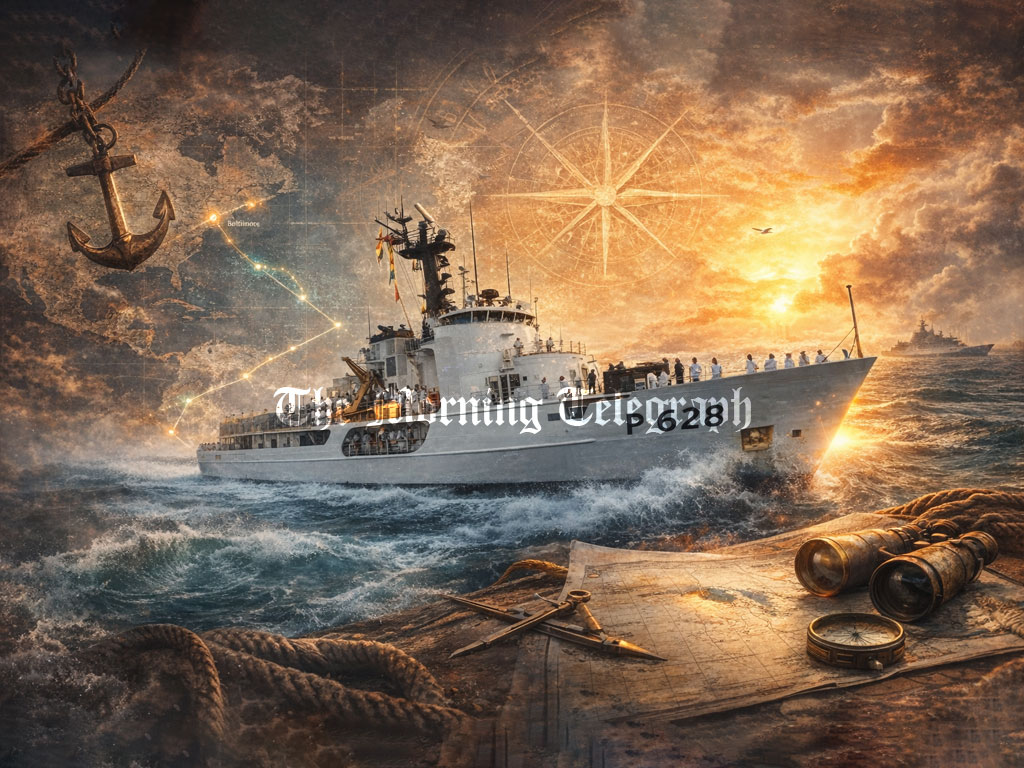
The Sri Lanka Navy ship P 628 is undertaking the longest passage in its recent history, sailing from the eastern seaboard of the United States all the way to Sri Lanka. News of this extraordinary voyage, covering 14,775 nautical miles, captured public attention and deserves reflection beyond the headline.

The four ex US Coast Guard ships transferred to the Sri Lanka Navy are SLNS Samudura P621, SLNS Gajabahu P626, SLNS Vijayabahu P627, and now the ex USCG Decisive P628. The latest vessel was formally handed over on December 2, 2025. The Commander of the Navy, Vice Admiral Kanchana Banagoda, and Sri Lanka’s Ambassador to the United States, His Excellency Mahinda Samarasinghe, attended the ceremony. After completing training and equipment testing, the newly acquired vessel departed Pensacola, Florida, for Colombo and Trincomalee. Commanded by Captain Gayan Wickramasooriya and supported by 14 officers and 72 sailors, she is expected to complete the voyage in 77 days and arrive by the second week of May 2026.
This is more than a routine transfer. She will be the first Sri Lanka Navy ship to cross the Panama Canal from the Atlantic to the Pacific. With an endurance of 6,000 nautical miles, careful refueling planning is essential. Such operational logistics highlight the professionalism behind long range naval deployments. We wish her fair winds and following seas.
For readers unfamiliar with maritime tradition, three clarifications may help.
First, why is a ship called she. The answer lies in naval culture and affection. A vessel demands constant care and maintenance. It is rarely the acquisition cost that burdens you most, but the long term upkeep.
Second, why acquire older ships. This cutter was built in 1967 and commissioned in 1968. Age alone does not determine capability. These ships are constructed using marine grade steel and undergo structured overhauls every four years. Consider the USS Blue Ridge, flagship of the US Seventh Fleet. Built in 1969, it commands dozens of ships, aircraft, and thousands of personnel. Capability rests in systems, maintenance, and mission readiness, not simply launch date. The Blue Ridge visited Sri Lanka in March 2016, and I had the privilege of hosting the Commander in Chief and President Maithripala Sirisena on board at Colombo Harbour.
Professional relationships also matter. Rear Admiral Dharmendra Wettewa led the Sri Lanka Navy delegation during the first ever SLN US Navy staff talks. His experience as an alumnus of the US Navy War College and later as Defence Attaché in Washington paved the way for establishing the Sri Lanka Navy Marines Corps and expanding training cooperation. Strategic maritime partnerships strengthened our position in the Indian Ocean region.
As the late Lakshman Kadirgamar wisely advised, officers who understand each other’s language and culture build better operational bridges.
Third, what does fair winds and following seas mean. Fair winds traditionally signify a safe voyage and good fortune. Following seas refer to waves moving in the same direction as the ship, helping her move steadily and safely toward home. It is both a blessing and a professional wish rooted in centuries of seafaring.
To Captain Wickramasooriya and his crew, we extend our heartfelt blessings. This voyage reinforces Sri Lanka’s role in maritime security, Indian Ocean stability, and naval diplomacy.
History, however, reminds us that long voyages can bring unexpected lessons.
In 1960, during the tenure of Prime Minister Sirimavo R.D. Bandaranaike, the Royal Ceylon Navy embarked on what was called the Far East Cruise. Under Rear Admiral Gerald Royce De Mel, the first Ceylonese Navy Commander, approval was obtained for a flag showing mission to Japan, with visits to Singapore, Malaysia, the Philippines, and Japan.
According to naval historian Commander Somasiri Devendra in We Should Have a Navy, the mission was formally approved. The flagship RCyN Ship Parakrama, an Algerian class minesweeper formerly HMS Pickle, and River class frigates were deployed. RCyN Ship Mahasen, a Canadian built frigate previously serving in the Israeli Navy, was commanded by Lieutenant Commander Rajan Proctor. Parakrama was commanded by Lieutenant Commander D.I. De Livera.
Rear Admiral De Mel flew his flag aboard Mahasen. The route included Singapore, Bangkok, Hong Kong, Tokyo, and a return through Port Swettenham and Penang. The voyage represented naval diplomacy and international goodwill at its finest.
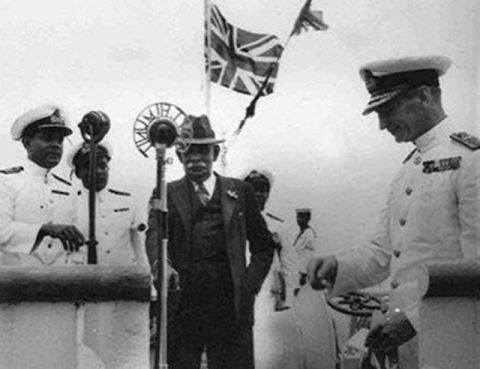
Complications emerged in Hong Kong when Parakrama developed technical issues and remained behind while Mahasen continued to Tokyo. The Japanese Self Defense Forces extended a grand reception, and the flag showing mission succeeded diplomatically.
Trouble began on the return journey. Mahasen was instructed to collect weapons and ammunition from Singapore under Ministry of Defence orders. Simultaneously, some officers purchased large quantities of whiskey, reportedly for personal enjoyment upon return. When the purchase was discovered, allegations surfaced that the Navy was smuggling arms.
Upon arrival in Sri Lanka, the Inspector General of Police inspected the vessel. Nothing suspicious was found beyond the authorized arms shipment. Nevertheless, Naval Headquarters ordered a patrol south of Mannar with secret instructions to dispose of the whiskey at sea and return clean.
The attempted transfer of the whiskey to a fishing trawler off Kalpitiya was spotted by another vessel and reported to police. The trawler was raided and the whiskey confiscated.
The consequences were severe. Nine officers were withdrawn. Eight were compulsorily retired along with several sailors. Rear Admiral Royce De Mel was interdicted pending inquiry. Subsequent political turbulence, including the 1962 attempted coup, further weakened the Navy. Recruitment halted for nearly a decade.
The Far East Cruise became known as the Far East Booze. Large ships were sold for scrap, and the Navy was reduced largely to a patrol craft force.
These events occurred before I was born in 1962. My account is based on documented records and stories from what many called the Okapi Navy.
I will explain the origin of that term in a future article.
Those were remarkable days that shaped our maritime identity.
For anyone interested in the evolution of Sri Lanka’s naval heritage, I strongly recommend reading We Must Have a Navy by Instructor Commander Somasiri Devendra, available through the Ministry of Defence.
As SLN P628 sails across oceans today, it carries not only equipment and sailors but also history, responsibility, and the enduring spirit of a Navy that has learned from triumph and setback alike.