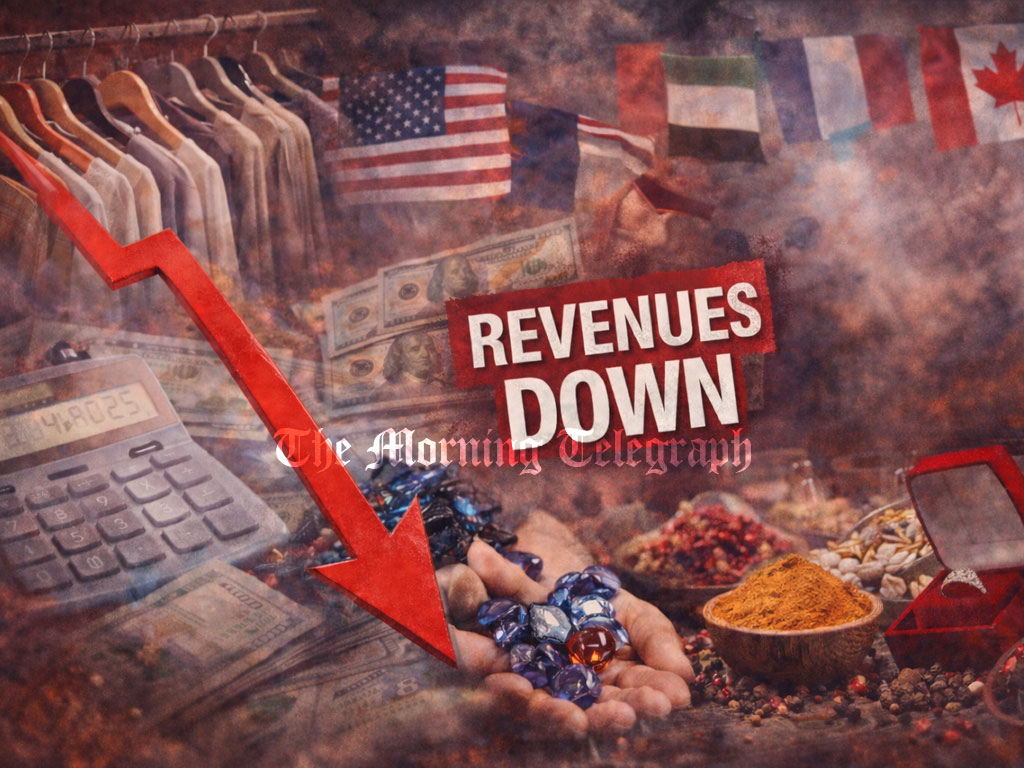
Fresh Export Development Board data reveals a January dip in apparel, textile, spice and gem export revenue, raising concerns about Sri Lanka’s trade performance despite assurances that garment exports remain stable.
Sri Lanka’s export sector has opened the year on a cautious note, with official figures showing a decline in several key revenue streams compared to January 2025.
According to the Export Development Board, apparel and textile export revenue for January this year stood at US$ 447.25 million, down from US$ 460.22 million recorded in January 2025. This reflects a 2.82 percent decrease year on year, signalling pressure on one of the country’s most vital foreign exchange earning sectors.

Beyond garments and textiles, other major export categories have also experienced setbacks. Export earnings from spices and essential oils declined by 4.57 percent compared to January last year. Meanwhile, diamonds, gems and jewellery exports recorded a sharper contraction of 10.96 percent over the same period, highlighting broader weakness across value added and traditional export industries.
In terms of export destinations, the United States, Sri Lanka’s largest single market, showed a marginal decline. Merchandise exports to the US fell from US$ 260 million in January 2025 to nearly US$ 258 million this January, reflecting a decrease of 0.90 percent. Export revenue from the United Arab Emirates, France and Canada also recorded year on year reductions.
Despite the data indicating an overall decline in apparel and textile export revenue, Export Development Board Chairman and CEO Mangala Wijesinghe stated at a press conference held at the Government Information Department that there has been no decrease in apparel exports specifically. His remarks suggest that fluctuations may be linked to textile components or broader trade dynamics rather than a contraction in garment manufacturing itself.
The mixed signals from Sri Lanka’s export performance raise questions about global demand conditions, competitiveness and trade resilience as the country continues to rely heavily on apparel, spices and gem exports for economic stability and foreign exchange inflows.