A forgotten courtroom exchange during Sri Lanka’s 1965 election dispute transformed a humiliated village organizer into a future lawmaker, proving how one spontaneous moment can alter political destiny.
In the tense and ideologically charged atmosphere of Sri Lanka’s 1965 general election, few could have foreseen that a single sound uttered in a courtroom would eventually be woven into the island’s political folklore. Yet that is precisely what happened. A young grassroots organizer from the hill country, who once cried out “hoo” during a chaotic campaign meeting, would later find that same sound replayed in a courtroom setting and remembered as the unlikely spark of a parliamentary career. What began as a moment of embarrassment became a defining anecdote in Sri Lanka political history.

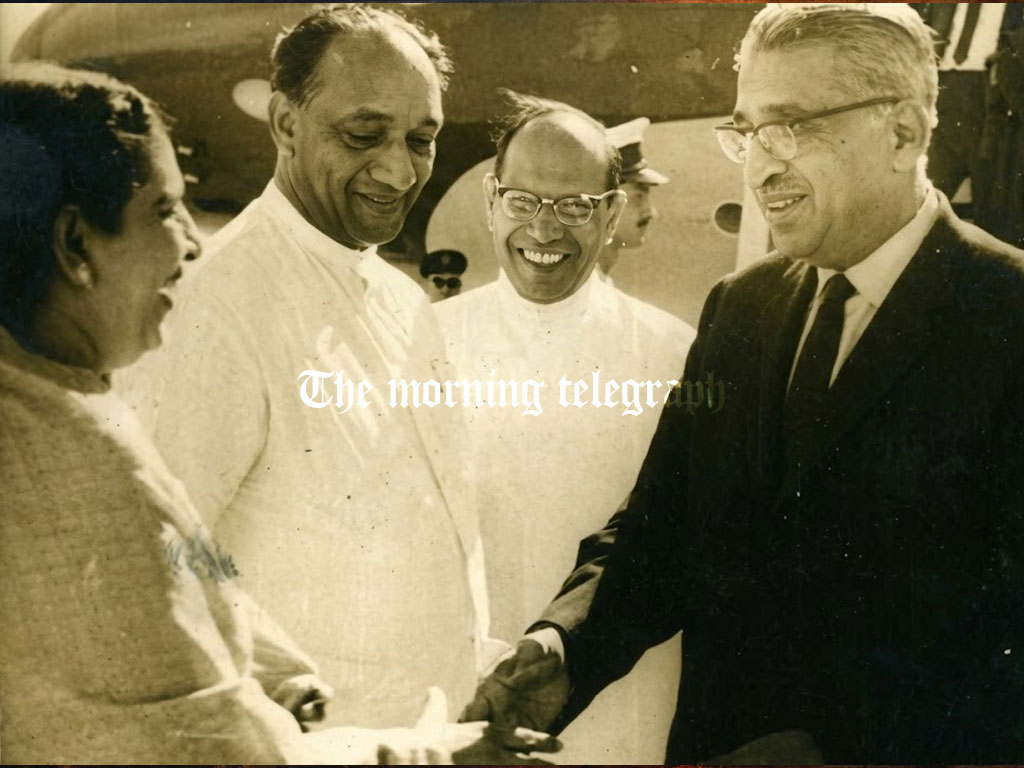
The story begins in the fiercely contested Yatiyantota electorate. The mid 1960s were marked by sharp ideological rivalry between socialist and conservative forces shaping the country’s democratic trajectory. Prominent Marxist leader N. M. Perera entered the electoral fray in a constituency known for strong leftist leanings. The United National Party, led nationally by Dudley Senanayake, fielded George Kotelawea as its candidate. Campaign tensions ran high, reflecting a broader national struggle between competing visions for Sri Lanka’s economic direction and governance model.
At the height of this political contest, a public meeting was organized in the rural locality of Thaligama by a young activist, R.A.D. Sirisena. The purpose was straightforward: energize supporters and reinforce Dudley Senanayake’s presence among voters. However, the meeting quickly descended into chaos. Groups aligned with leftist movements began loudly booing the visiting leader. The disruption was not spontaneous enthusiasm but widely viewed as calculated political intimidation. For the young organizer who had labored tirelessly to arrange the gathering, the humiliation was profound.
Overwhelmed by the disorder and the perceived failure of the event, he reportedly broke down in tears. Dudley Senanayake, known for his composure and measured leadership style, consoled him and urged him not to lose heart. Nevertheless, the electoral outcome proved disappointing for the United National Party candidate. Alleging irregularities and misconduct during the campaign, the party challenged the result through a formal election petition. What followed would transform a local embarrassment into a courtroom legend.
The case came before Justice H. D. Thambiya, who would later ascend to the Supreme Court of Sri Lanka. The proceedings assembled some of the era’s most formidable legal minds. The petitioner’s case was led by E. G. Wickramanayake. The defense featured the renowned Colvin R. de Silva alongside S. Nadesan. Amid these legal giants stood the same young activist from Thaligama, now summoned as a witness in a tense judicial arena far removed from village politics.
Initially, his testimony unfolded without incident. He answered carefully, remained composed, and withstood cross examination with steady confidence. Then came the question that would immortalize the hearing. Defense counsel, seeking to undermine his reliability, focused on the crowd’s jeering during the disrupted meeting. Had the protesters shouted “hoo” with their mouths open or closed, the lawyer asked. The query carried both absurdity and strategic intent, attempting to expose inconsistency and weaken the witness’s credibility.
The courtroom atmosphere shifted. Observers sensed the unusual weight of the moment. The young man replied honestly that while he could not recall the precise manner in which the protesters formed the sound, he distinctly remembered the sound itself. Justice Thambiya intervened, asking whether the witness could demonstrate what he meant. That invitation would create one of the most unexpected episodes in Sri Lanka legal history.
Drawing upon his rural upbringing along the Kelani River, the witness explained that villagers frequently used the same call to summon boats from across the water when traveling to town. The sound was not theatrical but practical, embedded in everyday life. Invited to demonstrate, he did so without hesitation. Standing in the witness box, he called out “hoo” repeatedly and at full volume, recreating the sound that once echoed across riverbanks.
The solemn courtroom, moments earlier bound by rigid procedure, found itself briefly transformed into a stage for village custom. The demonstration was surreal yet sincere. After allowing it to continue briefly, Justice Thambiya instructed him to stop. Then came the statement that would later assume near mythical significance. Observing the young man’s confidence and presence, the judge predicted that he would one day become a Member of Parliament.
At the time, the remark drew laughter rather than belief. The idea that a tearful village organizer could ascend to national office seemed fanciful. Yet history would vindicate the judge’s intuition. Nearly twenty years later, during the presidency of Ranasinghe Premadasa, political upheaval reshaped the national landscape. Following the assassination of Minister Ranjan Wijeratne, a vacancy emerged. The once obscure activist was appointed to represent Deraniyagala in Parliament.
From that point, his career advanced steadily. He later served as a State Minister and took responsibility for the Samurdhi program, one of Sri Lanka’s most significant social welfare initiatives. The trajectory from grassroots campaign volunteer to national officeholder appeared to echo the prophecy delivered years earlier inside a courtroom. What had once been a source of humiliation became a symbol of resilience and unexpected destiny.
Today, the anecdote survives as more than a curious footnote in Sri Lanka election history. It serves as a reminder of how democratic life can pivot on seemingly trivial moments. Political careers are often shaped by calculated strategy, ideological conviction, and institutional maneuvering. Yet sometimes, they are nudged forward by spontaneous acts that capture imagination and reveal character.
In a nation where politics has frequently unfolded amid turbulence, tragedy, and dramatic transformation, the story of a single shouted word resonates deeply. It illustrates how the interplay between law, politics, and personal courage can produce outcomes no strategist could design. The courtroom exchange did not merely test a witness’s memory. It revealed confidence under pressure and authenticity rooted in lived experience.
For scholars of Sri Lanka political history, the episode underscores the unpredictability of democratic systems. Election disputes, judicial proceedings, and campaign controversies may appear procedural, but within them lie human narratives capable of shaping national trajectories. The “hoo” that once disrupted a rural rally and later echoed inside a courtroom ultimately became part of a larger story about perseverance, opportunity, and fate.
The lesson is neither romantic nor cynical. It is simply human. In politics, as in life, defining moments often arrive unannounced. A courtroom question intended to embarrass instead illuminated character. A sound meant to jeer became an emblem of future leadership. And a young organizer who once wept over a failed meeting went on to occupy a seat in Parliament, carrying with him the memory of a judge’s unexpected prophecy.
SOURCE :- SRI LANKA GUARDIAN