Sri Lanka’s vital tea trade faces sudden disruption as Gulf shipping routes close, flights are canceled, and exporters are urged to keep cargo away from ports amid escalating Middle East tensions.
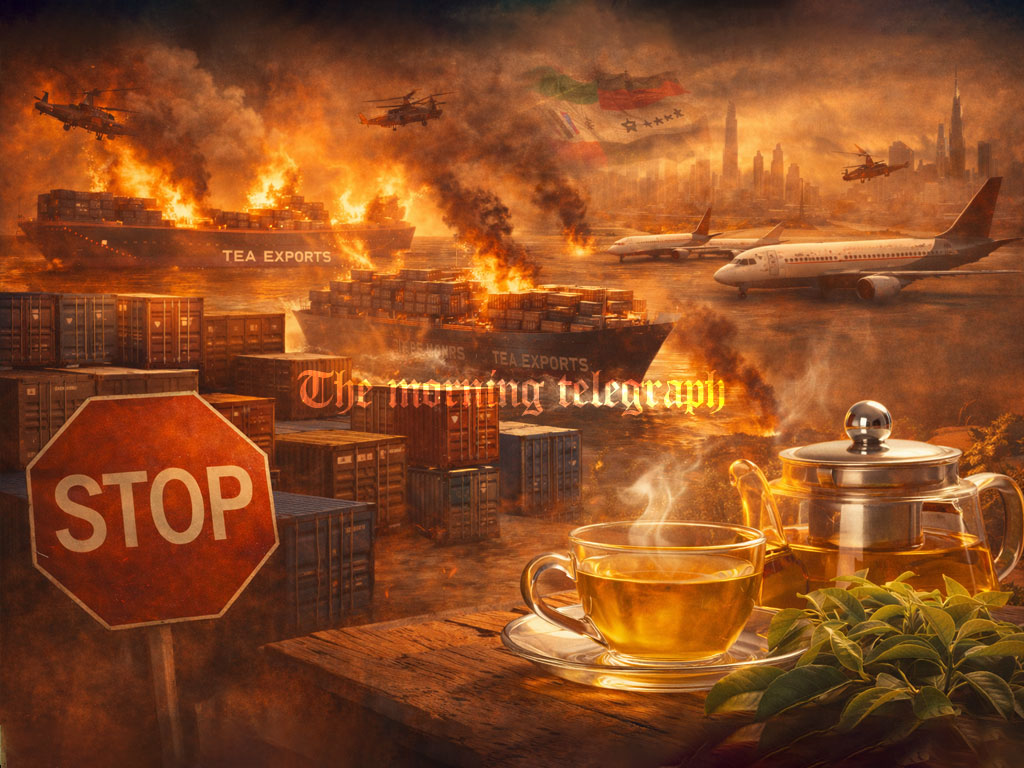
Sri Lanka’s tea export industry is facing serious disruption as the escalating military conflict in the Middle East cripples commercial shipping across the Mediterranean and Gulf seas. The government has warned that the ongoing war situation will significantly affect the country’s tea export process in the coming days, especially shipments bound for key Middle Eastern markets.

Minister Anura Karanathilaka emphasized that demand for Sri Lankan tea remains particularly strong in countries such as Iran and Iraq. However, with commercial shipping traffic through the Gulf region nearly at a standstill, exporters are encountering mounting logistical challenges. As a precautionary measure, the Minister has urged exporters not to bring tea and other goods destined for the Middle East to port premises until further notice, in order to prevent unnecessary congestion and operational bottlenecks.
He advised producers to retain their goods at the source until there is clarity on maritime access and regional stability. At the same time, the government is exploring alternative export markets to mitigate economic losses and safeguard foreign exchange earnings from the tea industry.
The crisis has also severely affected air travel. Approximately 125 flights to and from Bandaranaike International Airport have been canceled due to airspace closures in Iran, Bahrain, Abu Dhabi, Dubai and Sharjah. Authorities are in talks with airlines to reroute passengers via Turkey and other alternative hubs. Meanwhile, arrangements for food and accommodation are being provided for stranded travelers.
Officials are also assessing whether Colombo and Hambantota ports can serve as viable transit options for east to west cargo operations.