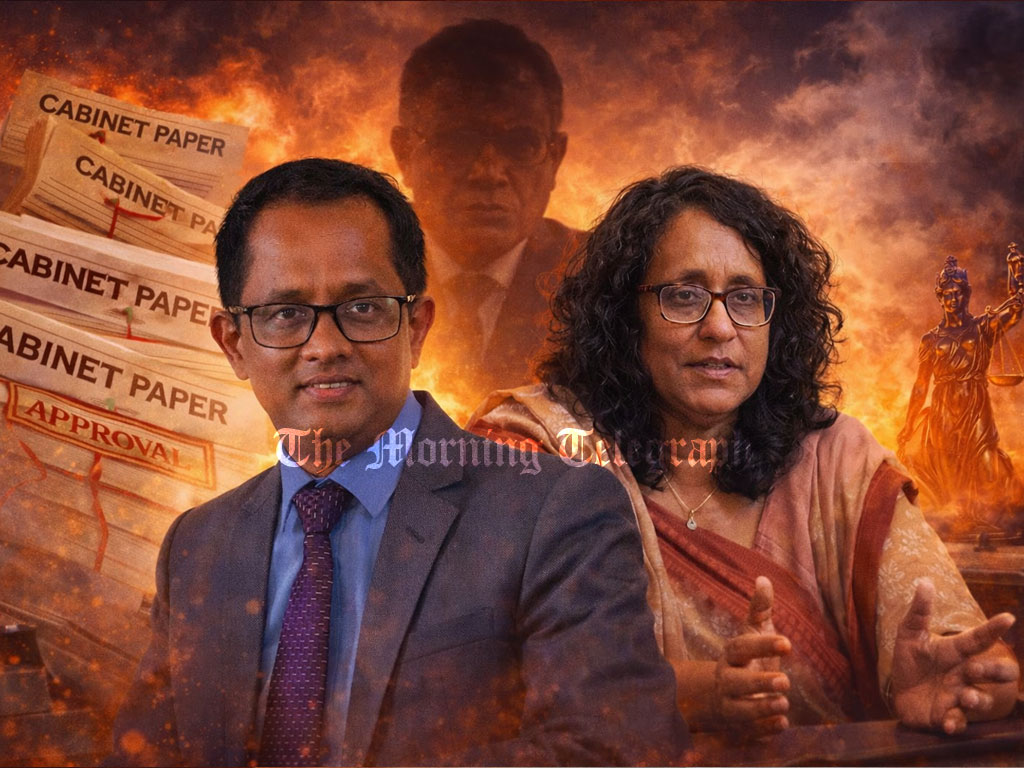
A controversial cabinet proposal linked to Parliament Speaker Jagath Wickramaratne has ignited a political firestorm, raising serious questions about abuse of state property, alleged attempts to evade corruption investigations, and the potential legal risks facing Prime Minister Harini Amarasuriya and the Cabinet.
Serious political controversy has emerged around Parliament Speaker Jagath Wickramaratne following allegations that he attempted to shield himself from a corruption investigation by submitting a controversial cabinet proposal. The move has raised concerns among political observers about possible interference with an ongoing investigation by the Commission to Investigate Allegations of Bribery or Corruption.

The complaint that triggered the investigation was reportedly filed by Deputy Secretary General of Parliament Chaminda Kularatne. According to the complaint and preliminary reports, the Speaker is accused of causing financial loss to the state through the alleged misuse of government property, including official vehicles and equipment belonging to the Parliament Media Unit.
Investigative sources claim that the official parliamentary vehicle bearing the number WP NC 4923 has been used by the Speaker for personal purposes since January 2025 without proper administrative approval. In addition, a modern camera system and media equipment owned by the parliamentary media division are also alleged to have been used for personal promotional activities.
At a time when the Bribery Commission has reportedly begun examining these allegations, political insiders claim that the Speaker submitted a special cabinet paper seeking retrospective approval for the use of these assets. The proposal reportedly requests that the vehicle and media equipment be formally authorized for use starting from January 2025.
Legal analysts warn that granting retroactive approval for actions currently under investigation could be interpreted as an attempt to legitimize alleged misconduct. Such a move could place political leaders, including the Prime Minister and Cabinet members, in a legally vulnerable position if it is viewed as interfering with an independent corruption probe.
Political commentators argue that a government committed to transparency must allow the anti corruption process to proceed independently and avoid decisions that could undermine institutional accountability.