A brief exchange at an international forum has ignited a fierce debate across Sri Lanka, with critics questioning diplomatic professionalism while supporters argue the foreign minister cleverly avoided a geopolitical trap.
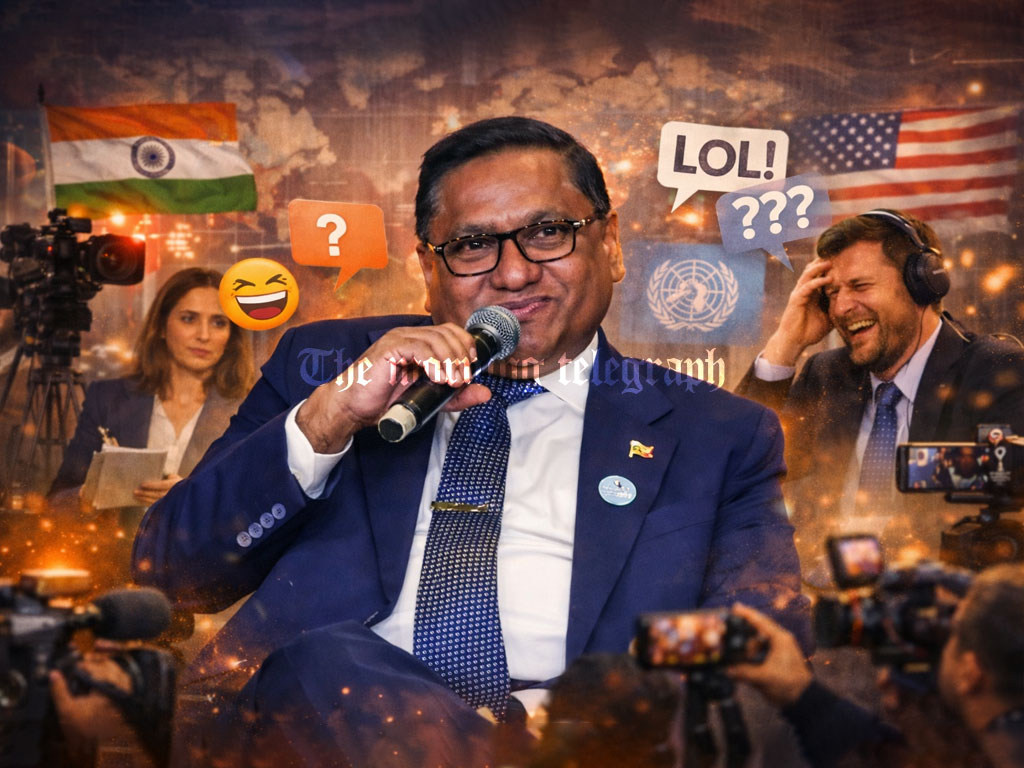
Sri Lanka’s Foreign Minister Vijitha Herath has become the center of a heated public debate following his appearance at an international press conference in India. Clips of the discussion quickly spread across social media, prompting widespread reactions about his responses to questions on Sri Lanka’s geopolitical stance, the Iran conflict, and the overall presentation of the country’s diplomacy on a global stage.

Critics argue that the minister’s English pronunciation and grammar did not meet the expectations normally associated with international diplomacy. Some commentators also focused on his body language during the interview, particularly the posture in which he sat with one leg crossed, claiming that such conduct was inappropriate for a representative of a nation at a major diplomatic forum. According to these critics, the moment risked damaging Sri Lanka’s image internationally and exposed weaknesses in communication at the highest levels of government. A number of observers also suggested that leaders who feel uncomfortable responding in English should simply use translators, a common practice in international politics, rather than risk miscommunication.
Supporters of the minister, however, present a very different interpretation of the event. They argue that the journalist’s question was carefully framed to force a direct yes or no answer regarding the sensitive geopolitical tension between the United States and Iran. In their view, any straightforward response could have placed Sri Lanka in an awkward diplomatic position by offending one side. By referring instead to principles such as neutrality and the United Nations Convention on the Law of the Sea, they say the minister strategically avoided the trap. To them, the audience’s laughter reflected the cleverness of the response rather than any weakness in language.
Others defending the minister emphasize that language is only a communication tool and should not be used to measure a person’s intelligence or leadership ability. They argue that judging a leader primarily on English fluency reflects a lingering colonial mindset. Supporters also point out that influential global leaders such as Vladimir Putin and Narendra Modi often conduct diplomacy in their native languages.
Moderate voices within the debate suggest that both perspectives carry valid concerns. They acknowledge that integrity and freedom from corruption remain essential qualities in political leadership. At the same time, they emphasize that professionalism, clear communication, and appropriate diplomatic etiquette are equally important when representing a country at international forums. Many observers conclude that using Sinhala confidently with a translator could sometimes be the more respectful and effective option.