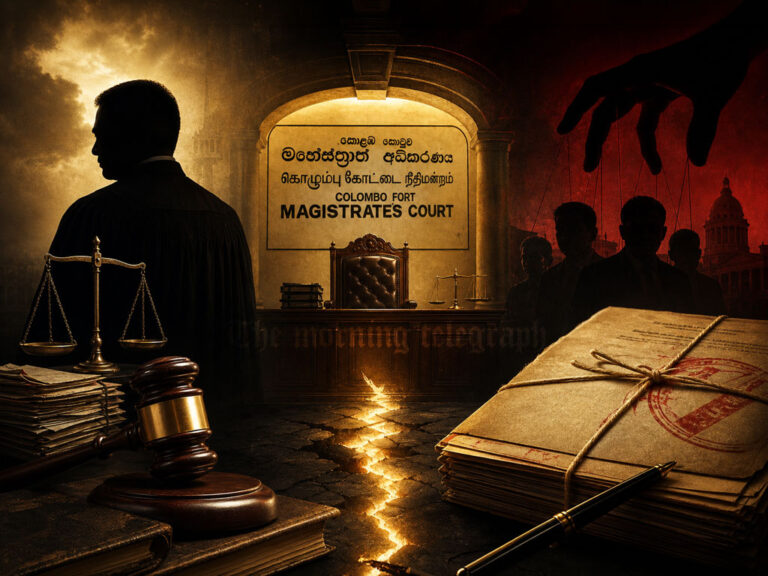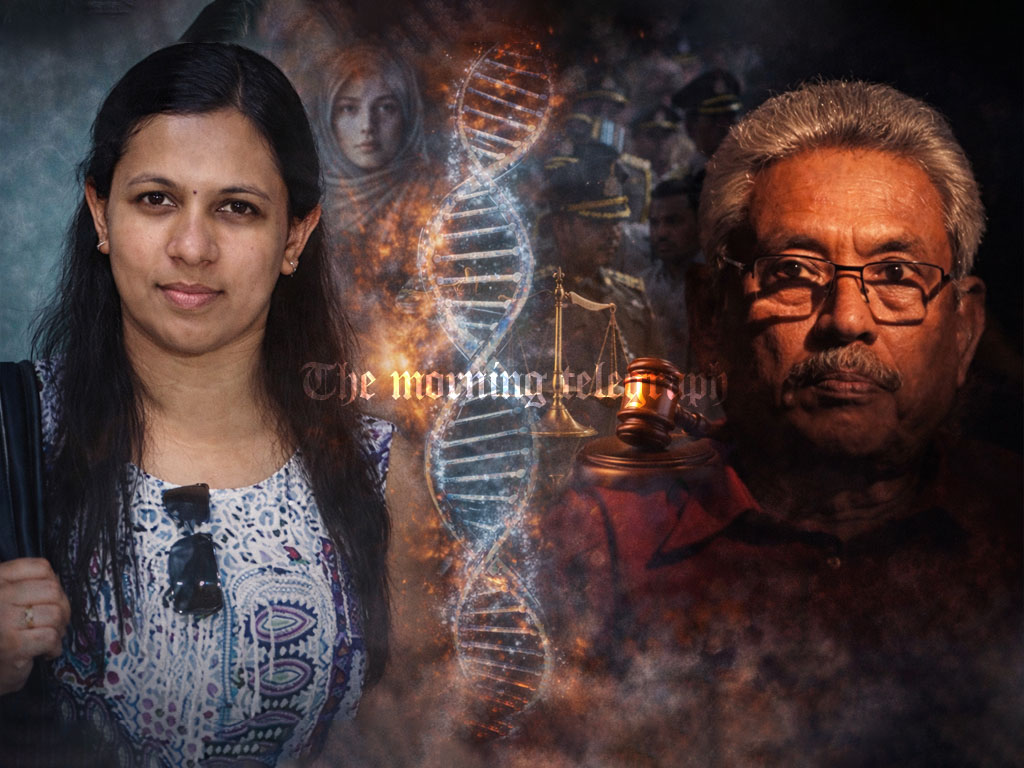
A dramatic court directive has reopened critical questions about the Easter Sunday investigations, with a magistrate ordering an urgent probe into whether political pressure influenced key DNA evidence linked to the mysterious figure known as Sarah Jasmine.
A major development in the ongoing investigation into the 2019 Easter Sunday terrorist attacks has emerged after the Fort Magistrate’s Court issued a strong order directing the Criminal Investigation Department to examine controversial decisions allegedly made by former President Gotabaya Rajapaksa.
Fort Magistrate Isuru Netthikumarage instructed the CID to immediately investigate the circumstances under which a third DNA test was ordered in 2022 regarding Pulastini Mahendran, also known as Sarah Jasmine, who was suspected of involvement in the Easter Sunday attacks. The court further ordered that a detailed report of the findings be submitted without delay.
This directive has renewed attention on long standing allegations that the Easter Sunday investigation may have faced interference or attempts to manipulate evidence.

Court questions the controversial third DNA test
The controversy centers on the events following a deadly explosion in Saindamarudu, Kalmunai on April 26, 2019. After the Easter Sunday attacks, several members of extremist leader Zahran Hashim’s extended family fled from Colombo to the eastern region. They later died in a massive explosion at a house in Saindamarudu.
Among those believed to have been present was a woman identified as Sarah Jasmine. Two separate DNA tests conducted earlier had reportedly concluded that the remains found at the site did not belong to her, raising speculation that she may have survived the blast.
Despite these findings, the court heard that a third DNA test was allegedly ordered in 2022 during a National Security Council meeting.
The magistrate instructed investigators to determine whether this third DNA test was requested as part of a legitimate investigative direction or whether it was intended to conceal evidence or derail the investigation.
The court also ordered the CID to examine who issued the instructions, on what basis they were made, and whether any criminal offense was committed.
Evidence report submitted to the court
During the hearing, the Criminal Investigation Department submitted a comprehensive 25 page evidence summary related to another sensitive aspect of the Easter Sunday probe. The report concerned former State Intelligence Service Director Suresh Saleh, who had been identified as the third suspect following revelations linked to international media investigations.
The CID also presented updates on investigations conducted under earlier court orders regarding two other suspects. These included Police Sergeant Jekyll Paras attached to the State Intelligence Service and Police Inspector Nishantha from the Police Intelligence Division.
According to investigators, the inquiry has attempted to establish whether these individuals had connections to the events that led to the devastating Easter Sunday attacks.
When the magistrate asked whether any new evidence had surfaced beyond the previously known Vavunathivu incident, investigators responded that no additional information had yet been uncovered.
However, they revealed that the Vavunathivu investigation itself had allegedly been misled through the introduction of fabricated evidence involving a jacket.
Intelligence links and informant testimony
Investigators provided further details pointing to possible intelligence related developments surrounding the attack.
The CID informed the court that a long time intelligence informant from Negombo had allegedly shown the Katuwapitiya church in Negombo to extremist individuals before the attacks.
Another informant based in Panadura, who had worked with Army Intelligence, had reportedly warned authorities in March of the possibility that Zahran’s group could carry out a major attack. According to investigators, no significant action had been taken based on that warning.
After the Easter Sunday bombings, this informant reportedly stated that someone with more than twenty years of experience in Army Intelligence had played a role in orchestrating the attacks. Following that claim he was arrested and later handed over to the Terrorism Investigation Division.
Investigators told the court that once Suresh Saleh became Director of State Intelligence, he allegedly obtained information from the same informant about the direction of ongoing investigations.
They also claimed that while the informant remained under arrest his house had been maintained and his son had been offered employment in the computer section of Army Intelligence.
Pressure claims and alleged Security Council influence
A particularly serious allegation presented to the court involved claims that pressure had been exerted on investigators to conduct the third DNA test concerning Sarah Jasmine.
The CID stated that the original DNA analysis did not confirm that Pulastini Mahendran alias Sarah Jasmine had died in the Saindamarudu explosion.
Investigators told the court that former intelligence chief Suresh Saleh had allegedly pressured then Inspector General of Police Chandana Wickramaratne and CID officials to authorize a third DNA test.
When the magistrate questioned whether the IGP had truly been pressured by an intelligence officer, investigators replied that the pressure had been ongoing during intelligence coordination meetings.
According to the CID, the pressure intensified when the IGP was summoned to a National Security Council meeting where similar demands were made in the presence of the then President.
Investigators also claimed that the stress generated during these discussions was severe and that the former IGP had suffered a heart attack during one of the Security Council sessions. They added that the former IGP had already provided statements regarding these events.
Defense raises concerns about detention conditions
President’s Counsel Anuja Premaratne, representing Suresh Saleh, raised several objections during the hearing. He referred to a previous writ petition before the Court of Appeal and argued that certain procedures relating to custody had not been properly followed.
The lawyer alleged that his client had been subjected to humiliating treatment while in detention. He claimed that family members visiting him had been required to produce certified documents including birth certificates, which he described as unnecessary and improper.
Premaratne also argued that confidential meetings between lawyers and their client were being monitored and recorded by investigators, which he said violated the principle of attorney client confidentiality.
The defense further requested that the court issue an order preventing authorities from transferring Suresh Saleh out of CID custody without court approval.
Court schedules next hearing
After considering the submissions made by both investigators and defense counsel, the magistrate announced that further orders related to the matter would be issued on the twenty fifth of the month.
The court directed the CID to submit the requested reports by that date.
The magistrate also informed lawyers representing Suresh Saleh that any additional requests should be submitted in writing.
Legal teams led by President’s Counsel Anuja Premaratne appeared for Suresh Saleh, while Attorney Manushika Cooray represented the aggrieved parties and President’s Counsel M. Nizam Kariyapper appeared for the first and second suspects.