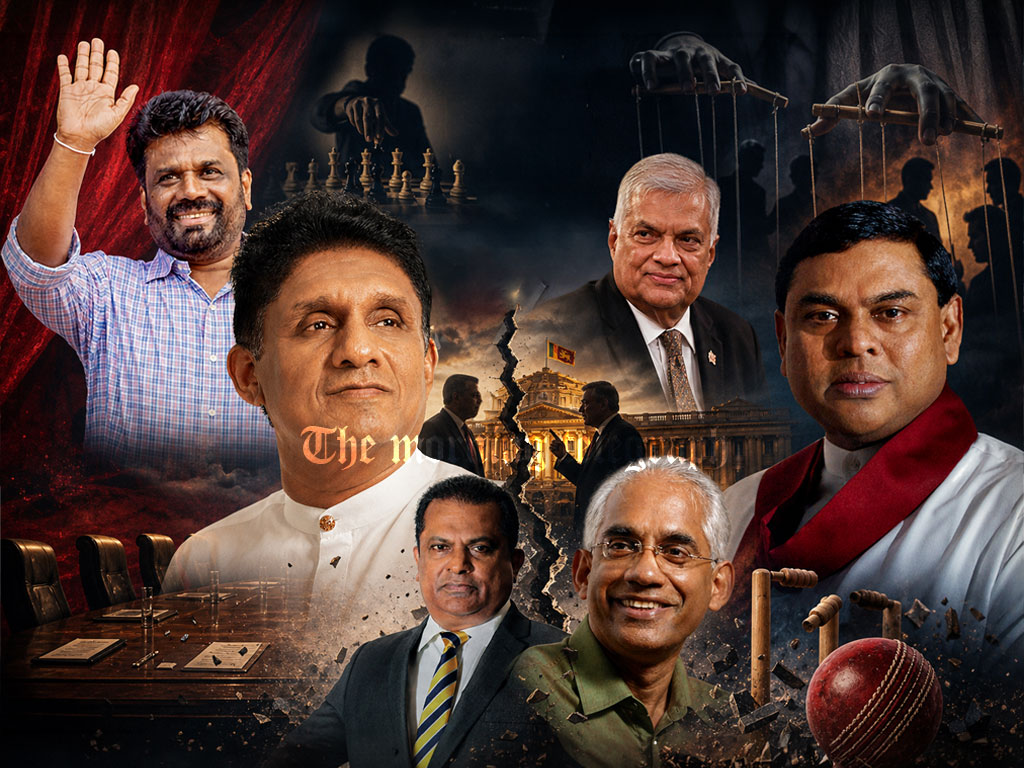
SJB-UNP unity faces fresh sabotage as Eran Wickramaratne joins cricket reform talks while Treasury scandal and Basil’s return shake politics.
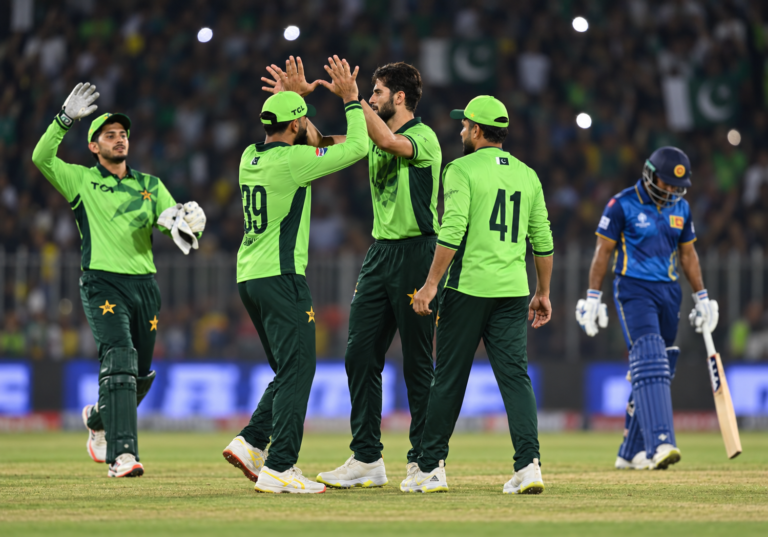
The SJB-UNP unity project has again run into political sabotage, as hidden operators inside the UNP allegedly worked to block reconciliation while President Anura Kumara Dissanayake turned to former SJB figure Eran Wickramaratne to clean up Sri Lanka Cricket.
At the centre of this widening political drama are several explosive developments: Shammi Silva’s recent resignation from Sri Lanka Cricket, and Eran Wickramaratne’s controversial move toward the Cricket Transformation Committee, Talatha Atukorale’s role in rejecting the SJB May Day invitation, the Treasury dollar scandal, and signs that Basil Rajapaksa may be preparing a political return.

Shammi Exit Fuels Talk Of A Political Deal
The resignation of Shammi Silva from Sri Lanka Cricket has triggered fresh speculation about whether a larger political arrangement was unfolding behind the scenes.
President Anura Kumara Dissanayake has reportedly moved to reshape cricket administration at a time when his government is facing mounting political pressure over several controversies, including low-quality coal, high-priced diesel purchases, allegations over Minister K. D. Lalkantha’s residence, and the missing US$2.5 million linked to the Treasury.
Into that tense political climate has stepped Eran Wickramaratne, a former SJB MP and a member of both the SJB Working Committee and Management Committee, who has now been invited to take charge of the Cricket Transformation Committee.
Basil’s Video Sparks Comeback Talk
While the government and opposition battle over cricket, the Treasury, and Parliament, another familiar name has returned to the political conversation.
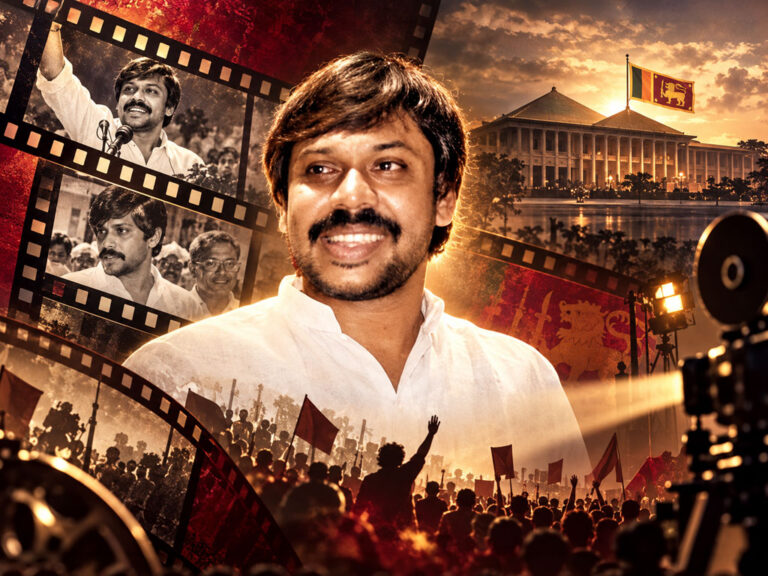
Basil Rajapaksa, widely seen as the chief strategist of the SLPP, has sparked fresh speculation after a professionally produced video about his political journey began circulating on social media and through WhatsApp.
The video traces Basil’s rise through the Sri Lanka Freedom Party, his links with Sirimavo Bandaranaike and Anura Bandaranaike, his role in Mahinda Rajapaksa’s 2005 victory, his contribution during the war period, and development programs such as Maga Neguma and Divi Neguma.
Although the video did not initially attract major public attention, Basil reportedly began personally forwarding it to close associates in Sri Lanka. This raises concerns about whether the former strategist is quietly testing the ground for a return.
Talatha Becomes The Political Bait
The latest attempt to derail SJB-UNP unity reportedly came through Talatha Atukorale, who publicly announced that the UNP would not attend the SJB May Day rally.
According to political insiders, two shadowy figures inside the UNP became alarmed after the Samagi Jana Balawegaya formally invited the United National Party to join its May Day event. They believed that if the two parties shared a stage, their own political agendas would suffer.
Their strategy was reportedly to use Talatha to block the alliance from within.
The argument presented was that the UNP, by tradition, does not conduct political activity on Poya days. Since May Day coincided with Vesak Poya day, they claimed the party should decline the SJB invitation.
The Operators Behind The Curtain
For some time, two shadow operators within the United National Party have allegedly worked to undermine every meaningful attempt at reconciliation between the UNP and the SJB.
Whenever genuine cooperation appeared possible, with support from the SJB leadership and several senior UNP figures, these individuals reportedly intervened from behind the scenes.
Their methods, according to this column, included anonymous news planting, internal pressure campaigns, manipulation of party figures, and attempts to create confusion before unity could take shape.
May Day became their latest battleground.
Sajith’s May Day Unity Plan
SJB leader Sajith Premadasa had been quietly preparing a plan for months to use May Day as a public platform to bring the two parties together.
The first step was to extend a direct invitation to the UNP to join the SJB’s May Day stage.
For hundreds of thousands of grassroots supporters from both parties, the idea carried emotional political weight. Many had long believed that the division between the UNP and SJB had weakened the wider opposition and allowed rival forces to dominate national politics.
Sajith saw May Day as the best moment to give the reconciliation effort mass visibility.
Anonymous Report Used To Disrupt The Process
When the two political schemers realised what Sajith was preparing, they reportedly moved quickly.
Their first move was said to be the publication of an anonymous report on the Lankadeepa website, owned by the family of former President Ranil Wickremesinghe.
The report claimed that leading Buddhist monks had requested political parties to avoid political activity on May Day because it coincided with Vesak full moon Poya day.
However, the report did not name a single monk. It did not mention a chief incumbent, a senior prelate, or even a junior novice.
Public criticism came swiftly. Within hours, the article was quietly removed by unknown persons.
Three Rounds Of Political Talks
Sajith did not abandon the effort.
Through the SJB Working Committee, he took personal responsibility for the reunification process and moved step by step.
First, he met senior second-tier UNP leaders Ruwan Wijewardene, Navin Dissanayake, and Akila Viraj Kariyawasam at Taj Samudra.
A separate meeting was then held at the same venue with Sagala Ratnayaka.
Later, Sajith and SJB General Secretary Ranjith Madduma Bandara met UNP General Secretary Talatha Atukorale to advance the dialogue further.
These three rounds of talks created real hope among ordinary UNP and SJB supporters who wanted the two parties to reunite.
Different Agendas Begin To Surface
Opposition to unity did not come only from the two backroom operators.
Ranil Wickremesinghe himself reportedly intervened at several points. According to those familiar with the discussions, his concern was linked mainly to the legal proceedings against him.
Before those cases reached a conclusion, Ranil was said to be eager to show that he still possessed enough political influence to engineer a reunion of the two parties on his own terms.
The two political ghosts had a different plan.
Their preferred strategy for the next presidential election was not to put forward a conventional SJB or UNP loyalist as the common opposition candidate. Instead, they reportedly wanted to recruit an outside figure, a so-called “hired” candidate, and present that person as the unified opposition standard-bearer.
A genuine SJB-UNP merger under Sajith’s leadership would destroy that plan.
Sajith Pushes Ahead Despite Pressure
Sajith showed no sign of retreating.
He believed May Day, with its huge public gatherings, was the ideal moment to give the unity effort maximum political impact.
Last Monday, he made a formal public statement inviting the UNP leadership and its supporters to join the SJB May Day rally.
Hours later, Ranjith Madduma Bandara sent an official letter from the SJB to Talatha Atukorale, formally extending the invitation in writing.
The invitation came amid growing scepticism. Talatha had reportedly been telling various groups that Sajith had no genuine interest in reuniting the two parties and was merely dragging the UNP along.
Even some within the SJB had begun to question whether Sajith was truly committed to unity.
His response was the invitation itself: a public and documented move that could not easily be dismissed.
Talatha Steps Into The Storm
Once the SJB invitation reached the UNP, the two alleged political operators inside the party reportedly became deeply alarmed.
They believed a shared May Day stage would weaken their influence and threaten their future political calculations.
According to reports, they approached former President Ranil Wickremesinghe and argued that the UNP traditionally avoided political activity on Poya days.
They then carried the same argument to Talatha Atukorale.
This placed Talatha at the centre of a move that would soon create a serious backlash inside the UNP itself.
Talatha’s Recent Political Path
To understand the latest controversy, it is important to look at Talatha’s recent political journey.
At the beginning of the last presidential election campaign, Talatha was a member of the SJB.
Around the time the election was announced, allegations emerged of a secret arrangement between Anura Kumara Dissanayake and Ranil Wickremesinghe, allegedly aimed at helping Anura win the presidency.
Part of that alleged plan involved weakening Sajith Premadasa by pulling a prominent figure away from his party.
Ranil is said to have done exactly that by bringing Talatha out of the SJB and back into his political orbit shortly after the presidential election was called.
At the time, Talatha wrote a long public letter strongly attacking Sajith before the election and then returned to Ranil’s side.
She continued to criticise Sajith from public platforms afterward. Many observers believe this played a significant role in Anura’s eventual victory.
The Same Playbook Returns
Now, according to reports, the same two UNP figures used Talatha again.
This time, the objective was to derail the emerging unity between the SJB and UNP.
The result was disappointment among supporters of both parties who had expected to see a formal May Day reconciliation after Sajith’s invitation.
Without consulting the UNP Working Committee, the Management Committee, or senior party members, the two individuals reportedly arranged for Talatha to announce publicly that the UNP would not attend the SJB May Day rally.
Talatha’s Media Briefing Backfires
Talatha held a media briefing and said that because May Day fell on Vesak Poya day, the UNP would avoid political activity and would not join the SJB rally.
Many saw the tone of her remarks as dismissive toward Sajith.
She also claimed, presenting it as a long-standing party principle, that even former President Ranasinghe Premadasa had upheld the tradition of keeping the UNP away from politics on Poya days.
She then went further and publicly read out the letter formally rejecting the SJB invitation.
However, questions remain over whether that decision had been properly approved by the party.
The Political Bomb Explodes
What Talatha and the two UNP figures apparently did not expect was how badly the announcement would rebound on their own party.
A move meant to embarrass the SJB instead created a crisis at Sirikotha, the UNP headquarters.
The UNP, which once commanded nearly five million votes, has seen its support shrink to an estimated 200,000 votes after 32 years under Ranil Wickremesinghe’s leadership and repeated electoral defeats.
Following Talatha’s announcement, UNP members and supporters reportedly flooded Sirikotha with angry phone calls.
They criticised both her statement and the decision to stay away from the SJB rally.
A Photograph Tells A Different Story
The backlash intensified when photographs began circulating online showing a large UNP political rally held in Gampaha on January 30, 2018, which was Duruthu Poya day.
Ranil Wickremesinghe had led that event.
The photographs directly contradicted Talatha’s claim that the UNP had a firm tradition of avoiding politics on Poya days.
What was meant to weaken the SJB instead became an embarrassment for the UNP.
News Planters Under Fire
The UNP’s rejection of the SJB invitation angered not only party supporters but also journalists and social media commentators who often defend the UNP online.
Many criticised the move on social media, calling it an ugly and unacceptable political act.
At the same time, UNP supporters launched strong criticism through WhatsApp groups against the operation allegedly carried out by the two ghosts inside the party.
The backlash became so intense that it began to resemble a rebellion among party supporters against those two figures.
Since many second-tier UNP leaders had no prior knowledge of Talatha’s statement, they quickly contacted Sajith Premadasa to clarify matters.
Some used third-party intermediaries to send messages.
They reportedly told Sajith the same thing: Talatha’s remarks had not been discussed within the party, they had no knowledge that she would make such a statement, and no formal decision had been taken to reject participation in the SJB May Day rally.
Several senior UNP figures also informed Sajith that they personally intended to attend the SJB May Day rally despite the official rejection.
They added that party supporters were pressuring them strongly to attend.
Sajith’s Message To UNP Seniors
Sajith’s response was clear.
“I did all of this with genuine intention and honesty. I truly believe these two parties must come together. No matter what political disagreements existed, when this government moved to jail Ranil, I put everything aside and stood up for him for that very reason. But at that moment, Ranil’s ‘news plant gang’ was spreading false stories in his family-owned newspapers saying I was trying to send him to prison.
I have not acted dishonestly in this process. I took time because I believed May Day was the best day to unite these two parties. Even if a few people are trying to stop that unity, I will not allow it to be blocked in any way. We must come together and move forward together.”
This was the message Sajith delivered to every senior UNP figure who contacted him.
Questions Around Talatha’s Authority
The episode raised serious questions.
How could Talatha Atukorale make such a major statement without the knowledge of senior UNP leaders or without any formal discussion inside the party?
Who instructed her to do so?
Not even former President Ranil Wickremesinghe had publicly announced such a decision through any official party channel.
No senior party member had been informed, not even by phone.
According to highly reliable internal sources, the message appears to have reached Talatha through what is described as Ranil’s “news planter” network operating inside his media unit.
These “news planters” are said to be individuals within Ranil’s media team who carry messages into the party and to the media, often using phrases such as, “Ranil said this” or “Ranil asked for this to be said.”
They act as unofficial messengers between Ranil and senior UNP figures.
According to these reports, one such “news planter” delivered the message to Talatha and encouraged her to make the announcement.
What makes the situation more striking is that Ranil himself had not made such a statement through any official party forum.
Yet the declaration was issued through Talatha without the knowledge of the UNP Chairman or other senior leaders.
That made the entire episode politically damaging and deeply suspicious.
Ruwan And Harin Challenge The Decision
Despite Talatha’s announcement, senior UNP figures were not prepared to accept the decision.
UNP Deputy Leader Ruwan Wijewardene and Deputy General Secretary Harin Fernando were particularly unwilling to accept the position taken by Talatha and her group.
On Wednesday night, Ruwan and Harin met party leader and former President Ranil Wickremesinghe to discuss the matter directly.
During the meeting, they strongly told Ranil that party supporters were deeply angered and disturbed by the decision to reject the SJB May Day invitation.
The Warning Given To Ranil
They reportedly told him:
“Sir, this is completely a wrong decision. Right now, all our supporters want to see us move forward together with the SJB. When the official invitation for the May Day rally came, we could clearly feel the excitement among our supporters who contacted us.
But now the party has issued a statement saying we are not going. We were not even aware that such a decision had been taken. Our supporters are furious. If this continues, we won’t even be able to step onto the streets.”
Ranil reportedly responded that the invitation had been extended not to the UNP as a party, but only to UNP supporters.
He suggested that the wording of the invitation letter created a problem.
But Ruwan and Harin rejected that argument.
Why Miss May Day?
They told Ranil that the invitation had been made to the entire UNP.
They also reminded him that when the UNP held its party convention at Sirikotha, the SJB had been invited.
SJB General Secretary Ranjith Madduma Bandara and Kabir Hashim had attended that event.
“So why should we miss a special opportunity like May Day, where both parties can come together?” they asked.
Ranil replied that a party convention was one thing and a May Day rally was another.
But as Ruwan and Harin continued to push for UNP participation, they reportedly realised something significant.
Someone from outside had planted toxic political ideas in Ranil’s mind and convinced him that the UNP should stay away from the SJB May Day rally.
As they looked deeper, they reportedly found that the same two internal ghosts, a university professor from outside the party, and the so-called news planter inside the UNP media unit had worked together to drive the anti-unity operation.
However, as Ruwan and Harin continued pressing their argument, Ranil found it difficult to keep opposing the move.
Eventually, he agreed.
In a major political development, Ranil granted permission for UNP Deputy Leader Ruwan Wijewardene to attend the SJB May Day rally on behalf of the party.
Sajith And Eran Meet Privately
Last week’s inside politics column revealed that the Compass government was preparing to make several popular decisions ahead of the May 1 rallies to restore public confidence after several political setbacks.
Those controversies included Minister Kumara Jayakody’s resignation over the low-quality coal issue, the purchase of diesel at the extremely high price of US$286 per barrel, Minister K. D. Lalkantha’s luxurious three-story residence, and the transfer of US$2.5 million from the Treasury into an unidentified account.
Faced with these setbacks, President Anura Kumara Dissanayake reportedly decided that removing Shammi Silva from Sri Lanka Cricket could help regain public ground.
The proposed replacement was Eran Wickramaratne, a former SJB MP and member of the SJB Working Committee and Management Committee.
A Meeting Away From The Opposition Office
Last week’s column also noted that because of the close personal relationship between President Anura and Shammi Silva, a special discussion between the two was expected before any final decision.
As talk of replacing Shammi with Eran gathered momentum, Eran reportedly sent a message to Sajith Premadasa saying he wanted to discuss the matter personally.
Eran initially wanted to meet Sajith at the Office of the Leader of the Opposition.
By then, however, Sajith had received reports from various sources suggesting that Eran had already met the President and reached a certain level of understanding regarding the appointment.
Because of this, Sajith decided that the meeting should not take place at the Opposition Leader’s Office.
Instead, it was held at a five-star hotel in Colombo.
During that private discussion, Eran informed Sajith that the President had personally invited him to take over as Chairman of the Cricket Transformation Committee.
Eran Explains His Position
Eran told Sajith:
“From the very beginning, we fought a major political battle to clean up the cricket institution. You were the one who led that battle powerfully inside Parliament. Now I have received an invitation from the President to take over as Chairman of the Cricket Transformation Committee.
The President also wants to make this a place free from political interference. That is why I need your approval before accepting this position.”
Sajith’s response was firm.
“Yes, we fought from the beginning to make the cricket institution free from politics and corruption. That part is true.
But we have a clear principle here: no politician should be involved in cricket administration.
Cricket was destroyed because of political interference. That is why we have always said that this administration should not be handed to politicians, but to people who understand cricket, those who have played cricket and genuine cricket professionals.”
With that, Sajith clearly communicated to Eran that while reforming cricket remained important, placing politicians in charge of cricket administration would contradict the principles they had long defended.
If He Accepts, He Must Leave
By that stage, Eran Wickramaratne had already indicated to President Anura Kumara Dissanayake that he was prepared to accept the position as Chairman of the Cricket Interim Committee.
Because of that, he informed Sajith that he had decided to step down from both the SJB Working Committee and the SJB Management Committee.
However, Eran also said he intended to remain a member of the Samagi Jana Balawegaya.
He further indicated that once he stepped away from cricket administration in the future, he hoped to return and resume active political work with the party.
Sajith did not give a direct answer at that moment.
Instead, he made clear that he could not accept anyone entering cricket administration while still carrying an active political background.
Following the meeting between Sajith and Eran, further discussions were arranged.
Kabir And Madduma Bandara Meet Eran
The next day, SJB General Secretary Ranjith Madduma Bandara, SJB Chairman Kabir Hashim, and Sajith’s close associate Lucky Fonseka met Eran for another discussion.
The meeting took place at Kabir’s residence in Colombo.
During that discussion, Eran again explained why he had accepted the President’s invitation.
He also repeated that while he was ready to resign from party committees, he still wished to remain an SJB member.
Kabir and Madduma Bandara rejected that proposal firmly.
The SJB Gives Eran A Clear Choice
They told him:
“Eran, what you are accepting is an appointment from the President. If that is the case, you cannot continue to function with the SJB.
To put it plainly, you cannot hold on to SJB membership while accepting a position given by the President.
Once you go into cricket administration, the decisions you make may be right or wrong. They may succeed or fail. Some may be praised; others may be criticised.
But the SJB cannot take responsibility for any of those outcomes.
Therefore, if you are accepting a position from the President, you must leave the SJB first and then take that role.
If, after completing that responsibility, you wish to return to the SJB, we can discuss that at that time.”
This was the clear message delivered by Kabir and Madduma Bandara, according to information received by the inside politics column.
Shammi Meets Anura
While Eran was speaking with senior SJB figures, a special meeting took place last Friday night between President Anura Kumara Dissanayake and Shammi Silva.
Shammi was accompanied by Sujeewa Godaliyadda, the Treasurer of Sri Lanka Cricket.
It is no secret that Shammi and the President have shared a close personal relationship for years.
During former President Ranil Wickremesinghe’s tenure, then Sports Minister Roshan Ranasinghe launched a major campaign to remove Shammi from the presidency of Sri Lanka Cricket.
He even brought a motion against Shammi in Parliament.
Anura did not speak against Shammi during that parliamentary debate.
Even the other two Compass MPs, Harini Amarasuriya and Vijitha Herath, were not present in Parliament that day to vote against Shammi.
After Anura became President following the 2024 presidential election, he did not act against Shammi for the following year and a half.
The President Asks For A Cricket Change
During Friday night’s discussion, President Anura directly informed Shammi that he wanted a change in cricket administration.
He asked Shammi to step down from the presidency of Sri Lanka Cricket.
He also told Shammi that by Monday, everyone holding cricket administration positions should resign.
Shammi responded that such a move could not be completed by Monday.
He said that while he was prepared to resign, he first needed to discuss the matter with other office-bearers and the Executive Committee of Sri Lanka Cricket.
The President insisted that Shammi should resign first and that he would take care of removing the others afterward.
Shammi again requested that there should be no unnecessary conflict.
He asked for time until Wednesday, saying that he and the others would step down after discussions with the Executive Committee and cricket board members.
After reaching agreement, the two continued a lengthy discussion about the state of Sri Lanka Cricket.
India Series And Cricket Finances Discussed
Shammi explained that Sri Lanka Cricket was facing financial difficulties due to the reduction in international tours coming to Sri Lanka.
He also said that although a cricket series with India had been planned for the middle of this year, India had still not granted the necessary approval.
President Anura responded that he would personally speak with Indian authorities and make arrangements for the series to proceed.
Through that response, the President appeared to signal, without saying it directly, that he had stronger influence in India than many assumed.
It is widely known that Shammi has a close relationship with Jay Shah, the current Chairman of the International Cricket Council and an Indian national.
Yet the President’s response seemed to imply that he knew even more powerful figures in India than Jay Shah himself.
The two also discussed the proposed interim cricket committee.
Shammi reportedly told the President that if an interim committee was appointed, four or five members from the current cricket administration should also be included.
He is said to have provided several names for consideration.
However, according to information received by the inside politics column, the President did not show clear agreement with that proposal.
By the end of the meeting, Shammi reportedly assured the President that he and the others were prepared to step down and cooperate with the appointment of a new interim cricket committee in line with the President’s wishes.
Three Months Could Decide Everything
Although Shammi Silva eventually agreed to support President Anura and step down, neither he nor the other officials resigned without careful planning.
According to information received by this column, the public may come to know a major development within another three months.
As soon as the President asked Shammi to step down, Shammi’s first move was to seek legal advice from one of Sri Lanka’s most prominent President’s Counsel.
He also held several telephone conversations with his close associate Jay Shah, Chairman of the ICC.
Accordingly, Shammi submitted his resignation based not only on legal advice but also after guidance from Jay Shah.
Who Really Decides Eran’s Term?
This leads to a crucial question.
Now that Eran Wickramaratne has taken over as Chairman of the Cricket Interim Committee, how long will he remain in that role?
According to reports, during the initial discussions between Eran and the President, Eran requested a full one-year term.
But who decides the timeline, the President or the ICC?
According to available information, the real decision lies not with the President but with the ICC.
When the President proposed an interim cricket committee, the ICC reportedly informed Sri Lanka that such an arrangement could be approved only for a maximum period of three months.
A formal cricket election must be held within that period.
This means that although Eran requested one year, he has reportedly been given only three months under ICC guidance.
There are also reports that the President indicated a further three-month extension could be considered depending on progress made during the initial period.
For now, however, the confirmed term is only three months.
That raises another critical question.
What happens if no election is held after those three months?
Could Sri Lankan cricket face suspension again, similar to what happened in 2023?
There is still no final answer.
However, with the appointment of the interim committee, two special ICC representatives are expected to arrive in Sri Lanka within the next few days.
They are expected to review all appointments made to the interim committee and help determine both its legitimacy and mandate duration.
In other words, Eran’s political and administrative future may depend entirely on whether he can clean up Sri Lanka Cricket and stabilise the institution within three months.
Eran Sends Resignation Letter
After accepting the chairmanship of the interim committee, Eran formally sent a letter to Ranjith Madduma Bandara confirming that he was stepping down from the SJB Working Committee and Management Committee.
However, in that letter, Eran stated that he intended to remain a member of the Samagi Jana Balawegaya.
Upon receiving the letter, the SJB immediately sought legal advice.
Following that, Madduma Bandara formally informed Eran that if he was accepting the post of Chairman of the Cricket Interim Committee, he must also resign from SJB membership itself.
So far, Eran has not responded to that demand.
On the other side, while handing the interim committee to Eran, President Anura appears to have tried to shield himself from possible criticism by including respected cricketing names such as Kumar Sangakkara, Roshan Mahanama, and Sidath Wettimuny in the proposed interim administration.
However, when Eran went to the Sports Ministry to assume office formally, none of those well-known former players were present.
As of Thursday, April 30, when this article was being prepared, none of them had publicly confirmed that they had accepted those positions either.
Government Rejects Blame Over Missing Treasury Funds
The main political issue that heated up last week was the report that US$2.5 million had gone missing from the Treasury.
The issue first came to national attention after lawyer Maithri Gunaratne publicly revealed details about it.
Once the matter surfaced, the opposition quickly seized on it and began building strong public pressure against the government.
During the Cabinet media briefing, another revelation followed.
Minister Nalinda Jayatissa stated that a separate sum of US$600,000, allegedly paid by Sri Lanka’s Department of Posts Sri Lanka to United States postal authorities, had also gone missing in a similar manner.
This became another issue in the opposition’s growing campaign against the government.
With Parliament scheduled to meet the following week, the opposition decided that the missing Treasury funds issue must be brought directly into the chamber.
Opposition Plans A Major Protest
During the low-quality coal controversy, the SJB successfully captured the political narrative by organising massive protests outside Parliament on the same day the no-confidence motion was debated.
Many believed the Treasury dollar scandal should be handled in the same way.
Last week, Opposition Chief Organizer Gayantha Karunathilaka met Opposition Leader Sajith Premadasa to discuss the issue.
Sajith made clear that the opposition should demand a full one-day parliamentary debate.
Gayantha then consulted other opposition party leaders and attended the party leaders’ meeting better prepared than usual.
At that meeting, opposition leaders formally requested one full day of debate on the missing Treasury funds issue.
Government Refuses Debate
To the surprise of many, the government refused.
Its argument was that during the same parliamentary week, the President of Vietnam was scheduled to address the Sri Lankan Parliament, leaving no room for such a debate.
That response made the party leaders’ meeting heated and confrontational.
Before Gayantha attended the meeting, Sajith had instructed him to report back immediately once it ended.
As soon as the meeting concluded, Gayantha called Sajith and informed him that the government had refused to grant the debate requested by the opposition.
Sajith’s response was immediate: hold a press conference and tell the country.
Sajith said:
“Normally, we do not call media briefings to reveal what happens inside party leaders’ meetings. But this is a serious issue. The whole country is talking about this incident, and the government is refusing to allow a debate. That means we must immediately inform the public.”
Following that instruction, Gayantha called the media that night and accused the government of trying to suppress and hide the issue.
This raises the bigger question.
Does refusing a one-day debate mean the Treasury dollar scandal is over?
Does the Compass government believe that by avoiding debate, the issue will simply disappear?
Public Trust Comes Under Pressure
Even many who helped bring the Compass government to power expressed concern on social media.
They argued that public trust in democratic governance was being further damaged.
Some referred to the old political saying:
“When there is intelligence, there is no power. When there is power, there is no intelligence.”
Many argued that if the government had simply allowed a one-day debate, the matter could have been openly discussed and politically contained.
But by refusing the debate, the government has created the impression that it has something to hide.
That impression may now be difficult to erase.
Meanwhile, the opposition has begun quiet discussions with other opposition parties about what action should be taken next.
Senior opposition figures held special discussions last week on how to respond.
Many argued that if the government was willing to break parliamentary tradition, the opposition too must respond by moving beyond traditional political boundaries.
Several proposals have already been put forward by different opposition parties.
According to reports, agreement has already been reached on some of the strongest options.
Interestingly, this issue has also brought together several opposition leaders who had previously been on bad terms.
Old political rivalries appear to be fading.
Some leaders who had barely spoken face-to-face are now reportedly speaking directly by phone.
All signs suggest that when Parliament meets on the 5th, there could be a major political showdown inside the chamber.
JVP Brigade Allegations Surface
Last week, a group led by Sugishwara Bandara, former personal secretary to ex-President Gotabaya Rajapaksa, staged a protest in front of the residence of Finance Ministry Secretary Harshana Suriyapperuma.
During the demonstration, they were attacked with cow dung and eggs.
Later, they lodged a complaint at the Talangama Police Station, alleging that groups linked to the JVP were behind the attack.
As the incident became a major topic of discussion, many began asking whether earlier statements by government leaders were now being put into action.
One remark repeatedly cited was a statement once made by JVP General Secretary Tilvin Silva during a commemoration event at Viharamahadevi Park.
He had declared that if a thousand people came to the streets against the government, a hundred thousand would be ready to come out to defend it.
Tilvin made that statement shortly after the SJB organised an anti-government rally.
Volunteer Youth Brigade Raises Concern
A few days ago, government MP Dinidu Saman Hennayake from Badulla made a similar statement.
He revealed that the NPP planned to establish a volunteer youth brigade in every village.
According to him, 30 young people from each village would be recruited into this force, with the pilot project beginning in Badulla.
Because of the cow dung attack on Sugishwara Bandara’s group in Pelawatte, serious concerns have emerged over whether organised groups are being created to suppress protests against the government.
If true, many believe this would be an extremely dangerous development.
Sri Lanka remembers how similar incidents escalated the uprising against Gotabaya Rajapaksa.
Although the Aragalaya protest initially remained peaceful, it turned violent only after mobs from Temple Trees attacked the protesters.
In the end, nearly 100 houses belonging to government ministers and MPs were set on fire, and Polonnaruwa District MP Amarakeerthi Athukorala was beaten to death on the roadside.
Many believe that if the dung attack in Pelawatte was driven by a similar motive, the consequences could be equally dangerous.
People are also questioning whether the government’s decision to initially hold only three May Day rallies before later expanding them to all 21 districts was aimed at strengthening these newly formed brigades at district level.
Basil Rajapaksa Tests The Waters
While the government was carrying out its political strategies, another surprising development emerged from the opposition.
This time, it centred on Basil Rajapaksa.
After the SLPP’s defeats in both the presidential and parliamentary elections, many assumed Basil would remain politically silent.
His departure to the United States before the defeat seemed to confirm that belief.
However, last week’s video created fresh suspicion that Basil may be preparing for a comeback.
The video focused entirely on Basil’s political journey.
It highlighted how he entered politics, joined the Sri Lanka Freedom Party, worked closely with former Prime Minister Sirimavo Bandaranaike, became a close associate of Anura Bandaranaike, played a key role in securing Mahinda Rajapaksa’s victory over the UNP candidate in 2005, supported the war effort, and contributed to national development through programs such as Maga Neguma and Divi Neguma.
The video was professionally produced and strongly suggested that it had been created under Basil’s own direction.
Although first shared on social media, it did not receive much public attention.
As a result, Basil reportedly began personally forwarding it through WhatsApp to close associates in Sri Lanka.
The “Rajya Rahas” column also received a copy.
As the saying goes, before the sacred casket is carried in procession, the drummers walk ahead to announce its arrival.
Basil has always been that kind of politician, someone who prepares the ground before making a move.
Whether this means Basil is preparing to reclaim an active political role is still too early to say.
However, many now suspect the former strategist is once again testing the political waters.
A Political Week Loaded With Unanswered Questions
What happens next could be critical for both the opposition and the government.
The SJB-UNP unity effort has exposed deep divisions inside the UNP, while Sajith Premadasa has tried to place himself at the centre of a broader opposition realignment.
Eran Wickramaratne’s move into cricket administration has created a separate political challenge for the SJB, especially if he tries to retain party membership while accepting a position offered by President Anura Kumara Dissanayake.
Sri Lanka Cricket now faces a three-month test under ICC scrutiny, while Shammi Silva’s exit may not be the end of the story.
The Treasury dollar scandal has pushed Parliament toward a possible confrontation, and the government’s refusal to grant a one-day debate has only intensified suspicion.
At the same time, allegations of political intimidation, youth brigades, and attacks on protesters have revived fears from the final days of the Gotabaya Rajapaksa administration.
And in the background, Basil Rajapaksa appears to be sending signals that he has not yet left the political stage.
For now, the ghosts behind the curtain are still moving, the opposition is still searching for unity, and the government faces a series of unresolved storms that may soon collide in Parliament, cricket, and the streets.