Transport workers warn that the current QR fuel quota system is crippling livelihoods, with three-wheeler drivers and transport operators demanding urgent increases to avoid protests and service disruptions.
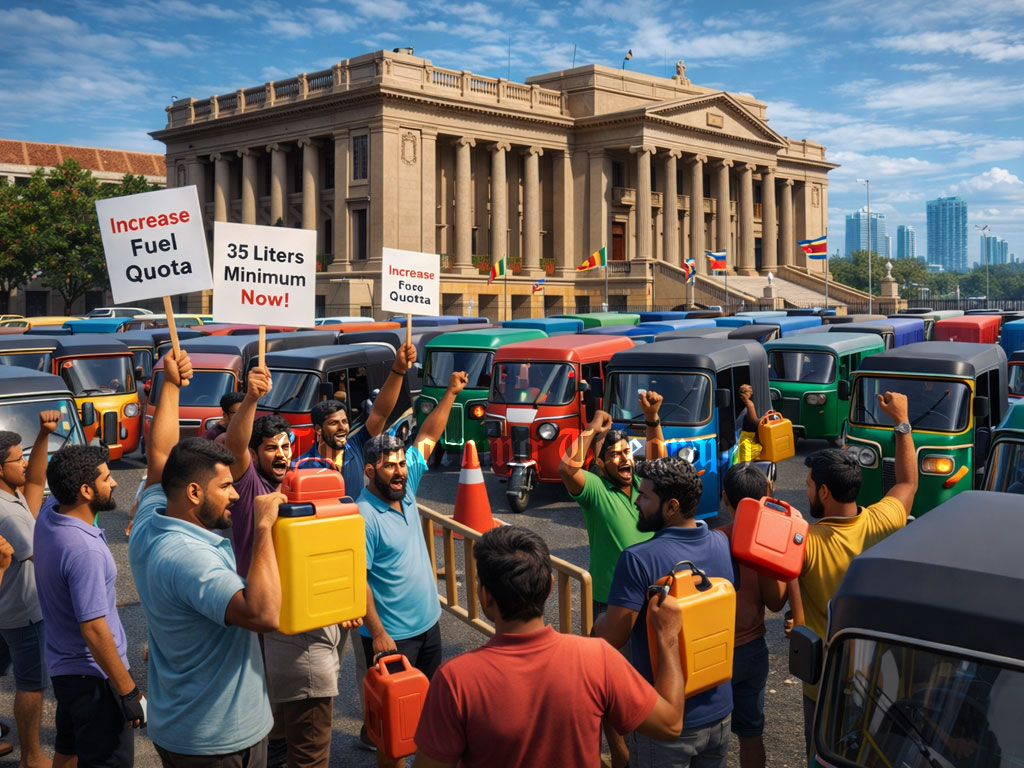
Three-wheeler drivers across Sri Lanka are warning that the weekly fuel quota allocated under the QR code based fuel distribution system is far too low to sustain their daily operations, raising concerns that protests may erupt if authorities fail to revise the current limits.

Drivers say the present system allows only 15 liters of fuel per week for each three-wheeler, an amount they claim is insufficient for those who depend entirely on their vehicles as their primary source of income and daily livelihood.
Representatives of several three-wheeler associations argue that drivers require at least 35 liters of fuel each week to run services properly and maintain stable earnings under the existing economic conditions.
They warn that frustration is rapidly growing among drivers and that a protest could soon take place in front of the Presidential Secretariat, where drivers may block sections of Galle Road if the fuel quota system is not revised by authorities.
Meanwhile, representatives from other transport sectors including school transport operators and private bus operators have also raised serious concerns about the current QR fuel allocation limits affecting public transport services.
School transport operators say the weekly allocation of 60 liters of diesel for buses is not sufficient to maintain daily student transport operations and normal road service requirements. They are requesting authorities to raise the quota to 100 liters to meet operational needs.
Private bus operators have also warned that if the fuel quota remains unchanged, several bus routes could be reduced or suspended due to limited fuel availability.