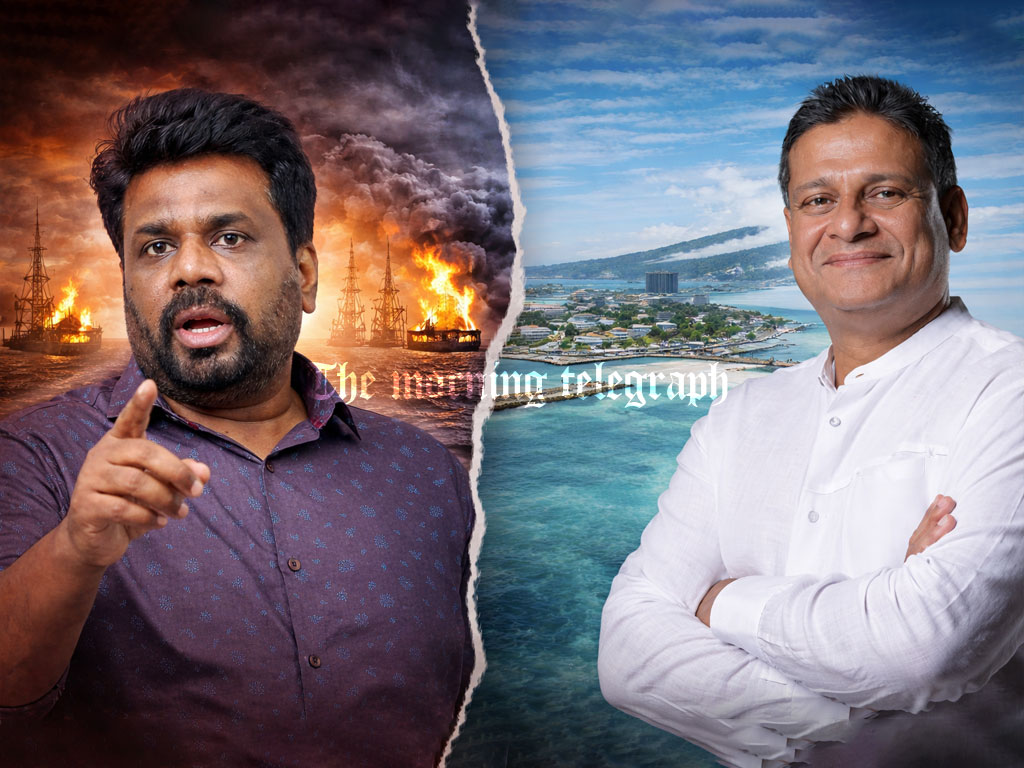
While President Anura Kumara Dissanayake delivers another speech devoid of solutions, entrepreneur Dilith Jayaweera presents a starkly different perspective, urging Sri Lanka to see global crisis as a gateway to unprecedented opportunity.
President Anura Kumara Dissanayake addressed Parliament again yesterday (20). Even as he arrives, there is a predictable weariness. His speeches have become monotonous, and the public already knows what he is going to say before he steps into the chamber.
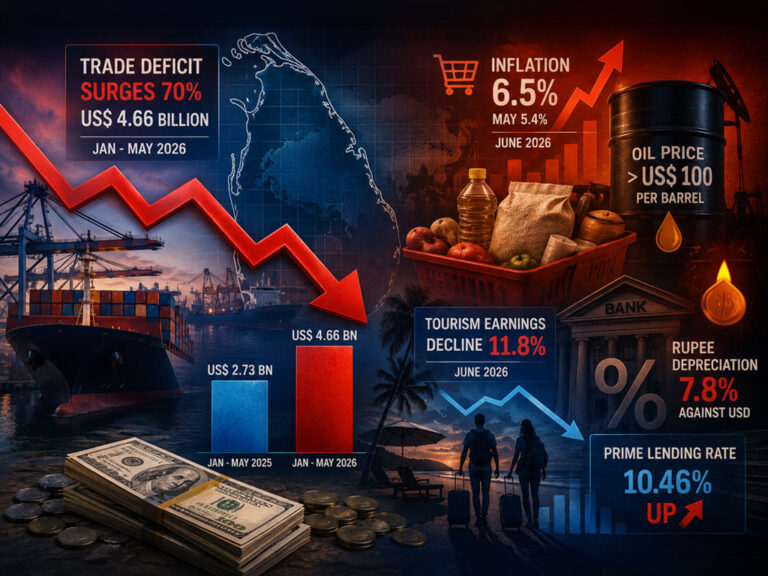
As usual, today’s address offered no solutions. It merely presented a few problems facing the country along with some basic data. This is a moment of global crisis, and the President’s remarks simply highlighted his struggle to keep the nation barely breathing. There was no meaningful solution, no sense of hope, no positive sentiment to be found in his words.

The most compelling take came instead from Dilith Jayaweera. Jayaweera is an entrepreneur, someone who sees the world and its challenges through an entrepreneurial mindset. When viewed through such a lens, problems disappear and only opportunities remain. Hailing from a modest middle class family in Galle, his rise to becoming the owner of one of Sri Lanka’s first large scale conglomerates was built precisely on this principle: the entrepreneurial mindset.
Throughout his career, Jayaweera has transformed crises into opportunities, emerging stronger from every challenge. Listening to his perspective on the current crisis reveals a vision entirely different from that of the President. There is no fear, no uncertainty, no despair in his narrative. Instead, he highlights the opportunities Sri Lanka can seize as a nation from this very crisis.
In reality, this global crisis and the ongoing conflict have opened immense opportunities for countries not directly affected. Sri Lanka is one such nation where opportunities have emerged. The only question is whether the government possesses the creativity and capability to recognize and capture them.
Other countries in the region are now focused on seizing these opportunities and generating wealth. No world leader today wastes time merely tracking incoming fuel shipments. The conflict has disrupted global supply chains, creating demand for new shipping routes, ports, and airports. Jayaweera had pointed this out from the very onset of the war, a perspective shaped by decades of international business experience.
The traditional tourism industry has been disrupted. Sri Lanka is no longer seeing only low income backpackers; high spending travelers have lost their usual transit hubs in the Middle East and are seeking new destinations. The Maldives and Bali have already launched aggressive national tourism promotion campaigns to capture this opportunity. Sri Lanka, meanwhile, remains fixated on counting fuel vessels.
These are the opportunities born from crisis. If captured correctly, Sri Lanka would no longer need to anxiously await fuel ships. The crisis has opened doors to foreign exchange earnings far more valuable than hundreds of fuel tankers. Jayaweera laid this out clearly with supporting evidence, speaking as an entrepreneur with deep global connections.
Perhaps for this reason, the government appears to take his words with weight and seriousness. A positive development emerged from the government this morning: preparations are underway to open Mattala Airport for flights arriving from the Middle East. It is encouraging that the government is finally moving beyond lamenting the crisis and attempting to seize new opportunities.
The challenge, however, is whether the administration knows how to execute what it has essentially borrowed from Jayaweera’s playbook. As citizens, what we ask is that the government learns the methodology as well, ensuring that the work gets done. At this moment, what matters is not who delivers, but whether the results are delivered at all.