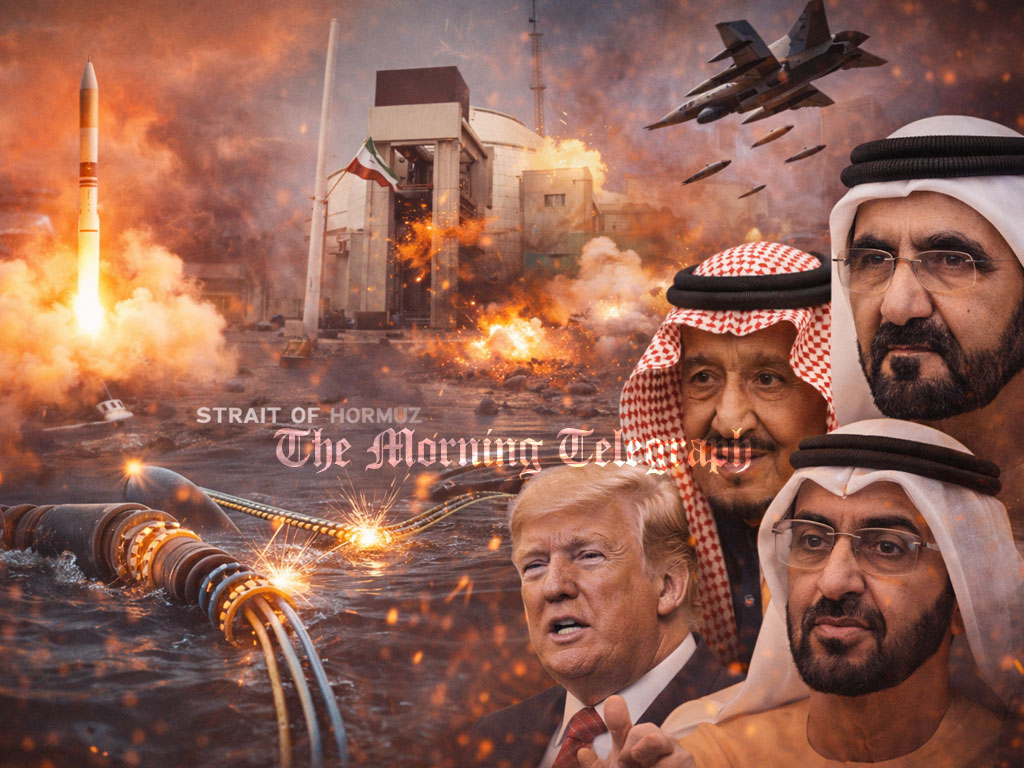
As the Iran conflict enters its third week, undersea internet cables in the Strait of Hormuz face potential destruction, while Saudi Arabia and the UAE join military operations against Iran’s Bushehr nuclear facility, threatening a global communications and energy crisis.
As the war between the United States, Israel, and Iran enters its third week, a grave threat has emerged to global internet infrastructure. Iran has blocked the Strait of Hormuz, raising concerns that underwater communication cables in the narrow waterway could be targeted, potentially disrupting international data flow.
A significant portion of the world’s internet traffic passes through undersea fiber optic cable systems located in narrow straits such as the Strait of Hormuz and Bab el Mandeb in the Red Sea. These cables carry data essential for video calls, emails, banking transactions, and artificial intelligence services. With Iran reportedly laying sea mines in the strait, shipping traffic has been severely disrupted. Given that the Strait of Hormuz is only about 200 feet deep in some areas, damaging the cables would be relatively easy.

Major cable systems such as AAE-1, FALCON, Gulf Bridge International, and Tata-TGN Gulf pass through the Persian Gulf region and directly serve India’s foreign data connections. If these cables are cut, India could experience significant internet slowdowns, affecting banking systems, stock markets, and hospital operations. Experts warn that repairing damaged cables in the current wartime environment would be extremely dangerous, with specialized vessels unable to access the area. Even a single damaged cable could take weeks or months to restore.
A similar incident occurred in 2024 when Houthi rebel attacks damaged cables in the Red Sea, disrupting internet connectivity across Asia and Africa. Analysts now warn that Iran’s underwater units possess the capability to sabotage these cables, potentially triggering a massive global economic and communications crisis.
Gulf Nations Join the Conflict
Amid growing regional economic threats, Saudi Arabia and the United Arab Emirates have shown increasing readiness to support active military operations against Iran. Saudi Arabia has already allowed US forces to use an airbase within its territory, marking a critical turning point in the conflict. Initially, Saudi Arabia had decided not to directly involve itself, but as Iran’s attacks have continued, Riyadh’s patience has worn thin. According to Wall Street Journal reports citing diplomatic sources, “Saudi Arabia’s entry into the war is only a matter of time.”
Gulf states have urged the US government to continue strikes until Iran’s military capacity is completely crippled. However, some Gulf leaders have expressed frustration with certain military decisions made by the Trump administration, particularly regarding the lack of prior notification about Israeli strikes on Iranian energy facilities.
Strike on Bushehr Nuclear Plant
On Tuesday evening, the United States and Israel jointly carried out a strike near Iran’s Bushehr nuclear power plant, according to Iran’s Atomic Energy Organization. Initial reports from Iran’s official IRNA news agency indicated that the attack caused no technical damage to the facility or any casualties.
International Atomic Energy Agency Director General Rafael Grossi expressed deep concern, emphasizing that all parties must exercise “maximum restraint” to ensure nuclear safety during ongoing hostilities. Iran condemned the attack, stating that targeting civilian nuclear facilities violates international law and poses a serious threat to regional security.
The strike came just hours after US President Donald Trump claimed that “good and productive” peace talks were underway with Iran. Following the collapse of negotiations over a nuclear agreement, the US and Israel launched this joint military campaign. Defense Secretary Pete Hegseth made a controversial statement, asserting, “We negotiate with bombs,” and vowed that the US would never allow Iran to acquire a nuclear weapon.