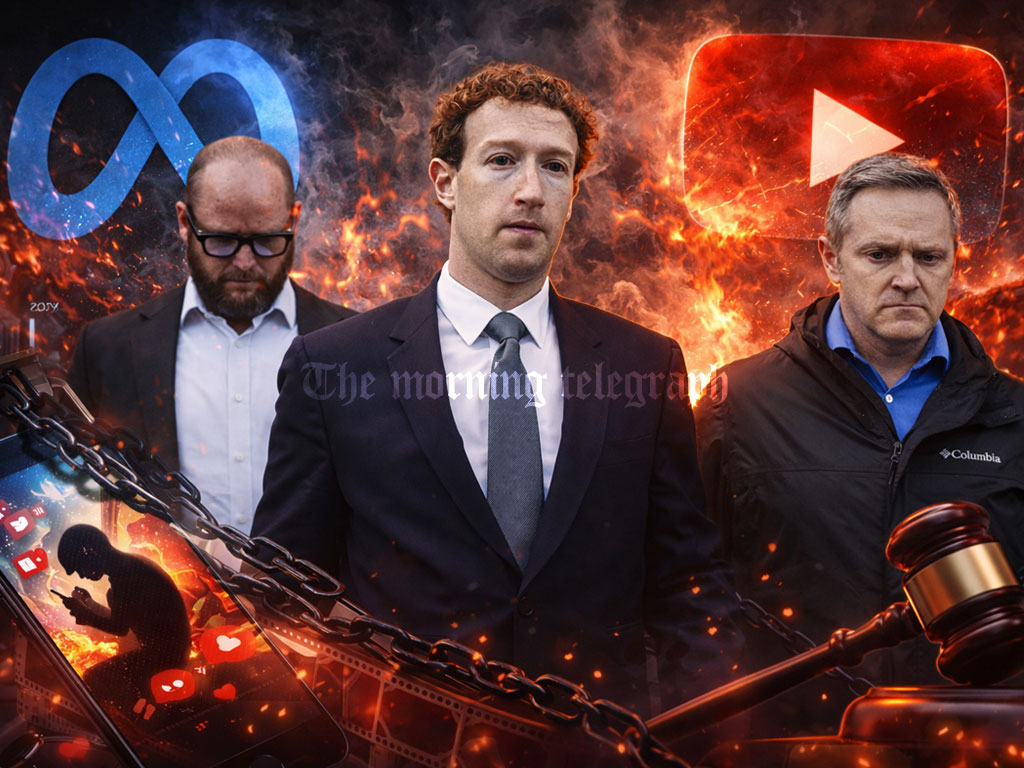
A groundbreaking jury verdict holds Meta and YouTube accountable for social media addiction, signaling a turning point that could reshape the future of digital platforms and user safety worldwide.
A jury in Los Angeles delivered a significant ruling on Wednesday, finding that Meta and Google’s YouTube acted negligently and failed to properly warn users about the risks associated with prolonged use of their platforms. The decision marks a pivotal moment in an ongoing legal battle that could influence the global social media landscape and redefine platform accountability.

The personal injury case, which began in late January at the LA Superior Court, centered on a young woman identified as K.G.M., also known as Kaley. She argued that her early exposure to platforms such as Instagram and YouTube led to addictive usage patterns during her childhood. Jury deliberations commenced on Friday, March 13, after weeks of testimony and evidence.
After careful consideration, jurors sided with the plaintiff, concluding that the negligence of Meta and YouTube played a substantial role in causing mental health harm. The jury awarded compensatory damages totaling $3 million, assigning 70 percent liability to Meta and 30 percent to YouTube. In addition, punitive damages were set at another $3 million, with Meta responsible for $2.1 million and YouTube for $900,000.
Attorneys representing the plaintiff described the verdict as a historic milestone. They emphasized that Kaley demonstrated remarkable courage in bringing her story forward, allowing a jury of her peers to evaluate what the companies knew about potential harms and when they knew it. The legal team stated that this decision represents justice not only for Kaley but also for countless children and families affected by social media addiction and digital platform risks.
In response, a Meta spokesperson stated that the company disagrees with the verdict and is currently reviewing its legal options. Similarly, a Google spokesperson said YouTube plans to appeal, arguing that the platform is a responsibly designed streaming service rather than a traditional social media network.
Legal experts have begun comparing these cases to what they call the social media industry’s Big Tobacco moment, drawing parallels to the 1990s when tobacco companies faced massive financial penalties for misleading the public about health risks. This comparison highlights the growing scrutiny surrounding tech companies, algorithm design, and user safety.
In a separate but related development, jurors in Santa Fe, New Mexico ruled that Meta willfully violated state unfair practices laws. The case, brought forward by Attorney General Raúl Torrez, alleged that the company failed to adequately protect users, particularly minors, from online predators. As a result, Meta was ordered to pay $375 million in damages. The company has indicated that it intends to appeal that ruling as well.
The New Mexico lawsuit is distinct from several other ongoing cases initiated by state attorneys general against major social media companies, including Meta and TikTok. These cases collectively point to a broader legal trend focusing on platform responsibility, digital safety, and the psychological impact of social media usage.
During the six week trial in Los Angeles, jurors examined whether specific design features such as recommendation algorithms, auto play functions, and constant notifications contributed to addictive behavior. The plaintiff, now 20 years old, testified that she experienced severe body dysmorphia, depression, and suicidal thoughts as a result of continuous exposure to curated content and engagement driven features.
This landmark verdict raises critical questions about the role of technology companies in shaping user behavior and protecting mental health. As more lawsuits unfold, the outcome of this case could set a powerful precedent for how social media platforms design their systems and address the risks associated with digital addiction.