Sri Lanka money supply growth raises fears of inflation, rupee pressure, weak reserves, and renewed public distrust in the economy.
Sri Lanka money supply concerns are once again growing as a sharp increase in liquidity raises fresh alarm among economists, market analysts, and citizens still scarred by the devastating economic collapse of 2022.
While the government insists the economy is stabilizing under an International Monetary Fund-backed reform program, critics argue that the Central Bank of Sri Lanka is quietly returning to monetary practices that helped accelerate the country’s earlier crisis.
At the center of the controversy is the dramatic rise in Sri Lanka’s aggregate broad money supply, known as M2b. According to Central Bank data, money supply increased from Rs. 14,439.1 billion in January 2025 to Rs. 16,585.7 billion by March 2026, expanding by more than Rs. 2.1 trillion in just 15 months.
Economists critical of the government say this points to large-scale money creation, even if authorities do not openly describe it as conventional currency printing.

The Central Bank has been purchasing dollars from commercial banks by injecting rupees into the financial system, a strategy officials consider necessary to protect foreign exchange reserves and stabilize the banking sector.
However, critics argue that this process amounts to indirect money printing, despite restrictions under Sri Lanka’s IMF agreement that are intended to limit inflationary financing.
Economic analyst Mr. Tennakoon said the mechanism is simple. According to him, the Central Bank cannot buy dollars from commercial banks without first creating rupees.
“What is happening here is money creation. Printing,” he said, warning that the policy could weaken confidence in the country’s fragile economic recovery.
The concern is not limited to local observers. International economist Steve Hanke, who repeatedly criticized Sri Lanka’s inflation policies during former President Gotabaya Rajapaksa’s administration, recently summarized the country’s predicament on social media with a blunt statement: “Inflation story equals money supply story.”
His remarks revived memories of the period leading up to Sri Lanka’s sovereign default in 2022, when rapid monetary expansion contributed to soaring inflation and the collapse of the rupee.
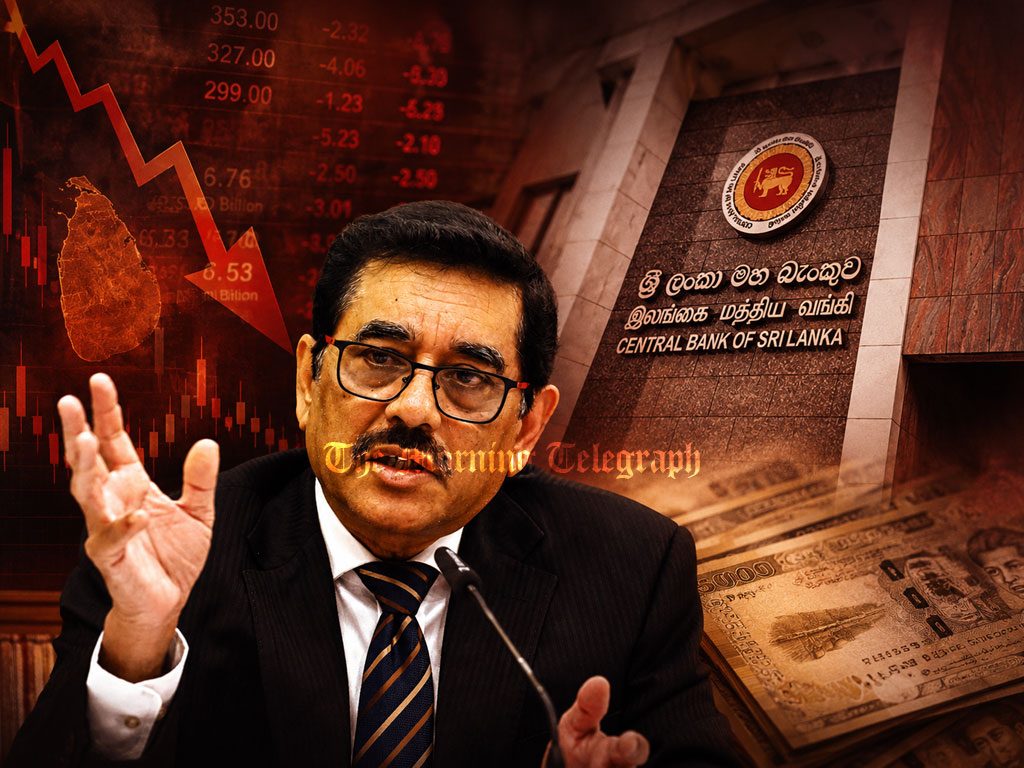
Recent market movements have added to those fears. Financial commentator Ranga Sirilal reported that the rupee has depreciated by more than seven percent against the US dollar this year, weakening from around Rs. 327 per dollar last week and Rs. 299 last year to approximately Rs. 353.
He also noted that the Central Bank printed Rs. 309.4 billion in March alone, bringing total money creation during the first three months of the year to more than Rs. 610 billion.
For ordinary Sri Lankans, the impact is becoming increasingly visible. Newly issued banknotes carrying the signature of President Anura Kumara Dissanayake are now circulating widely across the country.
Currency in circulation rose from Rs. 1.35 trillion at the beginning of 2025 to Rs. 1.65 trillion by May 2026, an increase of more than Rs. 300 billion.
Economists warn that such growth in physical cash circulation could create further inflationary pressure in an economy where food, fuel, and household essentials remain highly sensitive to currency depreciation.
Public confidence has also been shaken by allegations of financial irregularities involving state institutions.
After the Free Lawyers organization exposed what it described as a Treasury-related scandal in April 2026, accusations emerged over missing funds from several major institutions, including the Postal Department, Aswesuma welfare programs, state banks, the Road Development Authority, and SriLankan Airlines.
Although investigations are ongoing, the revelations have intensified broader concerns over transparency, fiscal discipline, and public accountability.
Critics say the Central Bank has failed to offer a convincing explanation for the rapid increase in money supply, the unusual expansion of currency circulation, and what they describe as unofficial efforts to manage the exchange rate.
Reports indicate that Central Bank officials privately encouraged commercial banks and licensed money exchangers to keep the dollar within a range of Rs. 329 to Rs. 335, despite pressure in the open market.
The Central Bank is also accused of informally maintaining an interbank exchange benchmark near Rs. 330 per dollar, a move some economists say contradicts IMF principles favoring market-determined exchange rates.
At the same time, authorities have shortened the period allowed for importers to bring export earnings into the country from 90 days to 30 days, another measure critics compare to emergency currency controls imposed during the peak of the previous crisis.
Analysts warn that these interventions may only delay deeper economic pain. Rising inflationary pressure and currency weakness are expected to push interest rates higher in the coming months, increasing borrowing costs for businesses and households.
Fuel prices and the cost of imported goods are also likely to rise if the rupee continues to depreciate.
Perhaps the most troubling issue for policymakers is that the aggressive monetary expansion has delivered little improvement in Sri Lanka’s foreign reserves.
Official reserves stood at USD 6.53 billion in March 2025 and had risen only marginally to USD 6.76 billion by April 2026.
Economists note that during 2023 and 2024, the Central Bank was able to build reserves by around USD 175 million per month without such dramatic growth in the money supply.
Meanwhile, Sri Lanka is expected to receive another USD 700 million installment from the IMF later this month. However, that funding is largely earmarked for budgetary support and Treasury operations rather than reserve accumulation, limiting its ability to strengthen the country’s external financial position.
Government debt also continues to climb. Outstanding central government debt, which stood at Rs. 28.24 trillion in late 2024, is projected to increase by nearly Rs. 1.75 trillion by the end of 2025, approaching Rs. 30 trillion.
Economists warn that rising debt, combined with rapid money creation, creates a dangerous mix that could weaken investor confidence and place renewed pressure on the financial system.
For many Sri Lankans, the developments are an unsettling reminder of how quickly economic stability can unravel.
Just four years after the island nation suffered its worst financial collapse since independence, fears are growing that unresolved structural weaknesses remain buried beneath official recovery narratives.