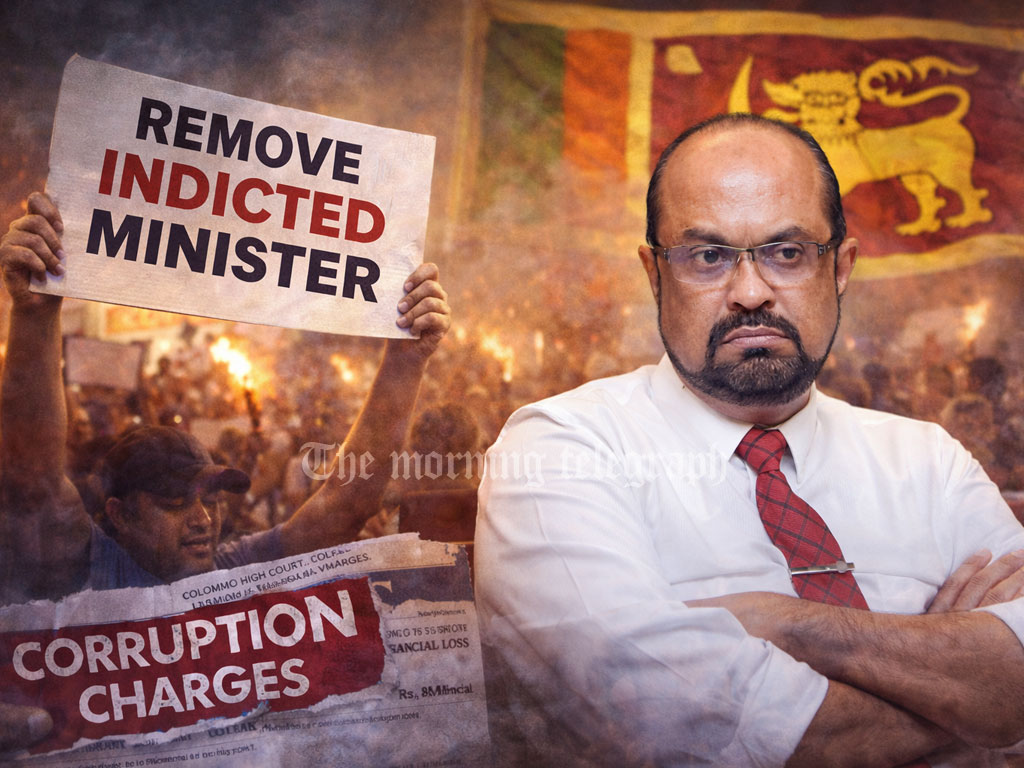
Sri Lanka’s government is under growing fire after choosing to keep Energy Minister Kumara Jayakody in office despite a formal court indictment, a move critics say exposes a troubling gap between the administration’s anti-corruption promises and its actions in power.
Sri Lanka’s government is facing mounting criticism over what many see as a stubborn and dismissive response to corruption allegations against Energy Minister Kumara Jayakody. Instead of distancing itself from the controversy, the administration has chosen to keep him in office even after a formal indictment, fueling accusations of arrogance, political double standards, and disregard for public accountability. Civil society voices, opposition parties, and independent observers say the decision sends a deeply damaging signal at a time when the government claims to stand for reform, transparency, and clean governance.

The controversy revolves around a case before the Colombo High Court, where Jayakody has been accused of causing a financial loss of Rs. 8.8 million to the state during his tenure at the Fertilizer Corporation in 2016. He was granted bail on March 26 on two personal sureties of Rs. 1 million each. Yet despite the seriousness of the indictment and the ongoing court proceedings, the government has made it clear that it has no intention of asking him to resign or removing him from the cabinet. That position has become the center of a widening political and ethical storm.
Senior figures within the administration have defended the decision in openly political terms. Inside government circles, there appears to be a strong belief that forcing Jayakody to step down would be interpreted as a political win for the opposition. That calculation has triggered sharp criticism from analysts and governance advocates, who argue that the government is putting political optics ahead of basic standards of accountability, democratic responsibility, and institutional integrity. For many critics, this is not just a personnel issue. It is a revealing test of whether the government values principle over partisan advantage.
At a cabinet media briefing held on March 31, Minister Nalinda Jayatissa confirmed that Jayakody would remain in office and that no cabinet decision had been taken regarding his removal or temporary suspension. The response was widely seen as blunt, inflexible, and out of touch with public expectations. Rather than reducing the pressure, the statement appeared to strengthen the impression that the administration is unwilling to seriously engage with ethical concerns, public anger, or the reputational cost of keeping an indicted minister in power.
Critics warn that the government’s stance risks setting a dangerous precedent about the standards expected from those who hold public office. The Centre for Policy Alternatives has cautioned that allowing an indicted minister to remain in cabinet could weaken confidence in anti-corruption institutions and erode public trust in the state. The group emphasized that public officials, especially those facing serious legal allegations, should demonstrate integrity and accountability, and it called for urgent corrective action. For many, the issue goes beyond the courtroom and touches the moral credibility of the entire administration.
Public reaction has been fast, visible, and increasingly uncomfortable for the ruling camp. Even some voices aligned with the government have used social media to express unease and frustration, urging Jayakody to step aside at least until the court process is complete. To many Sri Lankans, this is not only a legal matter but a powerful symbol of how seriously the government takes transparency, ethics, and political responsibility. The longer the administration resists public sentiment, the more the controversy risks becoming a broader verdict on its sincerity.
President Anura Kumara Dissanayake’s administration came to office under the banner of reform, presenting itself as an alternative to the corruption, impunity, and political protection that had damaged public faith in Sri Lankan institutions. Backed by the National People’s Power coalition, the government promised accountability, cleaner governance, and a restoration of trust in public life. But the handling of the Jayakody indictment is now being seen by critics as a sharp contradiction of those promises, raising doubts about whether the reform agenda will survive first contact with political self-interest.
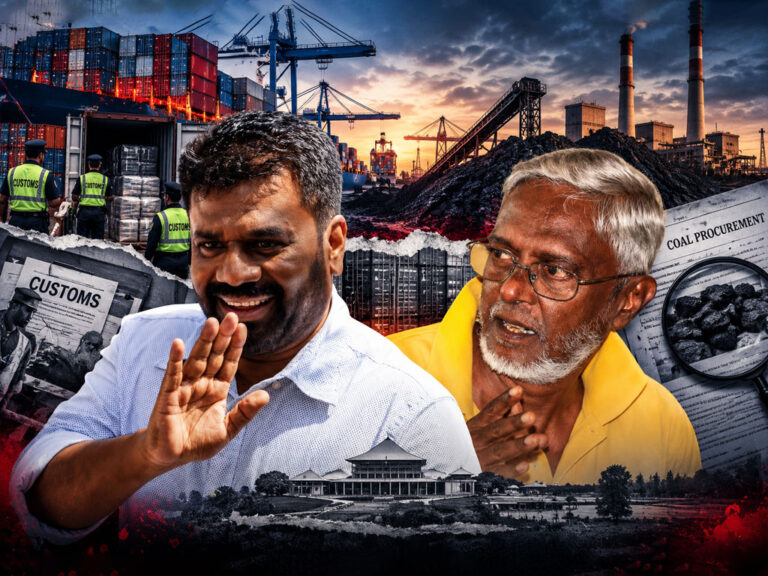
The situation has become even more sensitive because of separate allegations surrounding coal procurement and the wider energy sector during Jayakody’s time in office. While those claims are distinct from the current High Court indictment, they have intensified public concern over governance, ministerial conduct, and the credibility of the government’s anti-corruption posture. At a time when Sri Lanka continues to face pressure over energy policy, cost, and public confidence, critics say such controversies only deepen mistrust and weaken the image of a government that promised to do things differently.
The political fallout is likely to grow in the days ahead. A no-confidence motion against Jayakody is scheduled to be debated in Parliament on April 10, setting up a potentially explosive confrontation that could test both the government’s internal discipline and the opposition’s ability to turn public anger into parliamentary pressure. At the same time, the High Court case is due to resume on May 6, ensuring that the legal and political heat surrounding the minister will continue. What began as a corruption case is now becoming a defining credibility test for a government that rose to power promising accountability.