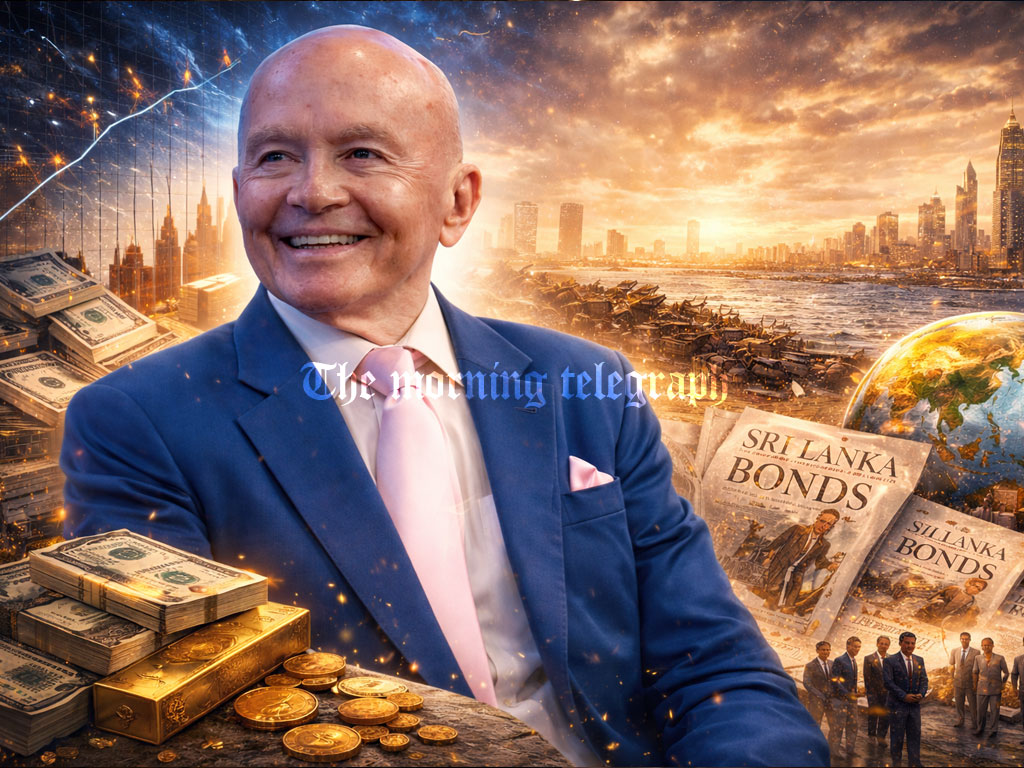
A global investing legend who saw opportunity where others saw risk, Mark Mobius helped shape Sri Lanka’s post-war financial story and left behind a legacy that still echoes through its markets.
Mark Mobius, the legendary emerging markets investor and one of Sri Lanka’s most influential foreign backers in its post-war recovery, has died at the age of 89.
Widely regarded as a pioneer of emerging market investing, Mobius was far more than a global fund manager in the Sri Lankan context. He became a symbol of confidence at a time when the island nation was struggling to rebuild its economy and credibility following decades of civil conflict.
According to a statement shared on his LinkedIn page, Mobius passed away on Wednesday. No cause of death was disclosed.

Mobius built his reputation on identifying opportunity in uncertainty. His philosophy was simple yet bold. Volatility was not something to fear but rather a signal that opportunity was close. This belief guided his investment decisions across some of the world’s most complex and high-risk markets.
For Sri Lanka, his role became especially significant in the fragile months after the civil war ended in 2009. At a time when global investors remained cautious and sceptical, Mobius stepped in with conviction.
Through the Templeton Emerging Markets Group, he led one of the most decisive foreign investment moves in Sri Lanka’s financial history. His firm began aggressively purchasing Sri Lankan government bonds, eventually holding nearly 800 million dollars in sovereign debt.
This was not merely an investment. It was a turning point. For a frontier economy emerging from conflict, Mobius’s entry into the bond market acted as a powerful signal to the global financial community that Sri Lanka was worth betting on.
His timing aligned with a wave of domestic optimism and a government narrative focused on rebuilding and growth. While others hesitated, Mobius saw the potential of a post-war peace dividend reflected in high-yielding local debt instruments.
At the time, Sri Lanka had narrowly avoided a balance of payments crisis with the help of a 2.6 billion dollar Stand-By Arrangement from the International Monetary Fund. While that agreement provided economic stability, Mobius’s investment provided something equally important. Confidence.
A key foundation of Templeton’s exposure to Sri Lanka was built on close engagement with policymakers, particularly then Central Bank Governor Ajith Nivard Cabraal. Their discussions focused on currency stability, infrastructure development, and maintaining investor trust.
Mobius consistently emphasized that currency strength was driven not only by interest rates but by confidence. He believed that with the war behind and IMF support in place, the Sri Lankan rupee would remain stable.
He publicly expressed optimism about the country’s monetary direction, stating that the worst of currency depreciation had already passed and that stability would follow through reforms and disciplined policy execution.
During his frequent visits to Colombo, Mobius went beyond financial data. He observed the country firsthand, meeting corporate leaders and studying infrastructure developments. He often pointed to the rapid rise of Chinese-funded projects and a changing skyline as indicators of long-term growth potential.
He described Sri Lanka as the next major investment frontier, driven by improving liquidity, foreign exchange management, and currency direction.
Although he later expanded his investments into equities and private ventures, his defining legacy in Sri Lanka remained rooted in sovereign bonds. He demonstrated that even a country emerging from conflict could attract significant global capital if the narrative of stability and growth was compelling.
In later years, however, some of the assumptions behind that optimism were tested. The soft peg currency system came under pressure, leading to depreciations that challenged earlier expectations.
Despite this, Mobius remained consistently bullish on Sri Lanka’s long-term potential. Even during periods of economic turbulence, he continued to advocate for reforms, lower interest rates, and a stronger push toward digital transformation.
His passing marks the end of an era not only globally but within Sri Lanka’s financial history. He was among the first global investors to treat Colombo as a serious destination for capital rather than a post-conflict risk zone.
For policymakers, he was a crucial partner during a defining period. For investors who followed, he was proof that bold decisions in high-risk environments could yield significant rewards.
Mobius spent over three decades with Templeton Emerging Markets Group as its executive chairman, traveling extensively across the globe in search of undervalued markets and overlooked opportunities. He is believed to have visited more than 100 countries during his career.
He became the public face of emerging markets investing at a time when the asset class was still gaining recognition. His calm demeanor and deep knowledge reassured investors wary of political instability, currency volatility, and governance challenges.
Born in Hempstead, New York, to Puerto Rican and German parents, Joseph Bernhard Mark Mobius earned his PhD in economics from MIT in 1964. His academic work focused on communication satellites, reflecting an early interest in global systems.
Before becoming a financial icon, he explored diverse career paths, including fine arts, teaching, talent management, and even marketing Snoopy products across Asia. He also worked as a political consultant, adding further depth to his understanding of global dynamics.
Mark Mobius leaves behind a legacy defined by courage, conviction, and an unwavering belief in the potential of emerging markets. In Sri Lanka, his story will always be remembered as the moment when global capital chose to believe again.