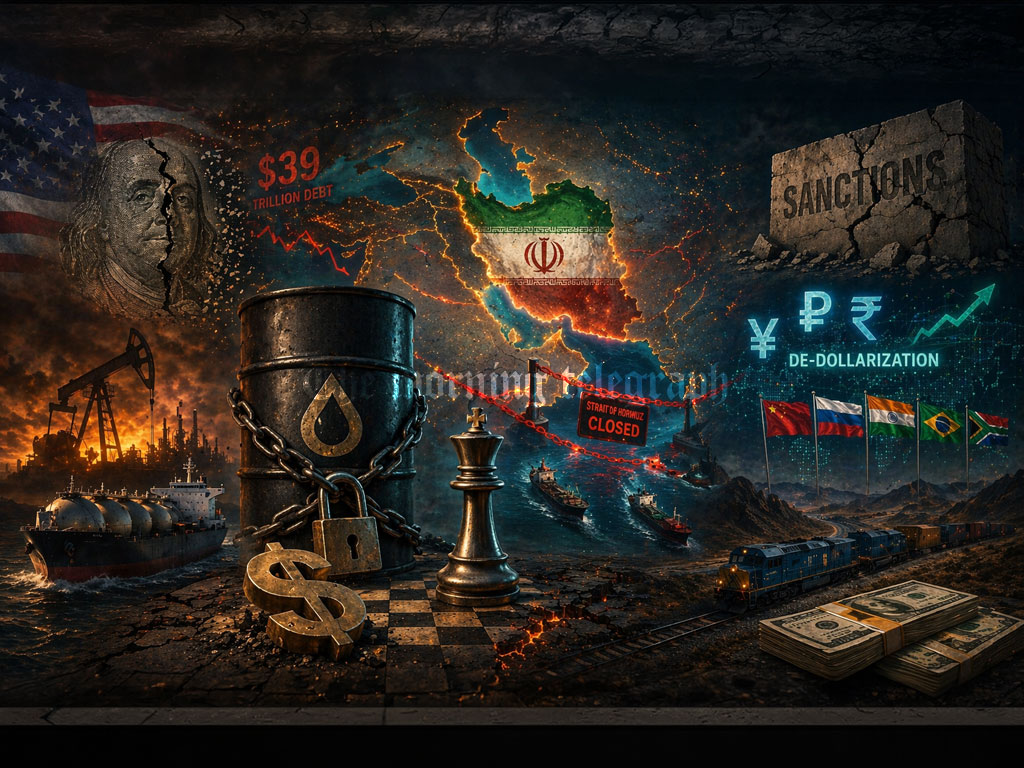
A deep geopolitical power struggle unfolds as Iran’s latest decision signals a larger battle over oil, currency dominance, and the future of global economic control.
The answer that America had been waiting for may have finally arrived. Just hours after Iran’s National Security Committee announced that it would not allow refined uranium to leave the country, the implications of that decision began to ripple across global politics and energy markets.
For decades, the global crude oil trade has revolved around the US dollar, forming what is widely known as the petrodollar system. Any nation seeking to purchase oil has traditionally needed access to dollars, effectively binding the world’s economies to the American financial system and reinforcing US economic dominance.

Today, however, that system faces mounting pressure. The United States is burdened with a national debt exceeding 39 trillion dollars, while its decision to freeze Russian assets during the Ukraine conflict has shaken global confidence. Countries such as China, Russia, and other BRICS members are increasingly exploring alternative payment systems that bypass the dollar.
This emerging shift represents a serious threat to American influence. The growing tensions surrounding Iran are increasingly viewed as part of a broader strategy to preserve the petrodollar system. When examining recent actions against Iran, it becomes evident that economic objectives are central. Unlike previous conflicts driven by direct gain, this confrontation appears aimed at maintaining control over global energy flows.
Through the Ukraine war, efforts were made to disrupt Russian oil exports, forcing regions like Europe and East Asia to seek alternative suppliers, particularly North America. Now, by escalating tensions with Iran and destabilizing Middle Eastern oil supplies, a similar outcome is being pursued, pushing countries toward reliance on American oil and gas.
The situation draws parallels to Shakespeare’s King Lear, where a once dominant ruler struggles to maintain authority. The petrodollar system, long unchallenged, now faces erosion as global economic dynamics shift. By freezing Russian assets, the United States may have weakened its own credibility as a trusted financial hub.
China’s role in this evolving scenario is critical. As Iran’s largest oil customer, purchasing nearly 90 percent of its exports, China has deep strategic interests tied to Iran, particularly through the Belt and Road Initiative. However, the instability in the Middle East places pressure on China’s already strained economy.
Reports suggest that Iran entered negotiations in Islamabad partly due to Chinese pressure, as Beijing seeks stability in energy supply chains. At the same time, proposals from the United States urging China to shift energy purchases away from Iran and Russia toward North America have been viewed as economic coercion.
China’s need for affordable Iranian oil is essential for sustaining its industrial base. The idea of replacing it with more expensive American energy sources presents a strategic dilemma. The presence of key figures aligned with Donald Trump during the Islamabad talks highlights the economic and geopolitical stakes involved.
For the United States, the objective appears less about achieving peace and more about shaping global oil markets. Iran, on the other hand, approached the talks with caution, aware of past risks faced by leaders in similar negotiations. Economic pressure from China, combined with regional instability, influenced Iran’s decision to engage.
Despite these efforts, the Islamabad talks ultimately failed. The United States reportedly rejected Iran’s proposals, including demands related to lifting sanctions and maintaining sovereignty over the Strait of Hormuz. The breakdown reflects deeper strategic intentions, where prolonging instability may serve broader economic goals.
The aftermath has already begun to unfold. Iran’s move to tighten control over the Strait of Hormuz disrupts one of the world’s most critical oil transit routes. In response, the United States has intensified its naval posture, effectively reinforcing a blockade that impacts global shipping.
This strategy also places indirect pressure on China. With Iranian and Russian oil constrained, many countries are forced to seek alternatives, increasing dependence on North American energy exports. Simultaneously, strategic positioning in regions such as the Strait of Malacca further amplifies control over global supply routes.
Recent reports indicate that military actions targeting Iran extend beyond traditional objectives, focusing on infrastructure such as railways, bridges, and communication systems. This approach aims to weaken internal stability rather than direct military confrontation, reflecting a calculated strategy rooted in economic and logistical disruption.
Speculation continues about the possibility of renewed negotiations. Rising oil prices are creating domestic pressure within the United States, while China’s need for stable energy supplies pushes both sides toward temporary compromises. However, lasting peace remains uncertain.
Any future negotiations may involve conditions that Iran is unlikely to accept, such as halting uranium production entirely. This would allow the United States to frame Iran as uncooperative, justifying further isolation and strategic measures.
Russia emerges as a significant counterbalance in this dynamic. By supplying essential resources to Iran and maintaining financial and logistical links, Moscow helps mitigate the impact of sanctions and blockades. This partnership complicates efforts to fully isolate Iran and adds another layer to the geopolitical contest.
Each major player pursues its own objectives. The United States seeks to preserve the dominance of the dollar and maintain control over global energy markets. Russia aims to counter American influence while advancing its own strategic interests. Iran focuses on protecting its sovereignty and resisting economic pressure.
For smaller economies like Sri Lanka, the consequences of this global power struggle are far from abstract. Fluctuating oil prices, supply disruptions, and currency volatility directly impact economic stability. Maritime tensions in key shipping routes could also affect trade and port operations across the region.
As history has shown, transitions in global power often come with significant turmoil. The unfolding contest over energy, currency, and influence may shape the next phase of the global order, with consequences that extend far beyond the immediate actors involved.