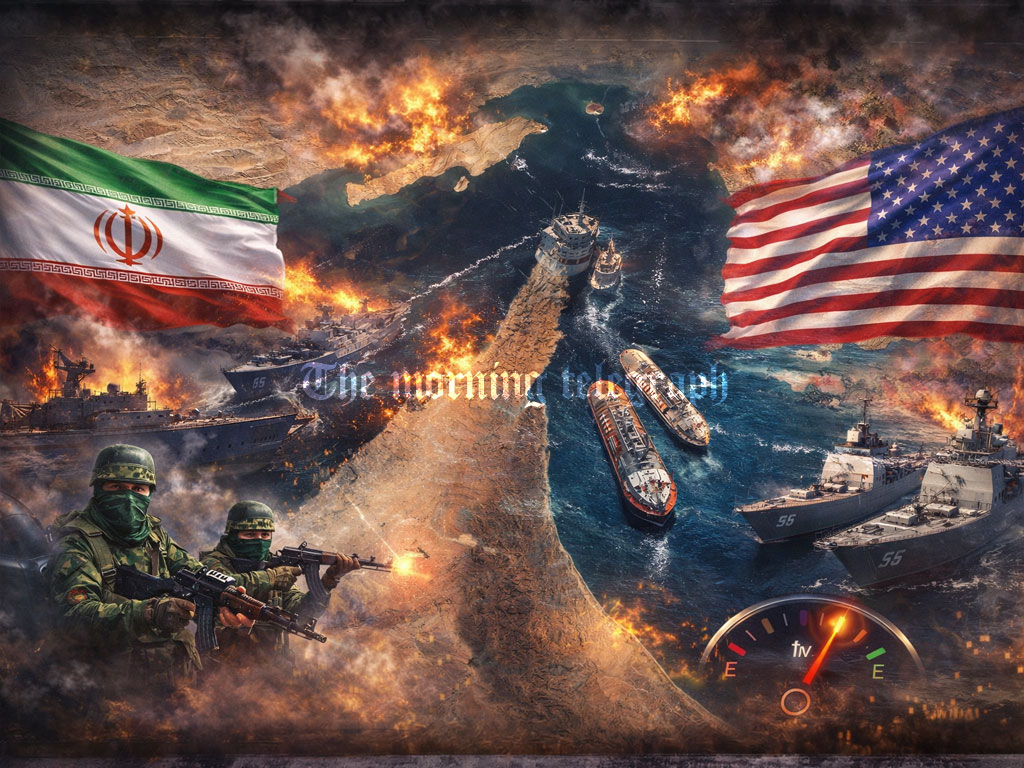
Global energy markets face fresh uncertainty as Iran escalates control over the Strait of Hormuz, raising fears of disruption to one of the world’s most critical oil routes.
The headquarters of Iran’s Islamic Revolutionary Guard Corps has announced that control over shipping through the Strait of Hormuz has once again been elevated to a strict military management level under its armed forces, signaling a significant escalation in regional tensions.
Iranian authorities have stated that this decision was driven by the continued naval blockade imposed on Iranian ports by the United States, accusing Washington of failing to honor previous commitments and maintaining pressure through sanctions and maritime restrictions.

Speaker of the Iranian Parliament, Mohammad Bagher Ghalibaf, emphasized that Iran is under no obligation to keep the Strait of Hormuz open if the United States persists with its blockade, reinforcing the country’s firm stance on sovereignty and maritime control.
Just days earlier, Iranian Foreign Minister Abbas Araghchi had publicly confirmed that the strait would remain open for all commercial shipping in line with the ceasefire arrangements connected to the situation in Lebanon, offering temporary reassurance to global markets.
US President Donald Trump welcomed that earlier decision, but Iran has since reversed its position, citing the continued enforcement of sanctions and the failure to ease economic and maritime restrictions affecting its ports.
Iranian officials further noted that they had initially permitted only limited and carefully managed shipping access, indicating that flexibility had been extended under specific conditions which have now changed.
State media reported that the United States continues to act aggressively at sea, maintaining its naval blockade, prompting Iran to place the Strait of Hormuz under tighter operational control through its military forces.
The Strait of Hormuz remains one of the most strategically vital waterways in the world, carrying nearly 20 percent of global oil supply, and its disruption has historically triggered immediate reactions in international oil prices and energy markets.
The strait had already been closed in late February following escalating confrontations involving the United States and Israel, leading to a noticeable surge in global oil prices and heightened geopolitical risk.
With the ten-day ceasefire between Israel and Lebanon expected to conclude on April 26, analysts suggest that the future status of the Strait of Hormuz will largely depend on how the regional situation evolves once the ceasefire ends.