Political earthquake hits as Sajith Premadasa’s opposition turns coal scandal into a two thirds majority nightmare, with secret audio leaks, a $286 per barrel oil shock, and a May Day rally that could reshape Sri Lanka’s future.
The Sinhala and Hindu New Year dawned not with the usual festive celebrations, family gatherings, and traditional rituals but rather with a profound political tremor centered squarely on the government. This marked the dramatic climax of months of relentless revelations by the opposition regarding an alleged coal procurement scandal that has shaken the foundations of the administration. Led by Opposition Leader Sajith Premadasa, the Samagi Jana Balawegaya, commonly known as the SJB, persistently accused the government of multiple irregularities in coal imports, ranging from tender manipulation to emergency purchases at inflated prices. Those allegations appeared to gain firm, undeniable ground when an audit report issued by the Auditor General’s Department seemed to substantiate every major claim, leaving the government, despite its commanding two thirds parliamentary majority, politically cornered and increasingly defensive.

Several months earlier, a series of astrological forecasts had been published predicting that the government would face a particularly difficult period after March. Among these were the controversial predictions of well known astrologer K.C.J. Ratnayake. Notably, Ratnayake had boldly predicted, even before the presidential election, that Anura Kumara Dissanayake would become President, a forecast made at a time when many prominent astrologers were predicting a victory for Sajith Premadasa. In subsequent months, Ratnayake continued to share a number of striking predictions via his YouTube channel. One of them warned that after March 2026, the ruling administration would face a series of serious challenges, with their consequences likely extending into mid 2027. He even suggested that the severity of these crises would make it difficult to determine whether the government could overcome them or become trapped within them.
As is often the case, opinions on such political forecasts remain divided. While some take them seriously, others dismiss them, particularly given that several high profile astrologers in the past have damaged their reputations by making inaccurate political predictions, eventually reducing themselves to little more than political caricatures. However, given Ratnayake’s track record of several accurate forecasts, ‘Mawrata’ chose to publish his warning about the government’s post March difficulties. True to that prediction, by March 2026, the government found itself grappling with a series of serious issues stemming from the coal deal, developments few had anticipated. The allegations proved so significant that an opposition with only around forty MPs managed to exert considerable pressure on a government commanding a special majority of 159 members. In the process, a previously fragmented opposition appeared reinvigorated and unified, something many political commentators had thought impossible just months earlier.
Amid mounting pressure from civil society, ordinary citizens, and even within its own ranks, many called on the President to deliver the change and clean governance he had promised, beginning with the immediate removal of the accused Minister of Power and Energy, Kumara Jayakody. The demand intensified further after the audit report appeared to validate the opposition’s claims with documentary evidence and financial figures. Many expected that, in line with the government’s pre election commitment to principled politics and zero tolerance for corruption, Jayakody would at least be asked to step aside pending the conclusion of investigations. However, despite the growing pressure from multiple directions, no such action was taken. Instead, the government appeared to shift its strategy, attempting both to deflect the allegations and to redirect the focus of investigations. This became evident during the concluding speech of Minister Bimal Rathnayake in the no confidence motion debate against Jayakody. He announced in Parliament that the government had decided to investigate all coal shipments to Sri Lanka dating back to 2009 and that the President would appoint a special presidential commission for this purpose.
Despite this statement, the very next day, Presidential Secretary Nandika Kumanayake lodged a complaint with the Criminal Investigation Department, calling for an immediate probe into coal imports. Acting swiftly, the CID sealed the offices of the Lanka Coal Company. Yet, within 24 hours, reports emerged that the same offices had been reopened, allowing officials to resume their duties, while CID officers remained on site to monitor activities. Many observers pointed out that rather than focusing squarely on the coal scandal, already highlighted in the audit report, there appeared to be attempts to pursue other lines of inquiry. The sequence of events, they noted, seemed inconsistent and raised further questions about the direction and intent of the investigations. This back and forth only fueled public suspicion that the government was more interested in managing perceptions than in uncovering the truth.
Just hours before the Sinhala New Year dawned, a group released an alleged audio recording on social media linked to the controversial coal imports. The clip was said to capture a discussion surrounding the government’s recent emergency coal purchases. It appeared to feature a conversation involving the Chairman of the Lanka Coal Company and two other officials, with one individual seemingly representing the company involved in the emergency procurement. In the recording, the chairman was heard mentioning both the president and prominent businessman Dhammika Perera. Within hours of being leaked, the audio clip went viral across multiple social media platforms, generating intense public debate and speculation. While the government maintained silence and issued no immediate response, opposition MPs Mujibur Rahuman and Varuna Rajapaksha quickly lodged complaints with the Criminal Investigation Department, calling for an urgent investigation. By the time the New Year dawned, the controversy surrounding the alleged coal scam had intensified dramatically, dominating news cycles and family conversations alike.
At present, the issue of coal imports has sparked significant public debate across the country. Many observers argue that the government’s decision to appoint a presidential commission to investigate coal imports dating back to 2009 appears to be an attempt not only to silence the opposition but also to justify losses incurred over the years. The strategy, critics say, is to muddy the waters by dragging multiple past administrations into the spotlight, thereby diluting the focus on the current government’s alleged misdeeds. Since 2009, coal imports have taken place under successive administrations led by Presidents Mahinda Rajapaksa, Maithripala Sirisena, Gotabaya Rajapaksa, and Ranil Wickremesinghe, with ministers such as Champika Ranawaka, Ranjith Siyambalapitiya, Kanchana Wijesekera, and D.V. Chanaka overseeing the relevant portfolios at different times. This long history has led to pointed questions from the opposition: is the commission genuinely meant to investigate all those past administrations thoroughly, or is it primarily a strategy to deflect allegations currently directed at the present government?
If the government’s intention in appointing the commission was to frighten the opposition into silence, the question remains, has it worked? Has the opposition backed off from raising the coal issue? Information available suggests otherwise. Even during the Sinhala New Year holidays, when most political activity traditionally halts, Opposition Leader Sajith Premadasa and members of the Samagi Jana Balawegaya continued discussions via Zoom, engaging MPs in ongoing strategy sessions. According to reliable sources, several key decisions were taken during these meetings. Foremost among them was the decision not to obstruct the Presidential Commission in any way, but instead to fully cooperate with its proceedings, a stance rooted in the belief that neither the party nor its MPs are implicated in coal import dealings. This cooperative approach is designed to contrast sharply with the government’s defensive posture.
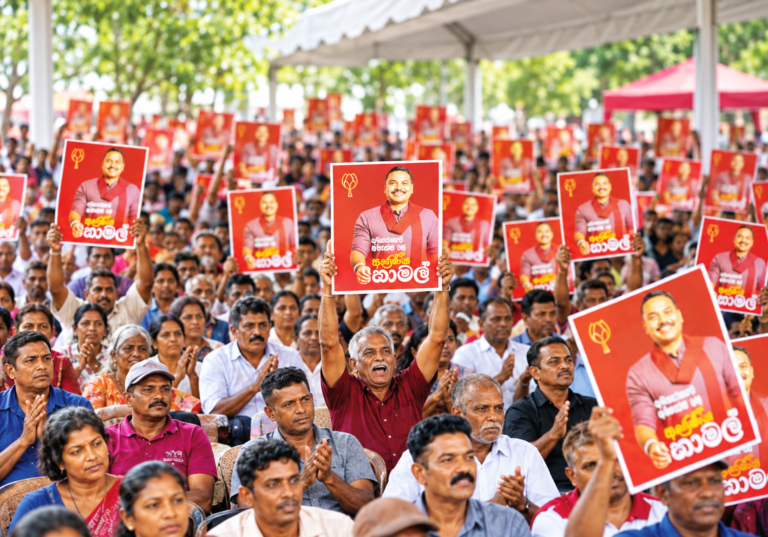
At the same time, the opposition resolved not to retreat even an inch from its campaign against the alleged import of substandard coal and the controversial emergency purchases. On the contrary, they decided to intensify their efforts and relaunch the campaign with renewed force following the New Year holidays. Another notable decision was to reverse an earlier plan and proceed with holding a May Day rally. Initially, the SJB had opted not to organize a rally due to the Vesak full moon falling on the same day. However, in light of the current political climate, particularly the fallout from the coal issue, the party has now decided to hold the event on a significant scale. Out of respect for Vesak, there will be no processions, no loud music, and no traditional parade elements. Instead, the rally will focus on voicing opposition to the alleged coal scam and other acts of corruption attributed to the government. Many within the party emphasized that the rally should serve as a platform to take the coal controversy deeper into the national conversation, especially as they believe the government is attempting to suppress the issue through various tactics.
In addition, sources indicate that several technical aspects related to the coal controversy were discussed in detail during these meetings, though specifics remain undisclosed for now. What is clear, however, is that further developments are imminent. There are indications that another major revelation tied to the coal issue could emerge shortly, potentially bringing yet another controversial dimension into the spotlight. Taken together, these developments suggest that the unfolding saga surrounding substandard coal imports is far from over and that the political storm it has triggered is likely to intensify in the days ahead.
During these discussions, particular attention was also given to the release of a high level audio recording related to coal imports at a critical moment. Many noted that the leak of this conversation had caused serious unease even among powerful figures within the government. There are indications that key elements within the administration have already begun urgently probing who might be behind the release, with suspicions reportedly falling on certain groups. Similarly, during the opposition’s Zoom discussions, there had been an exchange of views on who could be responsible for leaking the recording and bringing the conversation into the public domain. Some participants expressed the view that this controversial audio clip is unlikely to be the end of the matter. Rather, it could be just the first in a series of revelations. It was also suggested that more significant disclosures of a similar nature could emerge in the near future, potentially involving even higher ranking officials.
Attention was also drawn to how the opposition handled the substandard coal issue. In recent times, certain groups aligned with the opposition, along with various third parties acting in line with government interests, had repeatedly claimed in media briefings that the opposition was weak, ineffective, and lacked leadership, particularly targeting Opposition Leader Sajith Premadasa as being incapable of organizing a strong resistance. Yet, despite such claims, the opposition, led by Premadasa and the Samagi Jana Balawegaya, managed to mount a highly effective campaign. Within just a year and a half, they were able to push a government with a two thirds majority firmly onto the defensive over a single issue, a remarkable achievement in Sri Lanka’s political history.
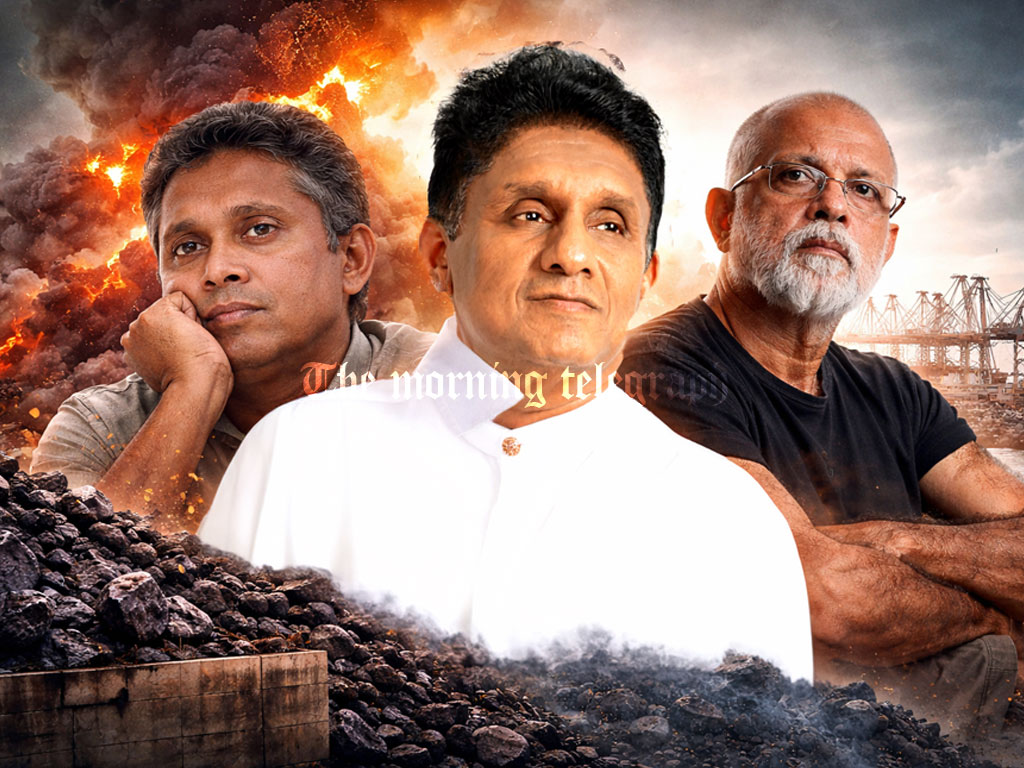
Interestingly, the origins of this controversy did not lie with the SJB. It was first brought to public attention by the Frontline Socialist Party, a group that had broken away from the JVP. Pubudu Jagoda, the party’s education secretary, was the first to reveal that the government’s coal imports had caused significant losses to the country and involved multiple irregularities in the tender process. Although his initial revelations did not receive widespread attention, Premadasa recognized their seriousness and initiated a detailed study of the allegations. In this effort, he was strongly supported by MPs Ajith P. Perera and S.M. Marikkar. Following extensive analysis, the trio launched a sustained and forceful campaign within Parliament, presenting new details about the coal deal on a near daily basis. Their efforts were further strengthened by SLPP MP D.V. Chanaka, who, having previously served as State Minister of Power, brought valuable technical insight into the issue. Chanaka also periodically highlighted alleged irregularities, even delving into technical aspects of coal procurement that few other MPs understood.
Beyond Parliament, the SJB organized a series of constituency level seminars under the theme “Pacha Madiwata Horu – Anurata Bae,” through which they disseminated extensive information to the public regarding the alleged coal related corruption. These seminars were held in towns and villages across the country, bringing the issue directly to ordinary citizens who might not follow parliamentary debates. Meanwhile, shortly after the Sinhala New Year, Frontline Socialist Party member Duminda Nagamuwa made another controversial revelation at a media briefing. He claimed that due to insufficient electricity generation caused by substandard coal, the government had decided to release significant amounts of the limited water in the Victoria Reservoir for power generation. He warned that this could lead to a serious drinking water crisis in several areas of Kandy, affecting thousands of families.
All this suggests that while the government succeeded in defeating the no confidence motion brought against Minister Kumara Jayakody, it has not been able to conclusively put the issue to rest. Based on the unfolding developments, it appears increasingly likely that the coal controversy will continue to haunt the government in the months ahead, evolving into a prolonged and politically damaging crisis. As the opposition sharpened its attack on the government over the coal scandal, it is worth examining how the government itself has responded. Information suggests that the controversy has already triggered serious internal tensions within the administration. In particular, it is reported that a request from the Pelawatte faction to remove Minister Kumara Jayakody was ignored by the President’s camp, which instead chose to shield him, a move that appears to have deepened divisions within the government.
What is more striking is that even some of the government’s strongest public defenders have now begun to shift their stance. Individuals who had consistently backed the administration and helped manage public opinion during previous crises are now seen taking a more critical line over the coal issue. Among them are Professor Nirmal Ranjith Devasiri, widely recognized commentator Ajith Perera often referred to as “Maha Kumbala”, and journalist Uvindu Kurukulasuriya, all of whom played a significant role in supporting the rise of the current administration. In the past, they actively engaged on social media to counter criticism and “clean up” the government’s image during difficult moments. However, the release of the audit report on substandard coal appears to have changed that dynamic. These same figures have now openly voiced criticism. Professor Devasiri, in particular, stated on his social media platforms that he could no longer defend the government. He argued that since the audit report confirmed irregularities, Minister Jayakody should at least step down until investigations are concluded. Ajith Perera echoed a similar position, calling for the minister’s removal pending inquiries. Even Uvindu Kurukulasuriya, considered close to the President, posted several critical remarks regarding the issue. All this indicates that even those who once stood firmly by the government now find it increasingly difficult to justify or defend the coal controversy.
Meanwhile, the coal scandal has injected fresh energy into the main opposition, the Samagi Jana Balawegaya, as well as other opposition parties. Developments over the past week have underscored this shift. Regardless of differing interpretations and political arguments, one key outcome stands out: the opposition, led by Sajith Premadasa, has managed within just a year and a half to bring a government with an overwhelming electoral mandate to a point of visible political strain before the public. Unlike past opposition strategies that often relied on populist rhetoric or agitation, the SJB appears to have taken a more measured and disciplined approach. Gradually but steadily, it has built its campaign, adapting new strategies rather than relying on traditional tactics, and positioning itself as a functioning opposition capable of challenging a government with a two thirds majority.
That said, this journey has not been without missteps. Premadasa himself, as well as the party, have faced criticism over certain decisions. One major shortcoming has been the failure to effectively take the party’s leadership and organizational strength down to the grassroots level. Another point of contention has been internal appointments. Critics argue that in attempting to balance competing interests, Premadasa may have created complications that weakened the party’s internal cohesion. A notable example is the appointment of Imtiaz Bakeer Markar as party chairman, a decision some viewed as misguided, arguing that senior figure Kabir Hashim would have been a more suitable choice. Nevertheless, out of respect and political consideration, Premadasa ultimately proceeded with appointing Imtiaz to the position. Taken together, these developments suggest that while the government is struggling to contain the fallout from the coal controversy, the opposition, despite its own imperfections, is beginning to find both direction and momentum.
What ultimately unfolded was striking. At a time when local government elections had already been announced, Imtiaz Bakeer Markar publicly declared his resignation as party chairman, a move rarely seen even among the smallest and least prominent political parties. He cited disillusionment with politics as the reason for stepping down. However, the timing of his resignation triggered a major setback within the Samagi Jana Balawegaya. It dealt a blow to the party’s election campaign and created internal disruption. At a moment when the ruling bloc’s vote base had already shown signs of decline, dropping significantly from its previous 6.9 million, Imtiaz’s departure drew sharp criticism even from within the party, while many others reacted with surprise. From that point on, the SJB functioned without a chairman, with leadership responsibilities effectively carried by Sajith Premadasa and General Secretary Ranjith Madduma Bandara, along with the parliamentary group.
Yet, over the past two months, the party’s sustained campaign around the substandard coal issue appears to have reinvigorated it. Riding on that renewed momentum, Sajith made a key decision, appointing Kabir Hashim as party chairman, widely seen as the most suitable candidate for the role. Kabir is not only one of the most senior figures within the party but also played a major role in building the SJB. With prior experience as General Secretary of the UNP, he brings significant organizational expertise. He was instrumental in the political shift of 2015 that led to the defeat of Mahinda Rajapaksa. Another notable strength is his broad electoral appeal, consistently winning in Kegalle with support from both Muslim and Sinhala Buddhist voters. In that sense, Kabir’s appointment as chairman can be seen as one of the most significant gains for the SJB amid the ongoing coal controversy. Building on this, Sajith’s next major decision was to go ahead with a May Day rally. The move appears aimed at practically leveraging the renewed strength brought by Kabir’s appointment. Reports indicate that Sajith, Kabir, and Ranjith Madduma Bandara are now actively holding discussions, meeting MPs, and organizing district level plans to ensure the rally’s success.
As the SJB gears up for a major May Day event, there are signs that what is described as the UNP’s “news plant” machinery has become active again. This perception has been fueled by the publication of an anonymous report on the Lankadeepa website, owned by the Wijewardene family. The report claimed that leading Buddhist monks had urged political parties to refrain from holding May Day rallies or processions, citing potential disruption to Vesak religious observances. However, notably, the article failed to name a single monk, not even a junior cleric, raising questions about its credibility. This has led to the view that the report was deliberately planted to undermine the SJB’s May Day rally. Such tactics, critics argue, are not new. On several previous occasions, similar anonymous or misleading reports have been published targeting Sajith Premadasa and the SJB, particularly in efforts to weaken any potential unity between the SJB and the UNP.
During past discussions aimed at bringing the two parties together, Sajith had reportedly raised concerns directly with UNP Deputy Leader Ruwan Wijewardene, pointing to the role of media outlets linked to his family, including Lankadeepa and The Sunday Times, in publishing such content. In response, Ruwan is said to have distanced himself, suggesting that editorial control lay elsewhere and that such narratives were driven by factions aligned with Ranil Wickremesinghe. He has also publicly expressed support for uniting the two parties. Interestingly, within hours of publication, the controversial Lankadeepa article was taken down, suggesting that it may have backfired. Despite such attempts, the SJB appears determined to proceed with its May Day rally as planned, without being distracted by what it views as low level misinformation campaigns. Meanwhile, there are indications that Sajith Premadasa is preparing to make a significant announcement in the coming week in connection with the May Day event, possibly extending a formal invitation to the UNP to join the SJB on the same platform. If that happens, the upcoming May Day rally could become a turning point, potentially paving the way for a decisive political realignment between the SJB and the UNP.
Although both the Sri Lanka Podujana Peramuna and the United National Party have already announced that they will not hold May Day rallies this year, the Sri Lanka Freedom Party has taken a different position. Despite suffering a major political decline in recent times, the SLFP has decided to go ahead with a May Day rally. They have already reserved Campbell Park in Borella for the event. The real question, however, is whether the party still has the strength to stage a large scale rally as it once did. Political observers estimate that the SLFP’s current vote base has shrunk to around 250,000. Even so, the party still retains a grassroots presence in many areas, unlike what some might assume. Their strategy appears clear: hold the rally at any cost and demonstrate to the public that the SLFP remains politically alive.
There is also a deeper calculation behind this move. Under current conditions, the SLFP has little chance of winning a presidential or general election on its own. Therefore, its survival depends on backing a viable, winning candidate. Over the years, the party has aligned itself with different leaders, supporting Mahinda Rajapaksa, later Ranil Wickremesinghe, and at times even Sajith Premadasa, while also engaging in discussions with various other political forces. At present, only a handful of influential figures remain within the SLFP who can shape such decisions. Among them is MP Chamara Sampath Dassanayake. It is likely that the final decision on whom to support at the next presidential election will rest with this small group. For a party like the SLFP, aligning with a losing candidate could be politically fatal, effectively pushing it further toward irrelevance. Their best lies in backing a candidate with a clear path to victory. Without such a strategy, even securing around 10 seats in a future general election would be difficult unless they align with a major political force.
For now, the SLFP appears to have adopted a wait and see approach, refraining from committing to any side until the stage is set, when they can identify the strongest contender and extend their support accordingly. Their decision to hold the May Day rally at Campbell Park is therefore aimed at rebuilding political strength and bargaining power ahead of that moment. Interestingly, two of the key decision makers within the SLFP are already maintaining close ties with Opposition Leader Sajith Premadasa and the SJB. Both within and outside Parliament, they are said to be engaged in ongoing discussions with senior SJB figures, exchanging views on future political directions. This suggests that significant political developments may be on the horizon. The SLFP’s immediate goal for the May Day rally is modest but strategic, to gather around 5,000 to 6,000 supporters at Campbell Park. Political insiders note that even a crowd of around 4,000 can be projected as a much larger gathering through presentation and optics. In that sense, the rally is less about sheer numbers and more about perception, an attempt to generate political oxygen and signal continued relevance.
Meanwhile, the outbreak of conflict involving Iran has raised serious questions about Sri Lanka’s foreign policy. Tensions escalated after two Iranian vessels entered Sri Lanka’s Exclusive Economic Zone, triggering attention that drew public scrutiny. The situation intensified when an Iranian vessel was reportedly struck by a U.S. submarine and sank, followed by a government statement that contributed to a diplomatic strain. A second Iranian ship later arrived, leading to further complications involving its crew. The Sri Lankan government intervened, bringing the sailors ashore and housing them at the Welisara camp, while indicating that the vessel would be moved closer to Trincomalee port. Unofficial sources suggest that there were behind the scenes communications between Sri Lanka and the United States regarding the fate of these sailors, with reports that the U.S. had sought to take them into custody, though this remains unconfirmed.
At the same time, Iran is said to have exerted significant diplomatic pressure on Sri Lanka to ensure the safe return of its personnel. Balancing these competing pressures, Sri Lanka appears to have attempted a middle path, avoiding confrontation with the U.S. while also not handing over the sailors. During this period, Sergio Gor, a regional representative linked to U.S. President Donald Trump, visited Sri Lanka, further highlighting the nature of the situation. His visit included a direct inspection of the Colombo Port, particularly areas beyond the Western Terminal, where there are reportedly proposals for new development projects with potential U.S. involvement. Amid ongoing negotiations, Sri Lanka is believed to have reached an understanding with the U.S. to allow the Iranian sailors to return home during a two week ceasefire period. Reports indicate that they were eventually flown back to Iran on a flight. As for the remaining Iranian vessel anchored near Colombo, the government faces a delicate decision. If it leaves Sri Lankan waters, it could risk being targeted. As such, there are indications that an understanding has been reached to keep the vessel within Sri Lankan waters until hostilities subside, after which it may be allowed to return to Iran. Altogether, the situation underscores the complexity of Sri Lanka’s diplomatic balancing act, navigating between global powers while safeguarding its own national interests.
The government is now facing yet another issue, this time over fuel procurement. Following the outbreak of war and the disruption of fuel shipments through the Strait of Hormuz, a severe global oil shortage emerged. In response, the government initially announced plans to secure fuel from Singapore and India, while also initiating discussions with Russia. Amid this, the Iran ambassador publicly stated that Iran was ready to supply oil to Sri Lanka. However, the very next day, Minister Nalinda Jayatissa announced at a cabinet briefing that Sri Lanka would not be sourcing oil from Iran. Instead, the government indicated it would look to the United States and Nigeria for supplies. The President also confirmed in Parliament that discussions were underway with the U.S., with Sri Lankan authorities reportedly engaging in multiple rounds of talks with an American firm identified as Park Company. However, what emerges now is that these discussions may have remained largely at the level of intent, without progressing into concrete agreements.
The controversy deepened after HSBC CEO Georges Elhedery made a striking claim during a public discussion. He noted that while many Asian countries were purchasing oil at around $100 to $120 per barrel during the conflict, Sri Lanka had allegedly paid as much as $286 per barrel, one of the highest prices reported. “The headline price is not what concerns me. In reality you may pay $140 to $150, but I’ve heard Sri Lanka paid as high as $286 per barrel.” This statement received wide coverage in international outlets such as Bloomberg and Reuters, as well as in local media. In response, the Ceylon Petroleum Corporation quickly issued a statement denying the claim, asserting that post war fuel purchases were made within a range of $71 to $113.29 per barrel. However, this denial appears to have created a deeper contradiction. At the time of the March 21 fuel price hike, global crude prices were roughly around $95 per barrel. The government justified the increase by claiming losses of Rs. 100 per litre of diesel and Rs. 20 per litre of petrol. But based on standard pricing formulas, such losses would only make sense if crude oil had been purchased at around $250 per barrel or more, not within the $71 to $113 range stated by the CPC.
This leaves two possible scenarios. Scenario one: fuel was indeed purchased at lower prices around $71 to $113, meaning the claim of losses was false, and instead significant profits were being made while prices were raised. Scenario two: the government actually paid extremely high prices closer to $250 to $286, which aligns with Elhedery’s claim, raising serious concerns about procurement decisions and potential financial losses. Even under a favourable exchange rate assumption of Rs. 315 per dollar, calculations suggest that if fuel was purchased at $113 per barrel, the government should have been making substantial profits per litre, not losses. This discrepancy raises serious questions. If oil was bought cheaply, why were prices increased citing losses? If oil was bought at extremely high prices, who approved such deals and why? Could this indicate massive financial mismanagement or even corruption? If the higher price narrative proves true, it would mean Sri Lanka may have paid nearly double the global average, potentially causing losses worth millions of dollars in public funds. Either way, the issue is fast turning into a major political liability. In the coming days, the government will likely face mounting pressure to provide clear, transparent answers, not just to the opposition but to a public already burdened by rising living costs.