Allegations of a covert strategy to dissolve Parliament and reset political power are raising fresh concerns over stability, governance, and the future of Sri Lanka’s ruling administration.
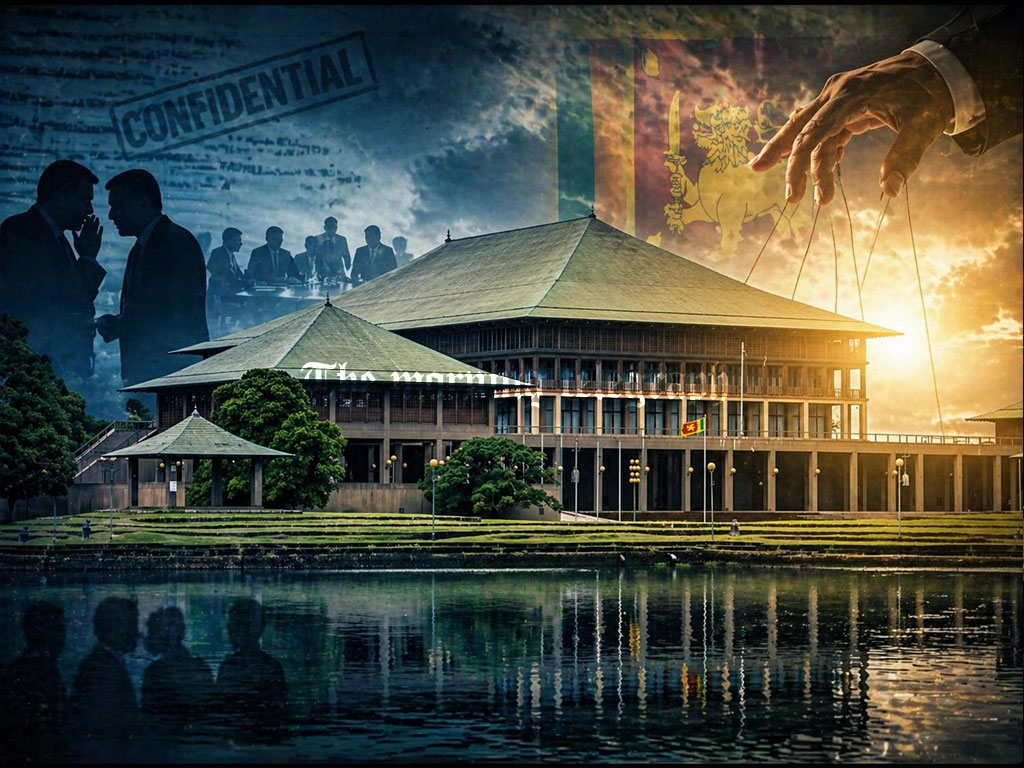
Leader of the Pure Sinhala Heritage and former Cabinet Minister Udaya Gammanpila has claimed that a confidential discussion is currently taking place within the government regarding the possible dissolution of Parliament, sparking intense political speculation across Sri Lanka.
According to Gammanpila, information received from both Pelawatte and the President’s Secretariat indicates that these discussions have involved a select group of influential businessmen and advisors linked to what he described as the President’s inner circle or kitchen cabinet. He suggested that these behind the scenes deliberations point to a deeper political strategy unfolding within the ruling establishment.

Gammanpila further alleged that the government, despite being in power for just one and a half years, has already become significantly affected by corruption and governance failures. He argued that the administration’s reliance on an inexperienced leadership structure has created serious challenges for the President in managing the country effectively.
Among the key factors contributing to this situation, he highlighted the lack of qualified individuals to fill critical positions, particularly the role of Secretary to the Ministry of Finance. He also pointed to what he described as a rapid erosion of the government’s voter base, suggesting declining public confidence in the current leadership.
Speaking during a discussion on his online platform, the former minister drew parallels to a political strategy used during the tenure of former President Chandrika Kumaratunga in 2001. He explained that the alleged plan involves dissolving Parliament, transferring power to the opposition, and subsequently using presidential authority along with trade union influence to destabilise the new administration.
According to Gammanpila, the ultimate objective of such a strategy would be to weaken the opposition’s standing among the public, thereby creating an opportunity for the current ruling group to regain power under more favourable conditions. This claim has added a new layer of complexity to the ongoing political discourse in Sri Lanka.
He also clarified the constitutional limitations surrounding the dissolution of Parliament. Under existing provisions, the President does not have the authority to dissolve Parliament until two and a half years have passed since its first sitting. In this context, Gammanpila revealed that internal discussions have reportedly focused on May 21, 2027 as a possible date for dissolution, marking the completion of two and a half years since the inaugural session of the 17th Parliament held on November 21, 2024.
Gammanpila concluded by stating that there is growing concern within certain political circles that failure to take such strategic action could result in severe political setbacks for the National People’s Power movement. These developments have intensified debate over Sri Lanka’s political future, governance stability, and the balance of power between the ruling party and the opposition.