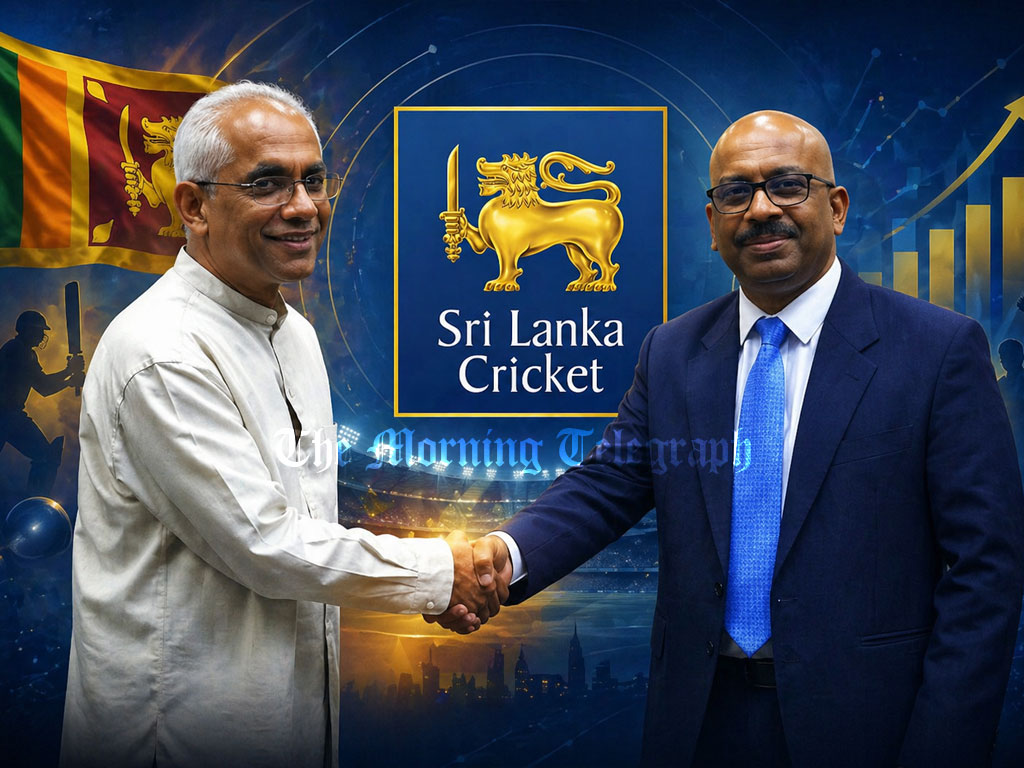
Eran Wickramaratne appointed to head Sri Lanka Cricket transformational committee with Sangakkara and Mahanama as reforms begin.
The Sri Lanka Cricket transformational committee has been formed with Eran Wickramaratne appointed as Chairman following the resignation of the entire Executive Committee, including Chairman Shammi Silva.
In a major administrative shift, the Ministry of Sports has entrusted Wickramaratne with leading the next phase of reform within Sri Lanka Cricket. The move comes at a critical moment as the institution faces mounting pressure to rebuild governance and restore public confidence.

The interim committee appointed today is as follows:
Chairman:
_ Eran Wickramaratne
Members:
– Roshan Mahanama
– Kumar Sangakkara
– Thushira Radella
– Sidath Wettimuny
– Avanthi Colombage
– Prakash Schafter
– Upul Kumarapperuma
– Dinal Phillips
Wickramaratne’s appointment marks a significant transition from politics to sports administration. He contested the last general election from the Colombo District representing the Samagi Jana Balawegaya but was unsuccessful in securing a parliamentary seat. He had previously served as a Member of Parliament from the same district in 2020 and earlier.
Until this appointment, Wickramaratne held positions within the Samagi Jana Balawegaya as a member of both the Executive Board and the Management Committee. However, his acceptance of the chairmanship has triggered immediate political consequences.
It is reported that the Samagi Jana Balawegaya has decided to expel Wickramaratne from party membership following his decision to take up a role under the new government structure. Internal sources indicate that he has already informed party leadership of his intention to resign from all positions within the party.
This raises concerns about the intersection of politics and sports governance. While the new committee has been tasked with driving reform, questions remain about how independent the process will be and whether political affiliations could influence decision making.
The inclusion of respected cricketing figures such as Kumar Sangakkara and Roshan Mahanama is seen by some as a positive step toward credibility. However, the broader challenge lies in implementing meaningful reforms that address long-standing structural issues within Sri Lanka Cricket.
What happens next could be critical. The success of this transformational committee will depend not only on leadership but also on its ability to navigate political pressure and deliver transparent, sustainable change.
As Sri Lanka Cricket enters a new chapter, the spotlight now turns to whether this initiative can truly reshape the future of the sport or if it will face the same challenges that have hindered past efforts.