Hormuz internet cable fears grow as Iran warns of asymmetric retaliation while the US faces claims it may bypass Congress for new attacks.
The Hormuz internet cable fears have intensified amid a fragile Iran-US ceasefire, as warnings emerge that any renewed American military action could trigger an unprecedented crisis across the region and beyond.
Against this tense backdrop, Iran’s Press TV news service has warned in an analytical report that if the United States resorts to military action once again, it could face a massive and unprecedented defeat. The report argues that Iran possesses several decisive factors that American war planners overlooked during what it described as the illegal war of the past 40 days.

According to the analysis, if those factors are activated, America could be pushed into a serious crisis. This raises concerns about whether the current ceasefire is a genuine step toward de-escalation or merely a temporary pause before another phase of confrontation.
Press TV states that Iran has an “asymmetric” response strategy against what it calls maritime piracy by the United States. The report says the nature, timing, and method of execution of this strategy have not yet been disclosed, allowing Iran to keep its enemy in a state of deep confusion.
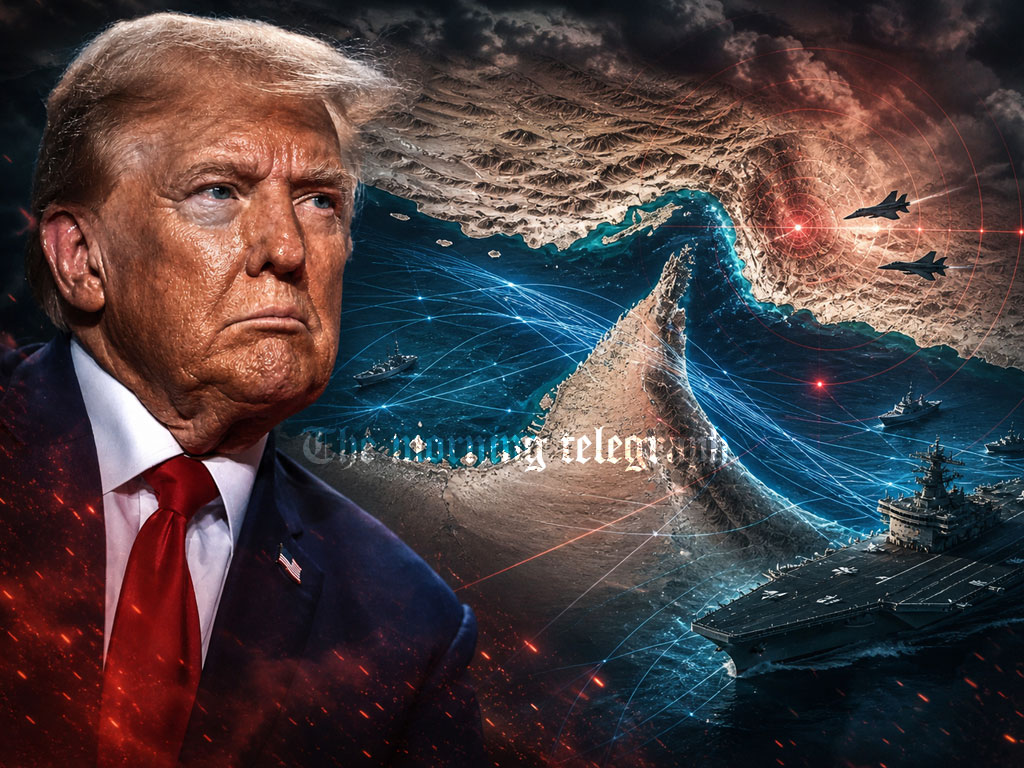
Many dangerous options possessed by Iran and regional resistance forces have also not yet been used on the battlefield, according to the report. It claims America is already living in great fear over sensitive vulnerabilities, including fiber optic communication systems running beneath the Strait of Hormuz.
The Strait of Hormuz remains one of the world’s most strategic maritime chokepoints. Any threat to underwater internet cables, shipping routes, oil flows, or military movement in the area could carry consequences far beyond the Middle East.
The report further states that the closure of the Strait of Hormuz has severely impacted the global economy as well as the American economy. Despite a naval blockade, it says Iran still has the ability to maintain supplies through its 8,000 kilometer land border with several neighbouring countries.
Press TV also claims that American attempts to incite rebellions against the Iranian government under economic pressure have failed because of national unity. It says anti-American sentiment among Iranians intensified after President Trump’s confession that he provided money and weapons to terrorist groups to overthrow the Iranian government last January.
The report emphasizes that the deaths of more than 3,000 Iranians during the short war have made American tactics ineffective in the face of growing public anger, hatred, and patriotism. It concludes that America may now have to choose between war and accepting Iran’s conditions.
However, questions remain over whether Washington is preparing for another military phase despite the ceasefire.
The Associated Press reports that the Trump administration believes there is no need to obtain Congressional approval for future military action because the state of war with Iran has now “ended.” According to the War Powers Act of 1973, a president can only launch a military operation for 60 days without prior approval from Congress.
The White House has now stated this position as that 60 day period nears its end.
A senior White House official has said the hostilities that began on February 28 have now ended. The administration’s argument is that the war legally ended because the two week ceasefire reached between Tehran and Washington on April 7 has now been extended indefinitely.
Secretary of Defence Pete Hegseth also confirmed this position during a Senate discussion last Thursday. He stated that with the ceasefire in effect, the conflict is in a “pause”, and therefore the calculation of the 60 day period has also temporarily stopped.
Legal experts, including Democratic Senator Tim Kaine, reject that argument. They say there are no legal provisions under the War Powers Act to “pause” or “end” the 60 day limit in this manner.
They argue that the administration has created a new and legally baseless position to bypass Congressional approval. This raises concerns about whether future attacks on Iran could be launched without proper legislative scrutiny.
Advisors such as Richard Goldberg, a former National Security Council official, say that by declaring the current conflict over and then starting a new operation, the need for Congressional approval could be avoided.
Meanwhile, even during the ceasefire, Washington’s movement of additional troops and military equipment into the Middle East has attracted intense international attention.
The deployment of powerful naval fleets, including three aircraft carrier strike groups, has led many observers to question whether the ceasefire is only a short pause before attacks resume.
What happens next could be critical, as fears over Hormuz internet cables, underwater communications, oil routes, Congressional authority, and Iran’s undisclosed retaliation strategy now sit at the centre of a dangerous new phase in the US-Iran standoff.