By Marlon Dale Ferreira
What was expected to be a professionally managed international rugby tour has once again descended into controversy, raising serious questions over match official appointments, transparency, and adherence to agreed protocols.
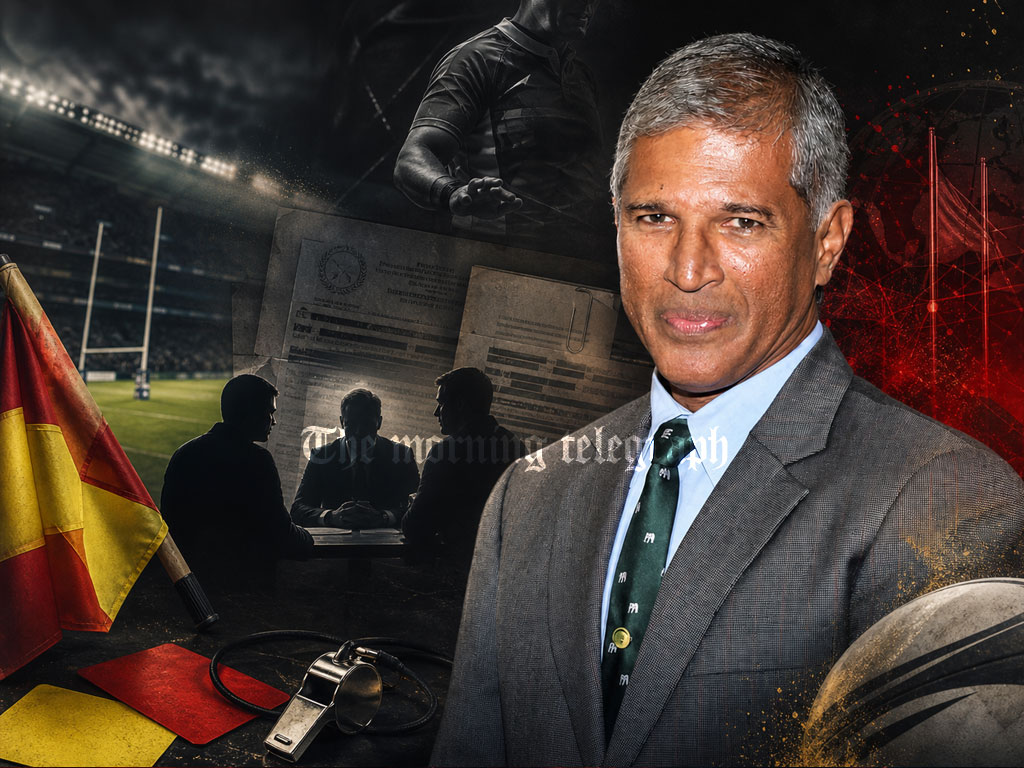
At the center of the storm is Asia Rugby Referee Manager, Dilroy Fernando, a figure once celebrated as one of the finest referees in the game, but now increasingly under scrutiny as a troubling pattern continues to unfold.
The Agreement That Was Supposed to Ensure Neutrality
The New Zealand Under-85kg tour of Sri Lanka operates under a formal Memorandum of Understanding (MOU) between the two teams’ administrations, clearly stipulating one key condition: Match officials must be independent and neutral.
This requirement had been communicated to Asia Rugby, with the expectation that appointments would strictly comply with international standards.
With Dilroy Fernando overseeing referee appointments, ensuring adherence should have been straightforward.
But what followed tells a very different story.

Echoes of 2025: Where It All Began
This is not the first time such concerns have surfaced.
During the 2025 tournament, the second leg at Racecourse was initially assigned to Australian-born referee Brayden Hudson. However, it later emerged that Hudson was not part of the Asia Rugby panel for that year.
The situation escalated quickly. Despite already arriving in Sri Lanka with his referee coach, Hudson was removed from officiating the main match and instead assigned as a touch judge. The originally designated touch judge was then elevated to referee.
An embarrassing reversal, and the first clear signal of deeper issues.
School Rugby Episode: A Failed Workaround
The controversy extended into the schools circuit when four leading schools formally requested foreign referees for key fixtures.
Fernando reportedly facilitated the use of two Hong Kong referees who were already in Sri Lanka for an Asia Rugby tournament. During their stay, they were assigned to officiate school matches.
However, this move was halted due to: Violation of Director General’s sanction, breach of visa regulations, unauthorized payments and the misuse of Asia Rugby appointments.
The attempt failed, but the pattern was already visible.
2026 Tour: Same Script, Same Questions
Fast forward to 2026, and the same issues have resurfaced.
Despite the neutrality clause in the MOU, the first leg featured: Three referees from Hong Kong, a touch judge who is the Secretary of Hong Kong Rugby Referees, also an Asia Rugby referee, another official, Shane Barr.
Fernando had confirmed that all officials were part of the Asia Rugby panel. However, within days, it was revealed that Shane Barr was not part of the panel.
On the field, Barr reportedly missed several key incidents, noticed not just by players, but by team management from both sides, though the impact was felt more heavily by the Sri Lankan team.
Once again, the credibility of the appointment process came into question.
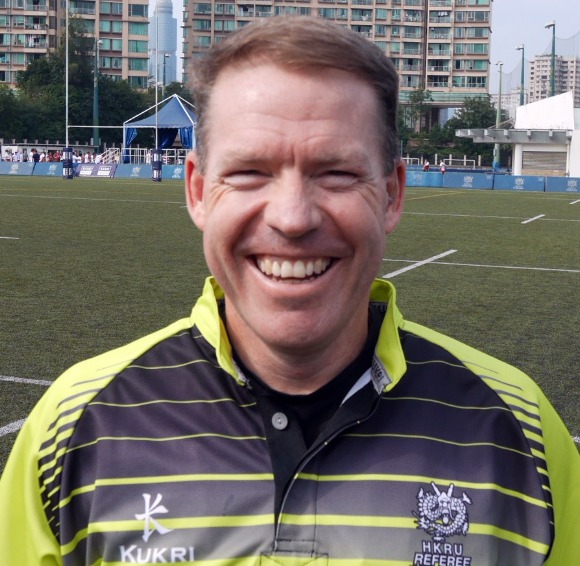
Kiwi Rugby Referee Appointed and Then Removed
Second Leg: Decisions Made in Advance
The controversy deepened further.
The referee who had a poor outing in the first leg was reappointed for the second leg, with the decision reportedly made even before the New Zealand team had arrived in Sri Lanka.
Two new touch judges were scheduled to arrive just days before the match.
One of them, Matt Rodden from Hong Kong, was identified as:
- Head of Hong Kong Referees
- A New Zealander
This raised immediate concerns regarding neutrality.
This was flagged as a clear violation of the MOU, prompting intervention at higher levels.
Following the intervention of Asia Rugby leadership, Rodden’s appointment was cancelled.
However, the tournament organizers were left to bear the cost of his airfare, as tickets had already been issued.
A replacement referee from Thailand was brought in, who officiated a domestic fixture between CH & FC and Havelocks.
A Pattern That Refuses to End
What makes this situation deeply concerning is not just the individual incidents, but the repetition.
From questionable panel selections, misrepresentation of referee credentials, attempts to work around regulatory frameworks and repeated violations of neutrality expectations. The same issues continue to surface year after year.
This is no longer about isolated lapses.
A Legacy Under Scrutiny
Dilroy Fernando’s reputation as a world-class referee is unquestionable.
But the current situation raises difficult questions about oversight, accountability, and consistency.
This is no longer about individual decisions. It is about systemic lapses, repeated disregard for agreed frameworks and a growing gap between expectation and execution
Repeat Telecasts
What should have been a showcase of international rugby cooperation has instead become a recurring case of administrative confusion and questionable decision-making.
The concern now is not just what has happened, but how many times it continues to happen.
How many more “repeat telecasts” will rugby in Sri Lanka witness before accountability finally takes center stage?
Finally – The Kiwi Under 85 Kg Tour Illusion
What was packaged as an international rugby spectacle now appears, on closer inspection, to be little more than a carefully engineered illusion, one that has left more questions than applause in its wake.
The entire New Zealand Under-85kg tour, it now emerges, was driven largely by the efforts of Imthie Marikkar, with strong backing from National Sports Council Chairman Priyantha Ekanayake. In the process, the Minister of Sports, new to office then and with little grounding in sports administration, found himself leaning heavily on guidance that, in hindsight, appears to have been anything but objective. Coming from an accounting background within the National Water Board, the Minister had little choice but to rely on those around him, and that reliance may have cost him clarity.
The illusion began early. When the first leg was played in Kandy last year, the atmosphere was electric, and the now-famous Haka performed by the visiting side captivated audiences, including a visibly enthralled Minister. But beneath the spectacle lay a more inconvenient truth.
While marketed under the powerful allure of the “All Blacks” brand, this touring side was far from the elite New Zealand outfit many believed it to be. In reality, it was a development-level team, positioned near the lower end of the domestic rugby ladder, players striving to climb their way upward, not representatives of the legendary national side.
Yet, the narrative had already taken hold. The suggestion that “the All Blacks are coming” proved enough to ignite public excitement, and, perhaps, cloud judgment at higher levels.
Even now, there are indications that this initial wave of excitement continues to influence decision-making at the top.
But the most telling moment came not from the field, but from within the rugby community itself. Pavithra Fernando, the President of Sri Lanka Rugby last year cut through the hype with a blunt reality check in a rugby WhatsApp group, questioning the very premise of the “Under-85kg” classification.
His claim was startling: the wife of a New Zealand player had reportedly confirmed that her husband, a reserve hooker in the touring squad, actually weighed 94 kilograms.
If true, it raises an uncomfortable question:
Was this truly an Under-85kg team, or just another carefully managed narrative?
Because when the branding doesn’t match the reality, and when perception is allowed to override truth, what remains is not a sporting contest, but a spectacle built on misrepresentation.