Power cut crisis grows as Patali Champika Ranawaka says CEB’s split into four firms has created chaos and a Rs. 2,700 crore burden.
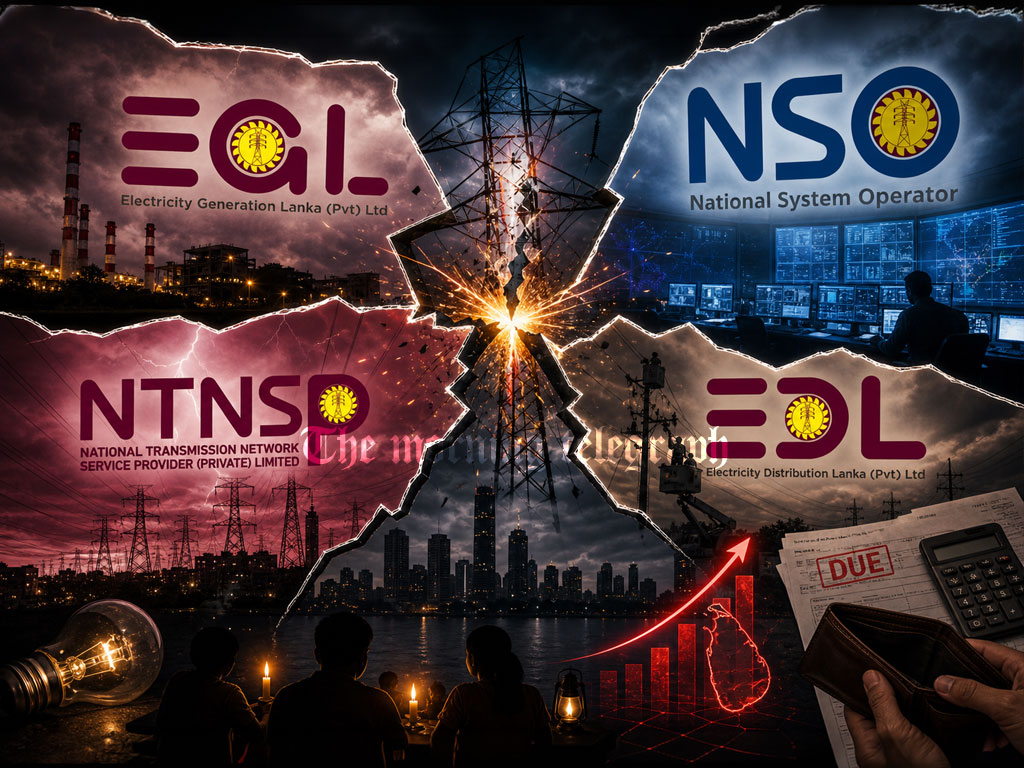
The power cut crisis has deepened after United Republic Front leader and former Minister Patali Champika Ranawaka warned that the division of the Ceylon Electricity Board into four entities has created serious disorder in Sri Lanka’s electricity sector.
Speaking to the media, Ranawaka said the public is now being asked to carry an additional Rs. 2,700 crore burden to maintain the companies created through the restructuring of the Ceylon Electricity Board.

He said those who once promised not to break up the Electricity Board have now divided it into four companies. According to him, the restructuring has produced a highly unregulated situation where one company does not know what another company is doing.
Ranawaka warned that this lack of coordination has pushed the entire electricity sector into a serious crisis. This raises concerns about whether the country’s power system is being managed with enough accountability, planning, and operational control.
He further revealed that, due to the crisis, even Colombo is now experiencing power cuts without notice in different locations. The claim has intensified public concern because Colombo is usually expected to receive more stable electricity supply than many other parts of the country.
The former Minister said the relevant companies have demanded an additional Rs. 2,700 crore to sustain the electricity sector. He warned that this financial burden will ultimately fall on the oppressed people of Sri Lanka.
However, questions remain over why consumers should carry the cost of what he described as a chaotic restructuring process. Ranawaka’s remarks suggest that the CEB division has not delivered the promised efficiency, but instead created confusion, fresh costs, and power supply instability.
Commenting further on the coal scam and trade unions, Ranawaka said that although it had been claimed that losses from the coal scam would not be passed on to the people, those losses have ultimately had to be borne by the public.
His statement adds another layer to the wider debate over energy sector governance, electricity pricing, coal procurement, and the hidden costs that consumers may be forced to absorb through bills and tariffs.
Ranawaka also alleged that some leaders have now reached the point of betraying the people by accepting cryptocurrency as bribes.
What happens next could be critical, as the electricity sector now faces growing pressure over power cuts, restructuring failures, coal scam losses, and the possibility that ordinary citizens may again be forced to pay for decisions made without transparency or accountability.