Treasury official death sparks fresh questions as article recalls Daya Pathirana killing case and claims about unusual sharp weapons.
The Treasury official death of A.M. Ranga Nishantha Rajapaksa has raised fresh questions in Sri Lanka and abroad, after concerns emerged over whether the incident could have been a suicide by cutting a vein.
Rajapaksa, aged 50, was an Assistant Director of the Department of Foreign Resources of the Treasury. According to the article, questions were raised by many people based on evidence provided by his wife and 15-year-old daughter.

The article presents its response to those concerns by recalling a killing from 39 years ago, during the second JVP insurrection, involving Daya Pathirana, the leader of the Independent Students’ Union of the University of Colombo.
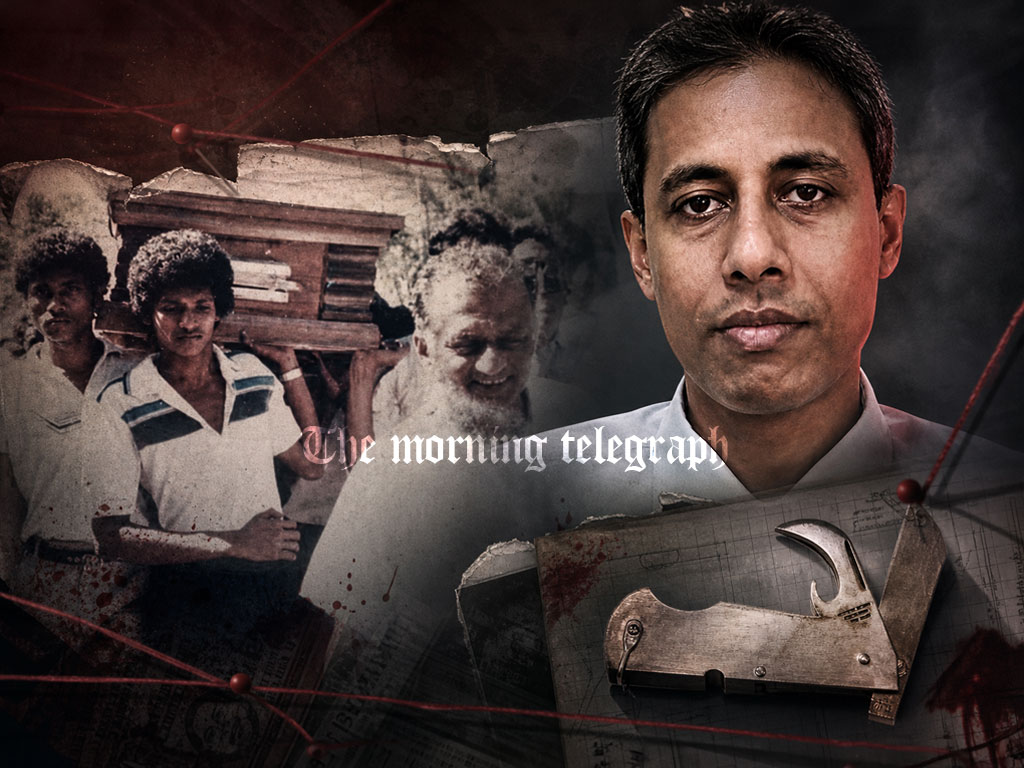
It states that Daya Pathirana was allegedly killed by rebels using a jungle knife fitted with a retractable spike and a blade measuring approximately four inches, according to the description provided.
The spike was described as extremely sharp, while the blade was said to be shorter than the spike. When folded, the handle reportedly made the device appear to be a heavy weapon.
The weapon was identified in the article as a British-made product that was issued to selected members of the Special Task Force in early 1986.
During the war period, the weapon was reportedly provided to a select group for personal use in jungle combat and self-defense. It was also said to have been used for hunting animals.
However, questions remain over the alleged misuse of the weapon by certain individuals. The article claims that because of such misuse, the weapon was withdrawn by mid-1986.
The report further claims that more advanced weapons exist today. It also alleges that journalist Lasantha Wickramatunga was later killed using an improved device with similar cutting technology.
This raises concerns about whether public understanding of certain high-profile deaths has been shaped by incomplete explanations, especially when unusual weapons or methods are alleged.
The article also refers to the killing of Daya Pathirana and states that he may have been attacked with a sharp weapon from both sides of his shoulders before being stabbed with the knife attached to it.
Punchiralage Somasiri, who reportedly survived the same incident despite severe neck injuries, is said to have told the writer that the weapon used was a device with sharp edges lowered from both sides of the shoulder.
At the time, however, public opinion widely believed that Pathirana had been killed by having his neck cut with a knife.
The article notes that the incident occurred 39 years ago and argues that more advanced tools exist in the modern world today.
What happens next could be critical, as questions surrounding the death of A.M. Ranga Nishantha Rajapaksa may now draw renewed attention to forensic evidence, witness accounts, and historical claims about unusual killing methods in Sri Lanka’s violent past.
SOURCE :- MAWRATANEWS.LK